

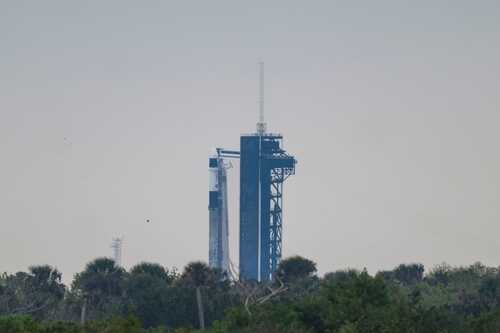
A rare Florida cold snap just forced NASA to hit the brakes on America’s next crewed Moon mission—proof that even the biggest government programs still answer to reality, not press releases.
Quick Take
- NASA postponed the Artemis II “wet dress rehearsal” fueling test after forecasts showed below-freezing temperatures near Cape Canaveral.
- The rehearsal shift from Saturday to Monday moved the earliest Artemis II launch from Feb. 6 to no earlier than Feb. 8, compressing the February launch opportunities.
- The wet dress rehearsal is a major safety gate, loading roughly three-quarters of a million gallons of supercold propellants to validate upgraded procedures from Artemis I.
- NASA’s schedule shuffle also pushed back the Crew-12 International Space Station mission because Artemis II operations get launch-pad priority.
Florida’s Freeze Forces NASA to Reroute a Critical Countdown
NASA managers delayed the Artemis II wet dress rehearsal after forecasts showed unusually cold conditions around Kennedy Space Center, including temperatures near or below freezing. The rehearsal had been slated for the weekend but was moved to Monday, Feb. 2, to avoid temperature conditions that fall outside launch criteria and risk ground systems and vehicle operations. The change also pushed the earliest possible launch date to no earlier than Sunday, Feb. 8.
NASA’s updated timeline called for the rehearsal countdown to begin Saturday evening, with fueling planned around late Monday morning and a simulated launch sequence later Monday night. That sequencing matters because the wet dress rehearsal is effectively a full-up practice run for launch day, designed to expose problems while the vehicle is still safely on the pad. Any issue found can drive “day-for-day” slips as teams troubleshoot and re-test.
Why the “Wet Dress Rehearsal” Is a Non-Negotiable Safety Gate
The wet dress rehearsal is the last major prelaunch test for the Space Launch System and Orion stack at Pad 39B, requiring the rocket to be loaded with supercold liquid hydrogen and liquid oxygen. That propellant operation is complex under ideal weather and gets riskier when temperatures plunge in a region built for heat, humidity, and hurricanes. NASA’s own explanation emphasized hardware capability checks against the forecast and a timeline adjustment aimed at mission success.
Artemis II carries unusually high stakes because it is slated to be the first crewed Artemis flight and the first crewed lunar mission since Apollo 17 in 1972. The four-person crew—NASA astronauts Reid Wiseman, Victor Glover, and Christina Koch, plus Canadian Space Agency astronaut Jeremy Hansen—has been quarantined in Houston while launch teams work through final pad processing. NASA planned the crew’s Florida arrival to follow key rehearsal data reviews, reducing exposure risks and avoiding wasted travel during schedule churn.
Lessons From Artemis I: NASA Claims Upgrades Are Ready, But the Clock Is Tight
Artemis I, the uncrewed 2022 test flight, required repeated attempts and troubleshooting during fueling operations, including hydrogen leak issues. NASA says it has since upgraded valves, procedures, and propellant-loading steps to reduce the risk of repeats. Launch Director Charlie Blackwell-Thompson publicly expressed confidence that Artemis I lessons have been incorporated into the Artemis II flow. Still, a compressed launch window means less flexibility when weather—or hardware—refuses to cooperate.
NASA’s February calendar reflects that pressure. With the Feb. 6–7 opportunities lost, the agency identified Feb. 8 as the earliest possible launch, with additional opportunities later in the month clustered around Feb. 10–11 depending on final processing and review outcomes. NASA also acknowledged that additional slips could cascade “day for day,” a plain acknowledgment that the schedule depends on what the rehearsal and subsequent analysis reveal—not on what anyone wants the date to be.
Pad Priority and Program Reality: Artemis II Pushes Other Missions Aside
The delay ripples beyond Artemis II. NASA’s Artemis operations receive launch-pad priority, and coverage of the reshuffle noted the impact on a separate astronaut mission to the International Space Station: Crew-12. That mission—conducted under NASA’s commercial crew framework with SpaceX—was pushed back in the planning stack while the Artemis team protects its critical path. In practical terms, Artemis II’s schedule now influences when other crews rotate to orbit, even when different spacecraft are involved.
Cold Weather Delays NASA Moon Launch At Least Two Days https://t.co/yLcuRknfVt
— zerohedge (@zerohedge) January 31, 2026
For taxpayers and voters who are tired of Washington’s habit of selling big promises without accountability, this episode offers a mixed but clarifying picture. NASA’s willingness to delay for safety shows the agency is not gambling with a crewed mission to satisfy headlines. At the same time, it underscores how fragile complex, government-run timelines can be when they meet uncontrollable constraints like weather, narrow launch windows, and multi-mission scheduling conflicts.
Sources:
NASA delays Artemis II launch, meaning mission to moon will start Feb. 8 or later
NASA delays Artemis moon mission
NASA launch: Moon mission Artemis delayed
Cold weather delays earliest Artemis 2 launch opportunity