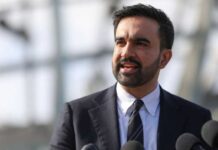


A viral claim that a GOP senator backed war with Iran because “I don’t wanna die” is colliding with a harder reality: Congress is still arguing about who gets to decide when America goes to war.
Story Snapshot
- Available reporting does not verify the specific “I don’t wanna die” quote attributed to a GOP senator; the underlying claim remains unconfirmed in the provided research.
- What is documented is a March 2026 Senate vote rejecting a measure meant to limit hostilities, keeping more latitude with the president in an escalating Iran conflict.
- Republican leaders have framed the initial action as “pre-emptive” and “defensive,” while some Democrats disputed whether an “imminent threat” existed.
- A smaller GOP breakaway occurred as Sen. Rand Paul backed a war powers resolution aligned with Democrats, underscoring constitutional tensions inside the party.
Quote Verification Falls Short, But the War-Powers Fight Is Real
The attention-grabbing line—“I don’t wanna die”—cannot be confirmed from the supplied search results and citations, which do not identify a senator saying it on the record. That matters because conservative voters have learned the hard way how quickly narratives get laundered through cable clips and social feeds. What can be reported responsibly is the broader dispute now driving Washington: whether military action against Iran is being conducted with clear legal authority and transparent objectives.
GOP Senator Says He Backs Iran War Because ‘I Don’t Wanna Die’ #Mediaite https://t.co/4QGUi9q7LU
— #TuckFrump (@realTuckFrumper) March 17, 2026
That verification gap also changes how the story should be read. Instead of treating the quote as settled fact, the more useful focus is what senators actually said and did in public: how they described the strikes, whether they demanded hearings, and how they voted on limiting hostilities. The available research points to a familiar pattern—lawmakers talking tough on security while sidestepping hard questions about scope, duration, and the constitutional balance between Congress and the commander in chief.
Senate Vote Keeps Hostilities Constraints Off the Table—for Now
In early March 2026, the Senate rejected a resolution aimed at limiting hostilities involving Iran. The vote outcome, as summarized in the provided reporting, left the administration with wider room to continue operations without a new, explicit authorization from Congress. For constitutional conservatives, that vote is the core development: regardless of party, lawmakers repeatedly prefer ambiguous accountability during wartime, even though Article I assigns Congress the power to declare war.
Republican leaders defended the posture by describing the initial U.S. action as “pre-emptive” and “defensive,” an argument that typically leans on the president’s Article II powers and prior authorities. The same reporting also reflects intra-party strain. Sen. Rand Paul backed the war-powers effort, breaking with many GOP colleagues who held the line against the limitation. The split signals that even pro-defense Republicans are not uniform on procedure and constitutional process.
Republicans Resist Hearings as Democrats Demand More Scrutiny
By mid-March, Republicans were resisting Democratic calls for hearings about the Iran conflict, creating a new standoff over oversight and clarity. In the cited coverage, Sen. Cynthia Lummis suggested waiting to see whether objectives become “murky” before pressing for hearings. That posture may appeal to lawmakers trying to avoid projecting division during conflict, but it also postpones basic oversight—exactly when mission creep, unclear objectives, and ballooning costs can take root.
Democrats, for their part, have tried to leverage intelligence-briefing interpretations to argue the administration’s threat case was overstated. Sen. Mark Warner, identified as vice chair of the Senate Intelligence Committee, pointed to a prior worldwide threats briefing and said he did not believe an imminent threat existed to the United States, and questioned imminence regarding Israel as well. That claim, if accurate, would undercut the “defensive” framing used to justify unilateral continuation of military operations.
What Conservatives Should Watch: Clarity, Limits, and Constitutional Guardrails
For a Trump-supporting audience that lived through years of expansive bureaucracy and “emergency” justifications for domestic overreach, the Iran debate raises a parallel concern: government power expands fastest when scrutiny is treated as disloyalty. The research provided does not settle whether an imminent threat existed, and it does not validate the viral “I don’t wanna die” quote. It does, however, document lawmakers leaning on broad justifications while delaying hearings and rejecting limits on hostilities.
Conservatives don’t have to choose between national defense and constitutional order; the system is designed to demand both. The practical questions now are straightforward: What is the mission objective, what is the end state, what authority is being used, and what metrics define success or termination? Until Congress insists on answers in public—with real hearings and recorded votes—Americans are left with viral soundbites, partisan spin, and an open-ended conflict that could outlast the news cycle.
Sources:
https://www.blumenthal.senate.gov/newsroom/press/release/blumenthal-statement-on-iran