

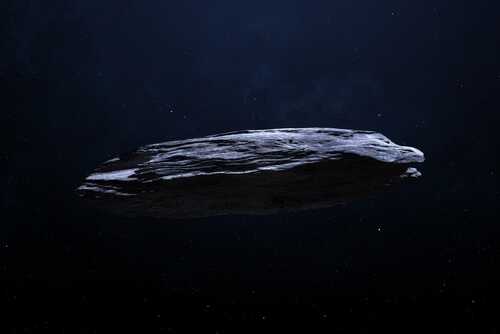
Scientists discover that mysterious interstellar visitor 3I/ATLAS exhibits an unprecedented “heartbeat” pulsation pattern, challenging everything we thought we knew about objects from distant star systems.
Story Highlights
- 3I/ATLAS represents only the third confirmed interstellar object ever detected, discovered July 1, 2025
- Object pulses with regular 16.16-hour “heartbeat” pattern, fluctuating tens of percent in brightness
- Scientists now believe pulsation comes from periodic jets of gas and dust, not nuclear rotation
- Discovery provides unprecedented opportunity to study material from distant planetary systems
Historic Discovery Marks New Frontier
Astronomers detected 3I/ATLAS on July 1, 2025, marking only the third confirmed interstellar object observed within our solar system. Following 1I/ʻOumuamua (2017) and 2I/Borisov (2019), this cosmic visitor exhibits behavior unprecedented among known interstellar objects. The object displays regular brightness variations with a precise 16.16-hour period, creating what researchers describe as a “heartbeat-like” pattern that challenges conventional understanding of interstellar comet behavior.
Unlike previous interstellar visitors, 3I/ATLAS provides a measurable, repeatable phenomenon that can be systematically studied across multiple observation cycles. This discovery represents a significant advancement in our ability to analyze material from distant star systems without requiring interstellar travel capabilities.
Revolutionary Heartbeat Model Emerges
Initial scientific interpretation suggested the pulsation reflected rotation of an elongated nucleus with approximately 0.8 axis ratio. However, detailed analysis revealed the nucleus alone cannot account for the observed brightness variations. The small nucleus, relative to the surrounding coma of gas and dust, cannot produce tens-of-percent brightness swings observed in the data.
The emerging “heartbeat model” explains the phenomenon through periodic jet activity. A large icy region on one side of the nucleus periodically faces the sun, causing solar heating to vaporize material and drive out jets of gas and dust. As the nucleus rotates away from the sun, activity diminishes, creating a cycle that repeats every 16.16 hours.
Scientific Implications for Space Exploration
This discovery establishes that interstellar objects can exhibit regular, measurable activity patterns previously undocumented in astronomy. The research provides insights into planetary system formation processes in distant star systems and volatile behavior in diverse thermal environments. Such understanding supports American leadership in space exploration by advancing detection methodologies for future interstellar objects.
The Mysterious Interstellar Object Appears to Be Pulsing in a “Heartbeat Pattern” https://t.co/SkVNAOr1tn via @@YahooNews
— jpsam85 (@jpsam85) December 2, 2025
The systematic study of 3I/ATLAS promises to refine models of comet behavior and develop new detection capabilities based on pulsation signatures. This represents exactly the type of cutting-edge scientific research that maintains America’s technological superiority and expands our understanding of the cosmos through rigorous observation and analysis rather than wasteful government spending on politically motivated projects.
Sources:
Stunning Thermal Capture Shows 3I/ATLAS Firing Multiple Jets