

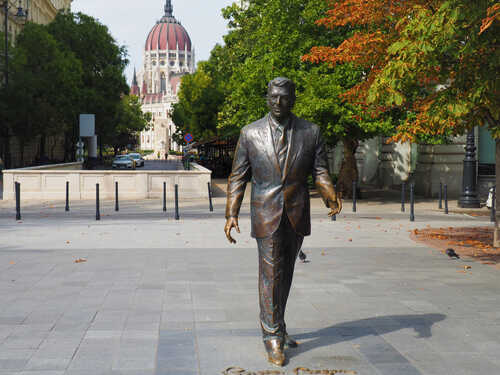
ESPN’s Ryan Clark ignited a firestorm among conservatives by deriding Louisiana Governor Jeff Landry’s proposal to honor Turning Point USA founder Charlie Kirk with a statue at LSU, a move many see as emblematic of the left’s ongoing campaign against free speech and traditional American values.
Story Snapshot
- Ryan Clark’s criticism of Governor Landry’s Charlie Kirk statue proposal sparks backlash from conservative influencers and Americans fed up with leftist rhetoric.
- The controversy highlights deepening divisions over free speech, conservative recognition, and the legacy of campus activism.
- Conservatives see efforts to honor figures like Kirk as a pushback against progressive dominance in academia and media.
- The incident exemplifies broader frustrations with cultural elites dismissing conservative voices and achievements.
Ryan Clark’s Comments Ignite Conservative Outrage
ESPN analyst Ryan Clark publicly condemned Louisiana Governor Jeff Landry’s proposal to install a statue of Charlie Kirk at Louisiana State University, prompting immediate and widespread backlash from conservative voices nationwide. Clark’s remarks, perceived by many as another example of elitist disdain for conservative leaders, quickly went viral, with prominent MAGA influencers and everyday Americans expressing outrage online and in the media. Many argue that such dismissals reveal a persistent double standard in how public figures treat conservative versus liberal icons on college campuses.
Debate Over Campus Recognition and the Conservative Legacy
At the core of this controversy is the ongoing battle for ideological space on America’s campuses. For years, conservatives have decried what they see as a hostile academic environment, where left-leaning activists and faculty shape the narrative and marginalize opposing views. Governor Landry’s proposal to honor Charlie Kirk—a figure known for his unapologetic defense of free speech, constitutional rights, and conservative student advocacy—was intended as a symbolic reversal of this trend. Supporters argue that recognizing conservative leaders is essential for restoring balance and ensuring all voices are represented in higher education.
https://www.youtube.com/watch?v=somehighlyr
For critics, the push to enshrine Kirk’s legacy is overdue. Many point to years of progressive activism on campuses, where statues and buildings are routinely renamed for leftist figures while conservative contributions go unacknowledged. The uproar following Clark’s comments reflects a broader frustration: conservatives see their beliefs caricatured and their leaders maligned by cultural gatekeepers. In their view, this incident exemplifies ongoing efforts to silence or delegitimize anyone who challenges progressive orthodoxy. Clark’s high-profile platform and dismissive tone only added fuel to the fire.
Free Speech, Media Bias, and the Fight for Fair Representation
Conservative commentators were quick to frame the controversy as yet another battle in the fight for free speech and equal representation. They argue that media personalities like Clark routinely use their influence to undermine conservative values, while progressive figures are celebrated for far less. The debate over the Kirk statue has thus become a flashpoint in broader disputes about who gets to define American culture, whose achievements are celebrated, and whose voices are deemed worthy of public honor. This episode underscores why so many Americans feel alienated by institutions they believe are hostile to their values.
Looking ahead, the controversy over Ryan Clark’s remarks is unlikely to fade quickly. As President Trump’s administration prioritizes restoring traditional values and pushing back against leftist narratives in public life, conservative leaders are expected to continue demanding recognition and respect on campuses and beyond. The fierce reaction to Clark’s critique signals that Americans are not only tired of cultural double standards but are also ready to defend their values, history, and right to be heard. For many, this is about more than one statue—it’s about reclaiming a place at the table for conservative America.