

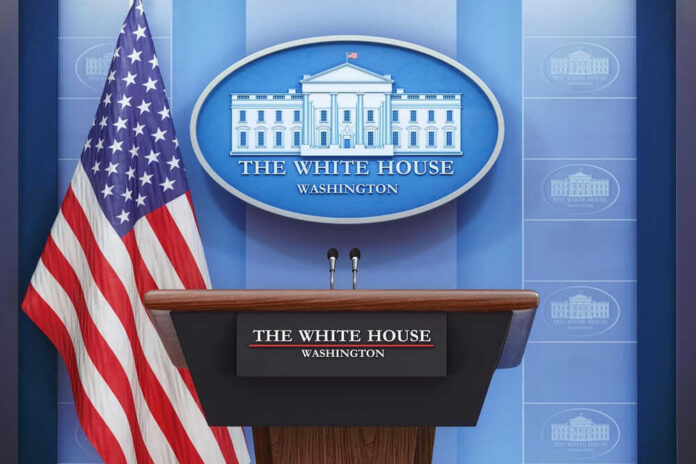
President Trump went on national television to claim China stole U.S. voter registration data in 2020 — and that his own intelligence agencies hid it from him.
Story Snapshot
- Trump delivered a primetime address alleging China accessed U.S. voter registration data during the 2020 election and that the CIA withheld this intelligence from him while he was in office.
- Trump said he is declassifying new documents to back up his claims about Chinese election activity and voting machine vulnerabilities.
- Multiple intelligence assessments — including one from Trump’s own Director of National Intelligence — found China did not change or manipulate any votes in 2020.
- The speech ended with a push for the SAVE America Act, which Trump framed as the solution to future election security threats.
Trump Takes the Case to the American People
President Trump addressed the nation in primetime on July 16, 2026, laying out his case that China interfered in the 2020 presidential election. He said China carried out the “largest ever theft of U.S. election data” and accused the Central Intelligence Agency (CIA) of knowing about it and keeping him in the dark. The White House confirmed the speech would include newly declassified information tied to 2020 election vulnerabilities and voting systems.
Trump also accused Democrats of colluding with China and called on Congress to pass the SAVE America Act to protect future elections. He closed the address with a line that fired up supporters and made clear he sees this fight as far from over. Federal Bureau of Investigation (FBI) Director Kash Patel has separately said he plans to present Congress with evidence of Chinese interference, though the FBI previously withdrew a related report about counterfeit driver’s licenses that had led to firings within the bureau.
What the Intelligence Record Actually Shows
The picture gets complicated when you look at what U.S. spy agencies have said on the record. Then-Director of National Intelligence John Ratcliffe wrote to Congress stating China “sought to influence” the 2020 U.S. federal elections. That’s a real finding. But the Office of the Director of National Intelligence’s March 2021 report went further — assessing with high confidence that China “did not deploy interference efforts” aimed at changing the presidential election outcome.
The Department of Justice and the Cybersecurity and Infrastructure Security Agency (CISA) issued a joint statement saying they found “no evidence” any foreign actor changed votes, altered voter registration data, or disrupted vote counting in 2020. The 2021 Intelligence Community Assessment backed that up, stating no foreign actor attempted to alter “any technical aspect of the voting process, including voter registration, ballot casting, vote tabulation, or reporting results.” There is an important distinction here: China may have sought to influence the election through propaganda and disinformation — but influencing and hacking vote systems are two very different things.
The Gap Between Influence and Interference
Experts who study foreign election threats say there is a clear line between foreign influence — things like propaganda or public statements — and foreign interference, which means actually breaking into systems and changing votes or records. Trump’s speech blended both, which is where critics say the argument breaks down. The intelligence community has consistently found evidence of the first but not the second when it comes to China in 2020.
Trump accuses China of election interference in national address about voting results https://t.co/8FXunJDfMs
— David Perreault (@DavidPerreault) July 17, 2026
Trump’s strongest argument is that newly declassified material may show something prior assessments missed — specifically, that China accessed voter registration databases in ways that were never fully disclosed to him. That claim has not yet been verified by independent sources. Sources familiar with the classified material told Reuters the intelligence “did not show Beijing had manipulated or changed votes.” Until the full declassified documents are public, Americans are left weighing Trump’s word against a broad intelligence consensus — and that is exactly the debate Trump wants to have heading into the next election cycle.
Sources:
cbsnews.com, dni.gov, bloomberg.com, theepochtimes.com, nbcnews.com, timesofindia.indiatimes.com, govinfo.gov, electioncrimebureau.com