

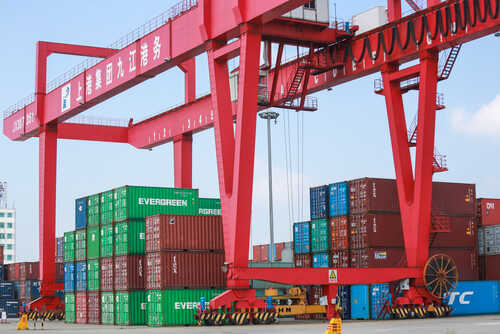
China’s record trade surplus with Africa in 2025 reveals how President Trump’s tariffs are forcing Beijing to reroute its exports, with implications for American manufacturing and global economic power.
Story Snapshot
- China’s trade surplus with Africa in early 2025 nearly matches all of 2024, underscoring a dramatic export pivot.
- Trump’s renewed tariffs on Chinese goods are driving China to flood African markets with manufactured products.
- African economies face rising deficits and increased dependency as Chinese imports outpace local industry.
- Global supply chains are shifting rapidly, with the US taking decisive steps to protect domestic industries.
Trump Tariffs Trigger China’s Pivot to Africa
President Trump’s administration, returning to office in 2025, wasted no time reinstating and increasing tariffs on Chinese products, with rates soaring to 145%. This assertive move was designed to restore American manufacturing strength and challenge China’s relentless export drive. The tariffs, some of the toughest ever imposed, have led to a near 22% drop in Chinese exports to the United States year-on-year. In response, China has been forced to redirect its vast export machine, with Africa emerging as one of the primary new destinations for Chinese goods.
Data from the first five months of 2025 shows Chinese exports to Africa surging by 20.2%, reaching $83.51 billion. Meanwhile, imports from Africa to China rose only 1.6%, widening the trade deficit for African nations to $32.86 billion. The total China-Africa trade hit $134.16 billion, up 12.4% from the previous year. This rapid growth highlights both the effectiveness of US tariffs in disrupting China’s traditional trade routes and the vulnerability of African economies to external economic pressures. For US interests, the shift illustrates how targeted tariffs can influence global supply chains, even as it exposes the risks for developing markets suddenly inundated with foreign goods.
Implications for African Economies and US Interests
African countries now face a challenging environment as their markets are deluged with affordable Chinese manufactured products. Local producers struggle to compete, and trade deficits with China are expanding at record rates. China has attempted to ease criticism by scrapping tariffs on 98% of products from 21 African countries, but this move has done little to close the gap. While African consumers may benefit from lower prices, the long-term danger is dependency and loss of local industry—an all-too-familiar outcome when communist regimes use economic leverage to gain influence.
For conservative Americans, these developments are a reminder of why robust trade protections and America-first policies matter. By forcing China to look elsewhere, Trump’s tariffs are strengthening US manufacturing and sending a message that the US will not be complacent in the face of globalist economic threats. Yet, the surge of Chinese goods into Africa also signals the ongoing need for vigilance: global supply chains are fluid, and economic power can shift rapidly if left unchecked.
Expert Analysis: A Wake-Up Call on Global Trade Dynamics
Industry analysts agree that the surge in China’s exports to Africa is a direct and predictable consequence of the Trump administration’s tariff policy. Experts warn that unless African nations can leverage Chinese investment for local industrialization, they risk becoming mere dumping grounds for surplus Chinese products. For the US, the lesson is clear: decisive action on trade can reshape global flows, but American policymakers must continue to anticipate how adversaries like China will adapt. The widening trade gap in Africa is a stark example of how authoritarian regimes exploit open markets to expand their reach, underscoring the need for strong, constitutionally grounded US policy that prioritizes domestic prosperity and security.
China’s Exports to Africa Are Soaring as Trade to U.S. Plunges https://t.co/jDWdiC3RSt
— C Cortbawi (@bekfaya) September 9, 2025
As China’s trade pivot continues, conservative Americans can take heart that US leadership is once again shaping the world stage—not as passive participants but as defenders of free markets, fair competition, and the values that made America strong. The Trump administration’s actions serve as a timely reminder: when America stands firm, the world takes notice, and the interests of hardworking families and businesses come first.
Sources:
China-Africa trade hits $134.16bn, up 12.4% in the first five months of 2025 – Ecofin Agency
China-Africa Trade Deepening: China-Africa Trade Amidst Economic Challenges – Africa Trade Academy
China Balance of Trade – Trading Economics
Data: China-Africa Trade – SAIS-CARI
China’s exports grow despite tariff turmoil as trade pivots to Africa – Euronews