
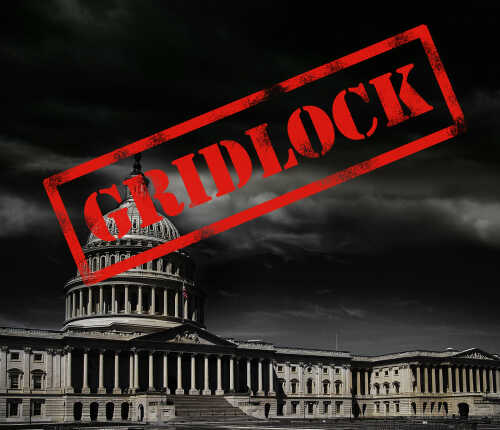
Unchecked government shutdown exposes deep vulnerabilities in America’s political system, threatening economic stability and public trust while Congress remains gridlocked.
Story Snapshot
- Congressional stalemate leaves federal government shut down for over a week with no clear end in sight.
- Millions of Americans endure loss of essential services and economic uncertainty as negotiations stall.
- Repeated shutdowns highlight growing partisan polarization and risks to the function of U.S. democracy.
- Prolonged inaction erodes public confidence and exposes systemic weaknesses in budgetary politics.
Congressional Gridlock Deepens Government Shutdown
On June 17, 2025, a dispute over federal budget priorities and contentious policy riders triggered a shutdown of non-essential government operations. By June 25, the impasse had stretched into its eighth day, affecting millions of Americans and federal employees. Congressional leaders from both parties remain entrenched, unable to reach a compromise, with essential services still running but many employees furloughed. The lack of progress has intensified public frustration and highlighted the fragility of the nation’s legislative process.
Morning Minute: What If They Never Vote to Reopen It? https://t.co/Epksvfx9IS
— Joebagodonuts Summertime (@JoebagodonutsS) October 23, 2025
Historical Precedents Reveal Systemic Vulnerabilities
Recent decades have seen an increase in government shutdowns as budget negotiations become partisan battlegrounds. Previous incidents, such as those in 2013, 2018-2019, and 2023, demonstrated that prolonged shutdowns cause significant economic and social disruption. Although Congress has always eventually voted to reopen government functions, the current scenario raises the alarming possibility of indefinite closure. This extreme situation exposes the limitations and vulnerabilities of the appropriations process, with the risk of cascading effects on governance and public welfare.
Stakeholders Face Mounting Pressures and Uncertainty
Congressional leaders, the President, federal employees, and the general public are among the primary stakeholders grappling with the shutdown’s consequences. Congressional leadership wields significant influence but is hamstrung by partisan divisions. The President, while calling for compromise, has not presented new solutions. Federal workers and unions advocate for job security and timely pay, while citizens demand restoration of critical services. Interest groups lobby for their priorities, adding further complexity to negotiations and decision-making.
Short- and Long-Term Impacts Threaten Stability
Immediate effects of the shutdown include widespread disruption of federal services, lost income for employees, and economic losses for businesses dependent on government contracts. The longer the shutdown persists, the greater the risk of lasting damage to critical infrastructure, erosion of public trust, and deepening political polarization. Industry experts warn that repeated shutdowns undermine the foundation of U.S. governance, and scholars point to constitutional ambiguities that make resolution difficult. These challenges have prompted renewed calls for systemic reform to prevent future crises.
Morning Minute: What If They Never Vote to Reopen It?https://t.co/uyqwj8qfUI
— RedState (@RedState) October 22, 2025
Expert Consensus Points to Urgent Need for Reform
Political analysts broadly agree that legislative gridlock and shutdowns reflect deeper issues within America’s political system. The concentration of power among a handful of decision-makers, combined with intense partisan rivalry, has made it increasingly difficult to resolve budget disputes. Academic experts argue that effective mechanisms are needed to avoid repeating these damaging episodes. Public opinion and media coverage continue to exert pressure on lawmakers, but the current standoff demonstrates the urgent need for practical reforms that safeguard essential functions and restore faith in democratic governance.
Sources:
Government Shutdown Latest: Senate Vote, Trump, Air Traffic Controllers