

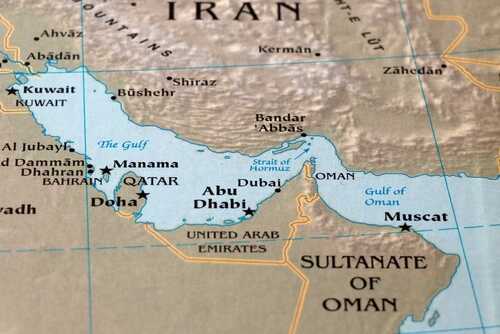
As Marco Rubio heads to the Gulf to sell Trump’s Iran deal and secure the Strait of Hormuz, the stakes for American power, energy prices, and our allies could not be higher.
Story Snapshot
- Secretary of State Marco Rubio is traveling to the United Arab Emirates, Kuwait, and Bahrain to reinforce Trump’s Iran framework and calm a tense region.
- The mission aims to keep the Strait of Hormuz open, protect global shipping, and reassure wary Gulf partners who still do not trust Tehran.[1]
- Trump’s second-term strategy links U.S. security guarantees to Gulf economic and investment commitments, making this trip both diplomatic and transactional.[17]
- The visit comes after a U.S.–Iran memorandum of understanding and a 60‑day window of talks that still leaves big questions on missiles and Iran’s behavior.[2][20]
Rubio’s Gulf Mission: Selling a Deal, Guarding a Chokepoint
United States Secretary of State Marco Rubio will spend Tuesday through Thursday in the United Arab Emirates, Kuwait, and Bahrain on what is now a formally acknowledged diplomatic mission backed by the Trump administration.[1][3] Reporting describes the trip as a chance to “sell” a preliminary memorandum of understanding with Iran directly to Gulf Arab allies that have lived under Iranian missiles and drones for years.[2][3] Rubio’s talks will focus on the Iran framework, regional security, and the future of U.S. commitments.
Coverage from Radio Free Europe and regional outlets notes that Rubio’s visit follows intensive weekend negotiations in Switzerland, where Vice President J.D. Vance said the sides built “a good foundation” for a final deal to end the Iran war.[1][2] The memorandum of understanding reportedly launched a 60‑day period to hammer out details on nuclear limits, sanctions, and the reopening of shipping lanes.[2][20] Rubio now has to convince skeptical Gulf partners this paper deal translates into real safety on the ground.
Why Hormuz and Gulf Skepticism Matter for Americans
The Strait of Hormuz, the narrow waterway off Iran’s coast, carries a huge share of the world’s seaborne oil, which means any closure or attack there hits American wallets through higher fuel prices.[1][20] Iran’s actions during the war, including mines and attacks on shipping, effectively shut down this international waterway and threatened the global economy.[10][20] Trump’s team has already launched “Project Freedom” to escort stranded ships and start reopening the strait, with U.S. military protection proving the concept in early transits.[10]
Gulf states may welcome lower tensions, but several reports say they are deeply uneasy with parts of the emerging Iran deal, including talk of a massive reconstruction fund and limited focus on Iranian missiles.[2][19] Analysts at the Atlantic Council and the Middle East Council explain that Gulf leaders are rethinking their reliance on Washington after being dragged into a war they tried to avoid and seeing Iranian firepower up close.[18][21] Rubio’s task is to rebuild trust while keeping pressure on Tehran, so the deal does not become another weak agreement that lets the regime regroup and threaten U.S. forces, Israel, and Arab partners later.
Trump’s New Gulf Playbook: Tough, Transactional, and Tested
Think tanks tracking the region say Trump’s second term has openly moved U.S.–Gulf ties onto a “transactional” footing, linking security guarantees to Gulf investment and energy cooperation with the United States.[17] That means Rubio’s trip is not just about handshakes and photos; it is about locking in concrete commitments on defense, energy flows, and financial support that serve American workers and strategic interests.[1][17] In plain terms, the message is: America helps protect your skies and tankers, and you help power our economy and stand with us against Iran, China, and Russia.
Rubio’s own record lines up with this harder line. As an analyst note on his appointment points out, he has long seen Gulf allies as essential partners in containing Iran and fighting terror networks across the region.[7] His public comments this year have hammered the danger of Iranian missiles and naval threats, and he has defended operations to strip Tehran of those tools so it cannot hide a nuclear push behind them.[4] For many conservatives, that is the kind of clear red line that was missing under past administrations, where “engagement” often meant cash for Tehran and lectures for our allies.
From Speculation to Official Mission — and What Comes Next
Early talk of Rubio’s Gulf travel started as leaks and media tips, with some reports stressing that the State Department had “not yet officially confirmed” the visit.[5][12] That uncertainty fed online chatter that the trip might be trial balloon politics rather than a set piece of Trump’s Middle East strategy. Those doubts faded once spokesperson Tommy Pigott publicly laid out Rubio’s agenda, including discussions on the Iran memorandum, free transit through Hormuz, and regional peace and stability.[1][3] At that point, the mission clearly moved from rumor to administration policy.
Rubio to visit Gulf capitals
US Secretary of State Marco Rubio plans to visit the UAE, Kuwait, and Bahrain from June 23 to 25 to discuss the recently signed memorandum of understanding between the US and Iran and efforts to ensure unimpeded transit through the Strait of Hormuz,… pic.twitter.com/Oxje5WDpeo
— S p r i n t e r (@SprinterPress) June 22, 2026
Bigger questions still hang over what Rubio can actually secure from Tehran and the Gulf capitals. The Iran memorandum has reopened the Strait of Hormuz on paper and created a 60‑day window for deeper talks on nuclear limits and sanctions relief, but it has not fixed Iran’s missile program or ended its support for militias.[2][20][22] Gulf leaders are already shopping for new security partners and hedging their bets, even as they welcome U.S. naval escorts and air defenses.[18][19][24] For American readers tired of endless wars, weak deals, and $5 gas, the bottom line is simple: this Rubio trip needs to match tough words with firm guarantees, or Iran and its friends will fill the gap.
Sources:
[1] Web – The Trump Administration Just Deployed Marco Rubio to the Middle East
[2] Web – Rubio Heads To Gulf As US Seeks To Cement Iran Framework …
[3] Web – Rubio to Visit Gulf Allies as Trump Administration Seeks Support for …
[4] Web – Marco Rubio travels to UAE, Kuwait and Bahrain to sell Iran accord …
[5] Web – Secretary Rubio’s Travel to Saudi Arabia, Qatar, Türkiye, Italy, and …
[7] Web – Secretary of State Marco Rubio is reportedly preparing … – Facebook
[10] Web – US Secretary of State Marco Rubio will begin a trip to three Gulf …
[12] Web – US Secretary of State Marco Rubio will begin a trip to … – Instagram
[17] Web – This week, I had the chance to question Secretary of State Marco …
[18] Web – Post-War Dynamics: The Gulf at the Center of a New World Order
[19] Web – How the Iran war could change the US relationship with Gulf states
[20] YouTube – Trump’s Gulf Allies Reassess US Defence Umbrella After Iran War
[21] Web – Iran–United States relations – Wikipedia
[22] Web – Before the Iran war, US President Donald Trump’s Gulf Arab allies …
[24] Web – Gulf allies disappointed U.S. didn’t notify about Iran attacks … – …