
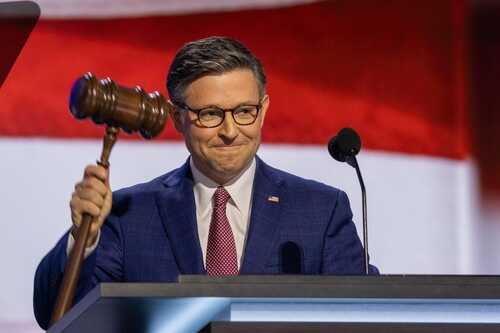
House leadership delays a crucial swearing-in, sparking concern that political gamesmanship is undermining transparency on one of America’s most controversial scandals.
Story Highlights
- Speaker Mike Johnson faces accusations of stalling Rep.-elect Grijalva’s swearing-in to block a vote on releasing Jeffrey Epstein files.
- The discharge petition to force the vote is one signature short, with Grijalva’s seat left vacant during key congressional business.
- The delay exposes sharp partisan tensions and raises questions about government transparency and accountability.
- Experts point to past precedent for swearing in members during recess, fueling criticism of the delay.
Swearing-In Delay Blocks Epstein Transparency Vote
House Speaker Mike Johnson is under fire after postponing the swearing-in of Rep.-elect Adelita Grijalva, whose signature is pivotal for forcing a vote on releasing the Department of Justice’s Jeffrey Epstein investigatory files. Grijalva, a Democrat who recently won a special election in Arizona, would be the 218th signature on a discharge petition led by Rep. Thomas Massie. Without her, the petition stalls, and the controversial Epstein files—long the subject of public scrutiny and bipartisan demands for transparency—remain sealed. Critics claim this move prioritizes political strategy over citizens’ right to know the truth about potential elite misconduct.
The delayed swearing-in comes amid a government funding standoff, with Johnson canceling House votes and leaving no set date for Grijalva’s official induction. Democrats argue this deprives Grijalva’s constituents of representation during a crucial period and accuse Johnson of using the situation to shield the House from a contentious vote. Precedent exists for swearing in members during pro forma sessions, as demonstrated earlier in the year, intensifying criticism that this delay is politically motivated rather than procedural.
Political Tensions and Stakeholder Motivations
At the heart of the dispute are competing interests within Congress. Speaker Johnson’s leadership is focused on controlling the House agenda and averting difficult votes that could expose sensitive information or fracture party unity. Grijalva, having just won her seat, stands ready to represent her district and support efforts for greater transparency regarding Epstein’s high-profile case. Massie and other transparency advocates argue that releasing the files is essential for restoring public trust in government, especially as the Epstein scandal continues to cast a shadow over both parties.
Democratic leaders, including Katherine Clark and Hakeem Jeffries, have condemned the delay, emphasizing the importance of every American being fully represented in Congress, particularly when major accountability votes are at stake. The impasse reflects broader partisan divisions, with Democrats framing the delay as obstruction and Republicans defending it as strategic management in a turbulent legislative environment.
Impact on Public Trust and the Rule of Law
The immediate effect of the swearing-in delay is the absence of representation for thousands of Arizonans at a time of heightened legislative activity. On a national scale, the maneuver deepens public skepticism about Congress’s willingness to confront powerful interests and ensure transparency in cases involving elite wrongdoing. Legal experts stress the importance of following established precedents and democratic processes, warning that repeated delays may erode faith in constitutional protections and the rule of law. The handling of the Epstein files—and the controversy over the discharge petition—could have lasting effects on congressional accountability and future investigations.
Short-term consequences include potential government shutdown fallout and mounting frustration among voters demanding transparency. Long-term, the controversy threatens to intensify political polarization and undermine efforts to hold public officials and institutions accountable for their actions. The episode serves as a stark reminder of the stakes when political maneuvering collides with core American values like open government and equal representation.
Expert and Media Perspectives on the Delay
Industry observers note the rarity of delaying a swearing-in for procedural reasons, especially when past examples show it can be accomplished during recess. Reports from leading outlets consistently link the delay to the Epstein vote, despite Johnson’s denial that his actions are politically motivated. Experts maintain that genuine transparency would best serve the public interest, while partisanship only fuels distrust. With the House remaining in recess and no clear timeline for Grijalva’s induction, calls for accountability and openness are likely to intensify, keeping the spotlight on congressional leadership and the unresolved Epstein files.
Johnson Postponing New House Member’s Swearing-in to Dodge Epstein Vote, Says Massie https://t.co/geRwbzz84T
— T (@Rifleman4WVU) October 8, 2025
As the nation watches, the outcome of this standoff will set an important precedent for how Congress balances political strategy with its fundamental responsibilities to the American people. If transparency and accountability are sacrificed for short-term gain, citizens may be left questioning whether their voices—and their values—are truly represented in Washington.
Sources:
Mike Johnson faces scrutiny for delaying swearing-in, stalling Epstein files vote — Axios
Democrats accuse Johnson of stalling new member to block Epstein vote — AOL
Shutdown, Epstein files controversy collide in House — Axios
Mike Johnson refuses to swear in new Democrat amid shutdown, Epstein vote — The New Republic