

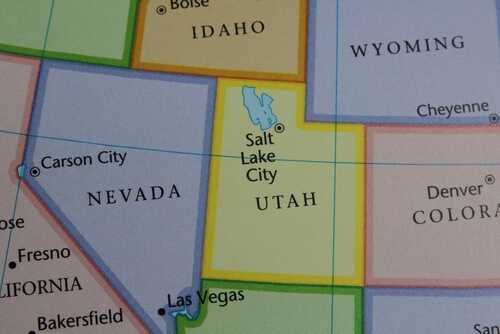
Judicial overreach now threatens Utah’s legislative authority as a judge orders politicians to redraw congressional maps—or face unelected activists submitting their own, raising alarms for every American who values constitutional checks and balances.
Story Snapshot
- A Utah judge has ordered the legislature to redraw congressional maps by September 24, 2025, citing violations of a voter-approved anti-gerrymandering initiative.
- If lawmakers fail to comply, plaintiffs and third parties—outside the legislative process—are allowed to submit their own maps for court consideration.
- The ruling sharply escalates tensions between judicial power, legislative authority, and direct democracy, with national implications for congressional control.
- Conservatives warn this judicial intervention undermines the will of elected representatives and could set a precedent for activist-driven redistricting elsewhere.
Utah’s Redistricting Battle: Courts Versus the Legislature
On August 26, 2025, Utah’s Third District Court Judge Dianna Gibson issued an order that the state legislature redraw congressional maps by September 24, 2025. The decision follows a years-long dispute centered on Proposition 4, a 2018 voter initiative that created an independent redistricting commission and banned partisan gerrymandering. The legislature, maintaining its traditional authority, later repealed key provisions of Proposition 4 and enacted its own maps in 2021, igniting legal challenges from advocacy groups. Judge Gibson’s ruling asserts that the legislature’s action bypassed voter intent, mandating a new map that meets the standards of the original initiative.
This conflict highlights a growing trend of judicial intervention in state-level redistricting. The core of the dispute is not just about Utah’s congressional lines, but about who holds the constitutional right to draw them. Proponents of the court’s decision argue it upholds direct democracy and the sanctity of voter initiatives. Critics, particularly conservatives and the Utah Republican Party, argue that the judiciary is overstepping, eroding legislative authority and potentially opening the door to unelected third parties influencing the makeup of Congress—a serious concern for anyone wary of government overreach and activist interference.
Direct Democracy or Judicial Activism? The Stakes for Constitutional Balance
Utah’s case sits at the intersection of direct democracy and representative government. In 2018, voters narrowly passed Proposition 4 to create an independent commission. Yet, the Republican-majority legislature, responsible for representing the people’s interests, repealed and replaced those reforms. Lawsuits followed, with groups such as the League of Women Voters claiming the legislature’s maps diluted the voting power of Salt Lake County’s residents, a Democratic stronghold. Judge Gibson’s recent order empowers plaintiffs and even unrelated third parties to submit map proposals if lawmakers fail—effectively transferring redistricting control from elected officials to the courts and external actors. Many conservatives view this as a breach of the separation of powers, undermining both legislative prerogative and the very foundation of constitutional government.
The ruling’s supporters herald it as a “win for democracy,” but its opponents see a dangerous precedent: if courts can override elected legislatures and empower activist groups to redraw districts, similar interventions could soon threaten conservative strongholds nationwide. The Utah Republican Party has decried the decision as judicial activism, warning that it could pave the way for increased litigation and less accountable, less representative redistricting processes in the future.
National Implications: Could This Trend Spread?
Utah is not alone in this battle; similar lawsuits are underway in states like Texas, California, and Indiana, all with their own partisan divides. Legal experts point to a broader trend: judicial enforcement of anti-gerrymandering reforms is gaining traction, but at the cost of constitutional clarity and legislative independence. The role of independent redistricting commissions, established by voter initiatives, is now being tested against the powers reserved for state legislatures under the U.S. Constitution. The potential for third-party and activist map submissions, as now permitted in Utah, could shift political power in unpredictable ways—impacting not just local representation but also the balance of power in the U.S. House of Representatives.
Salt Lake County’s future representation—and Utah’s congressional delegation—hang in the balance. While no direct economic impact is noted, the indirect effects of changing congressional control could influence federal resource allocation, national policies, and the voice Utah has in Washington. For conservatives, the core concern is clear: the erosion of legislative authority and the rise of judicial—and potentially activist—control over electoral processes threaten the principles of limited government, accountability, and constitutional order.
Judge Orders Utah to Redraw Congressional Map: What We Know https://t.co/Jmlh0VVmnj
— Robert Goetz (@robertgoetz0024) August 26, 2025
As Utah’s legislature faces a court-imposed deadline, the battle lines are drawn not just over district boundaries, but over the fundamental question of who governs in America: elected representatives or unelected judges and activists. With the nation watching, the outcome could set a precedent for the rest of the country—and conservatives are right to be alert to the risks posed by this latest wave of judicial intervention.
Sources:
Utah judge rules Legislature violated voters’ right by bypassing Proposition 4
Judge makes ruling in gerrymandering lawsuit over Utah’s redistricting
Utah gerrymander map ruling: What is next for congressional maps?
Utah congressional map redistricting judge
Utah redistricting: A surprise win for Democrats