

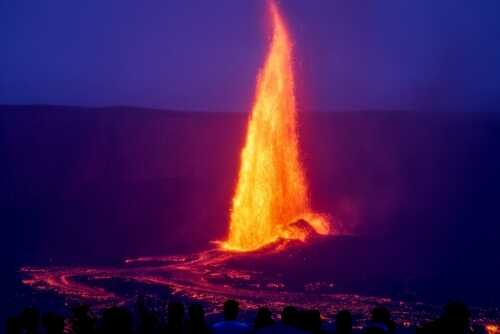
The Kilauea volcano in Hawaii erupted once again, launching streams of lava that soared 1,400 feet into the air, highlighting the ongoing volcanic activity that has captivated geologists and residents alike.
Story Highlights
- Kilauea’s latest eruption marks its 39th episode within a year.
- Authorities closely monitored the eruption, reporting no major damage or injuries.
- Scientists continue to study the volcano’s activity to predict future eruptions.
- Despite the spectacle, the event underscores the potential hazards of living near active volcanoes.
Kilauea’s Persistent Activity
Hawaii’s Kilauea volcano has reaffirmed its status as one of the world’s most active volcanoes with its latest eruption. This dramatic event is the 39th in the past year, underscoring the persistent volcanic activity that defines the region. The eruption was centered around the Halemaʻumaʻu crater, shooting lava fountains up to 1,400 feet high, which quickly captured the attention of scientists and locals alike.
Authorities acted swiftly to monitor the eruption, ensuring public safety remained a priority. Fortunately, no significant damage or injuries were reported, but the event serves as a stark reminder of the power and unpredictability of nature.
Scientific Monitoring and Community Safety
Scientists have been meticulously tracking Kilauea’s activity, focusing on gas emissions, seismic activity, and ground deformation to better understand the volcano’s behavior. These efforts aim to provide timely warnings to nearby communities, minimizing the risk of harm in future eruptions. The continuous study of Kilauea offers invaluable insights into volcanic activity, contributing to global research efforts.
The local community remains vigilant, with many residents accustomed to the volcano’s frequent outbursts. While these events are a natural part of life in Hawaii, they pose significant challenges, particularly regarding safety and environmental impact.
The Broader Implications of Volcanic Activity
The recent eruption of Kilauea highlights the delicate balance between living in harmony with nature and the potential threats posed by active volcanoes. While the spectacle of an eruption can draw interest and tourism, it also serves as a reminder of the constant need for preparedness and respect for natural forces. The ongoing activity at Kilauea is a testament to the dynamic nature of our planet and the importance of scientific research in mitigating risks.
The resilience of the Hawaiian community, coupled with scientific advancements, continues to play a crucial role in managing the challenges posed by one of Earth’s most active volcanoes.