

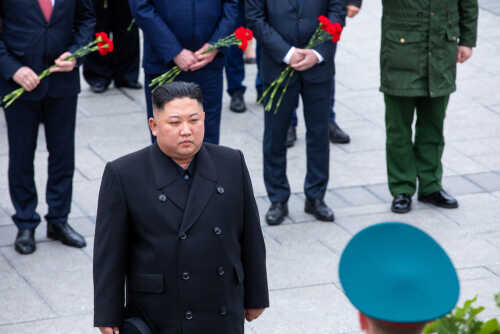
North Korea’s military provocations reach new heights, threatening regional stability and global peace.
Story Highlights
- North Korea escalates military provocations with missile launches and DMZ incursions.
- Deepening military cooperation between North Korea and Russia raises international concerns.
- Kim Jong Un’s regime tests advanced missile systems, challenging security in Northeast Asia.
- Heightened tensions could lead to broader regional conflict.
North Korea’s Escalating Military Provocations
In 2025, North Korea has taken its military provocations to unprecedented levels, drawing international attention and concern. From frequent missile launches into the Sea of Japan to aggressive incursions across the Demilitarized Zone (DMZ), North Korea has heightened tensions on the Korean Peninsula. The regime’s actions are seen as a direct challenge to regional security and an attempt to assert its military prowess.
The provocations have not only raised alarms in South Korea and Japan but also prompted the United States to reinforce its commitment to defending its allies. North Korea’s aggressive posture and its willingness to cooperate militarily with Russia, especially amid the ongoing conflict in Ukraine, have further complicated the geopolitical landscape.
Strategic Motivations Behind North Korea’s Actions
North Korea’s actions are driven by a desire to secure regime survival and gain international leverage. By demonstrating military strength, Kim Jong Un aims to negotiate from a position of power. The regime’s deepening ties with Russia and diplomatic engagement with China are strategic moves to counterbalance US influence in East Asia. These relationships provide North Korea with critical support and diplomatic cover.
North Korea’s provocations often coincide with significant diplomatic events, such as military exercises by South Korea and the United States. This pattern suggests a deliberate strategy to disrupt regional stability and draw attention to its demands. The regime’s willingness to send troops to assist Russia in Ukraine signifies its boldness in challenging international norms.
Implications for Regional and Global Security
The immediate effect of North Korea’s provocations is increased military alertness in South Korea and Japan. The risk of accidental clashes along the DMZ and the further deterioration of inter-Korean relations are significant concerns. In the long term, these actions may accelerate an arms race in Northeast Asia and erode nonproliferation norms.
Economically, the instability could disrupt regional trade and investment. Politically, it places pressure on the United States and its allies to strengthen deterrence measures and missile defense systems. The defense and security industries may see increased demand for technology to counter North Korea’s threats. As the situation unfolds, the international community must carefully manage the balance between deterrence and diplomacy to prevent further escalation.
Sources:
Wikipedia: 2025 in North Korea
CSIS Beyond Parallel: North Korean Provocations Database
Arms Control Association: Chronology of U.S.-North Korean Nuclear and Missile Diplomacy
Council on Foreign Relations: North Korea Crisis Tracker