
A Connecticut teacher faces career ruin for displaying a crucifix—has the war on religious freedom gone too far?
Story Highlights
- A veteran teacher is suspended for refusing to remove a crucifix from her workspace.
- Marisol Arroyo-Castro files a Title VII complaint alleging religious discrimination.
- The school district’s actions are under legal and public scrutiny.
- The case may set a precedent for religious expression in public schools.
Teacher Faces Suspension for Crucifix Display
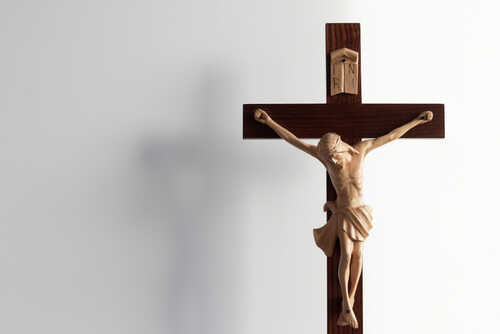
Marisol Arroyo-Castro, a seasoned educator in the Consolidated School District of New Britain, Connecticut, has been thrust into the spotlight for standing firm on her right to religious expression. Ordered to remove a small crucifix from her desk, Arroyo-Castro faced suspension, administrative leave, and a demotion. This clash over religious freedom is reminiscent of a bygone era, challenging the balance between personal rights and public policy in educational settings.
The crucifix had been a fixture on Arroyo-Castro’s desk for nearly a decade without issue. However, in December 2024, a supervisor demanded its removal, citing concerns about religious displays in public schools. Arroyo-Castro’s refusal led to a two-day suspension without pay, followed by a demotion to a non-teaching role. Her attorneys argue that this is a clear case of religious discrimination, filing a Title VII complaint and seeking a federal injunction to halt further retaliation.
Legal Battle and Religious Freedom
The legal proceedings surrounding this case are drawing national attention, particularly as they unfold against the backdrop of recent Supreme Court rulings. Notably, the Kennedy v. Bremerton School District decision in 2022 reaffirmed the right to personal religious expression in public spaces. Arroyo-Castro’s legal team, including the First Liberty Institute, contends that her rights under Title VII of the Civil Rights Act are being trampled, and they are not backing down.
The school district, on the other hand, maintains that its actions are in line with policies designed to ensure religious neutrality. They deny allegations of threatening Arroyo-Castro with termination. The case is now in federal court, and the outcome could have far-reaching implications for public employees nationwide, particularly educators who wish to express their faith.
Implications for Religious Expression in Schools
This case highlights the ongoing tension between individual rights and institutional policies. Religious liberty advocates see Arroyo-Castro’s plight as indicative of a broader trend of eroding personal freedoms in public institutions. If the courts side with Arroyo-Castro, it could embolden other educators to assert their rights, potentially altering the landscape of religious expression in public schools across America.
The implications extend beyond the individual, affecting how school districts nationwide might approach similar situations in the future. The decision could influence policies regarding personal displays in classrooms and solidify protections for religious expression, provided it does not disrupt the educational environment or imply government endorsement.
Community and National Reactions
The case has sparked a wave of reactions, drawing comments from religious groups, legal experts, and the public. Many express concern over what they perceive as an assault on Christian values under the guise of maintaining neutrality. Meanwhile, the school district faces mounting pressure from both legal avenues and public opinion, complicating its stance.
As the legal battle continues, Arroyo-Castro remains in a non-teaching role, her future uncertain but her resolve unshaken. The case serves as a litmus test for how far institutions can go in curbing personal freedoms and could redefine the boundaries of religious expression in public settings.