
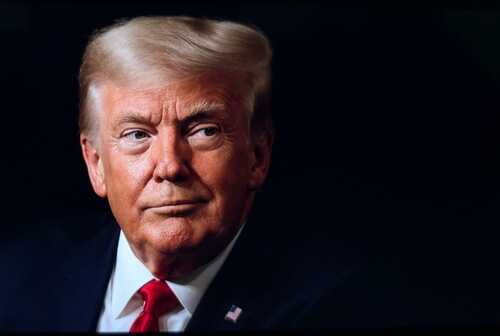
In a town that spent years lecturing Americans about “norms,” the loudest moment before President Trump’s 2026 State of the Union wasn’t a policy line—it was the roar greeting First Lady Melania Trump.
Story Snapshot
- Video from the U.S. Capitol shows First Lady Melania Trump receiving sustained applause as she entered the House chamber for the 2026 SOTU on Feb. 24.
- Melania arrived alongside Barron Trump, a rare high-profile appearance for the Trump family’s youngest member.
- The pre-speech scene included major institutional figures, including Chief Justice John Roberts and Secretary of State Marco Rubio.
- President Trump delivered the address later that evening, with coverage noting topics including the economy, immigration, Iran, and Epstein-related files.
A Viral Entrance That Set the Tone Before Trump Spoke
Footage circulating after the event shows Melania Trump entering the House chamber to enthusiastic applause ahead of President Donald Trump’s Feb. 24, 2026 State of the Union address. The reception became a headline moment precisely because it arrived before any partisan policy fight could begin. Viewers saw a chamber packed with lawmakers and dignitaries reacting to a First Lady whose public appearances have often been measured, controlled, and relatively rare.
Melania’s arrival also included Barron Trump, underscoring the “family” dimension of a night typically dominated by speeches, camera cutaways, and political theater. Barron has kept a lower profile than most presidential children, so his presence added to the sense that this was not just another Washington ritual. The clip-driven focus matters: in 2026 politics, the first 30 seconds of video can shape the public narrative before the first paragraph of a transcript is read.
Why the State of the Union Still Matters to Constitutional Government
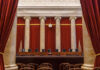
The Constitution requires the president to provide Congress information “from time to time” on the state of the union, and the modern in-person address has been a feature of American government for more than a century. That setting—the House chamber, with members of Congress, the Cabinet, and the Supreme Court present—remains one of the clearest civic reminders that separate branches of government still show up in the same room under the same rules.
That institutional tableau was visible in the reporting around the arrivals. The same pre-speech moments placed Melania Trump near figures like Secretary of State Marco Rubio, representing the executive branch, and Chief Justice John Roberts, representing the judiciary. Those optics do not prove “unity” in a divided country, but they do reflect continuity: the event proceeds with formal roles intact, even when politics outside the chamber feels like constant escalation.
Trump’s Guest List Optics vs. The Issues Voters Actually Feel
Coverage of the evening noted President Trump’s address touched issues that have dominated kitchen-table conversations since the inflation and border chaos of the early 2020s—especially immigration and the economy. Reports also referenced foreign policy topics such as Iran, along with mention of Epstein-related files. The available material in this research set does not include full speech analysis, but it does confirm the SOTU was framed around high-salience concerns rather than niche cultural messaging.
For conservative voters frustrated by years of runaway spending, “woke” signaling, and bureaucratic overreach, the contrast is hard to miss: the loudest organic-seeming applause in the room was not directed at a trendy slogan, but at a traditional symbol of the presidency—family, formality, and public respect. The evidence here is limited to video and event coverage, so motivations can’t be assigned to every attendee. Still, the reaction itself was unmistakable.
What We Can Confirm—and What We Can’t—from the Video Moment
Multiple outlets documented the timing and setting: Feb. 24 arrivals at the Capitol, Melania Trump’s entrance before the speech, and President Trump’s address later that evening. The “crowd roars” characterization is derived from video and headline descriptions rather than a measurable, official record of crowd volume. No transcript line captures applause intensity, and no comprehensive breakdown is provided showing which members applauded or withheld applause.
Even with those limits, the episode reveals something real about modern political communication: symbols travel faster than policy. A brief entrance can become the clip people share at work, in group texts, and on social media—especially in an era when many Americans distrust corporate media framing after years of one-sided coverage. Whether supporters view it as a cultural “reset” or simply a human moment, the footage became part of the SOTU story.
Crowd Roars for First Lady Melania Trump as She Enters Chamber for 2026 SOTU (VIDEO) https://t.co/6Uudzv7OD2
— The Gateway Pundit (@gatewaypundit) February 25, 2026
For the Trump coalition, the takeaway is practical: attention is shifting back to signals of strength, stability, and national confidence. The applause for the First Lady does not pass legislation or secure the border, but it does indicate momentum in the court of public perception—an arena Democrats leaned on heavily during the Biden years. The next test is whether the administration’s agenda can convert that energy into durable, constitutional governance outcomes.
Sources:
Gallery: President Trump delivers his State of the Union address