
President Trump’s military campaign against drug cartels enters a critical new phase as experts warn the strategy could backfire while cartels continue operating in over 1,200 American cities.
Story Highlights
- Trump’s August 2025 executive order launched first military strikes against cartels designated as terrorist organizations
- Seven major cartels now face lethal military action under expanded wartime authorities bypassing traditional law enforcement
- Experts predict the escalating campaign will backfire as cartels adapt to military pressure across 50 states
- New homeland security task force coordinates military, CIA, and law enforcement operations on American soil
Military Operations Replace Law Enforcement Approach
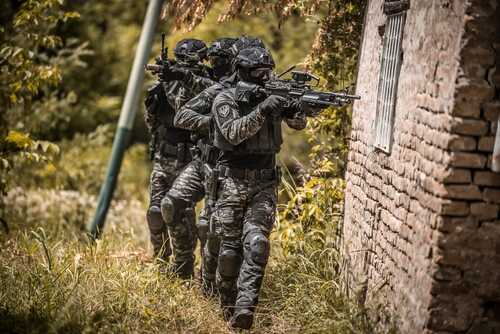
Trump’s secret August 2025 executive order fundamentally transformed America’s approach to combating drug cartels by authorizing direct military strikes against organizations now classified as foreign terrorist groups. The September 2 attack on a Tren de Aragua vessel in the Southern Caribbean marked the first operation under this new framework, with the administration promising additional strikes to follow. This represents a dramatic shift from traditional law enforcement tactics to treating cartel members as enemy combatants subject to lethal military action.
The terrorist designation unlocked powers under the 2001 Authorization for Use of Military Force, originally designed to target al-Qaeda after 9/11. Seven major organizations face military action: the Sinaloa Cartel, Jalisco New Generation Cartel, Cártel del Noreste, Tren de Aragua, MS-13, Gulf Cartel, and La Nueva Familia Michoacana. The CIA received authorization to use lethal force against these criminal organizations, expanding the campaign beyond traditional military boundaries into intelligence operations worldwide.
Domestic Security Operations Expand Federal Powers
A new homeland security task force coordinates military, intelligence, and law enforcement agencies to target cartels operating in all 50 states and 1,286 American cities. The terrorist designations enable expanded surveillance, asset freezing, and enhanced criminal penalties against suspected cartel operatives on American soil. The Secretary of Defense now determines how military forces can be deployed domestically, raising constitutional questions about the military’s role in domestic law enforcement operations.
The fentanyl crisis, which killed nearly 100,000 Americans last year, provided justification for this unprecedented escalation. Trump’s administration characterizes the crisis as “sophisticated irregular warfare targeting American society, with cartels serving as proxies in a broader strategic campaign coordinated by China.” This framing connects the cartel war to broader geopolitical competition while expanding executive powers to combat what officials term an existential national security threat.
Expert Warnings About Strategy Backfire
Foreign affairs expert Mauricio Meschoulam from Universidad Iberoamericana warns Trump’s approach prioritizes “the spectacle of headline-grabbing blows against criminals” over substantive results that actually reduce drug trafficking. Defense analysts note that previous counter-narcotics efforts failed due to “whack-a-mole tactics” without a defined victory condition or actionable strategy for long-term success. The current campaign faces similar strategic gaps despite its military escalation.
Trump’s war on cartels enters new phase as experts predict what’s next https://t.co/16sPCwXuI2
— Fox News Politics (@foxnewspolitics) October 15, 2025
Legal specialists question Trump’s authority to conduct these operations, particularly regarding drone strikes and overseas raids in countries that haven’t consented to U.S. military action. The War Powers Resolution requires congressional approval for extended conflicts, though Trump’s “armed conflict” designation could allow him to bypass this constitutional check. International lawyers express concern about sovereignty violations, especially given the UN’s previous condemnation of U.S. military action in Panama as a “flagrant violation of international law.”
Sources:
2025 United States war on cartels
Donald Trump Declares War on the Cartels: His Plan Could Change Everything
Heavy-handed threats and headline-grabbing moves: the Trump show reaches the war on drugs