
Trump is betting that a renewed focus on kitchen‑table affordability can both steady a bruised GOP and finally undo years of Biden‑era economic damage that families are still feeling every month.
Story Snapshot
- President Trump has launched an affordability-focused messaging tour in northeastern Pennsylvania after Republicans’ rough off‑year elections in several blue-leaning states.
- The tour aims to reconnect with working- and middle-class voters still squeezed by Biden-era inflation, energy costs, and runaway federal spending.
- Trump is contrasting his past and current economic record with Democrats’ failures, emphasizing jobs, wages, border security, and deregulation.
- The White House is using the tour to frame affordability as a constitutional, limited-government issue—not just a talking point for the next election cycle.
Trump Turns Election Setbacks into an Affordability Offensive
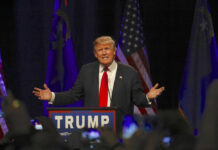
President Trump kicked off his new affordability-focused roadshow Tuesday in northeastern Pennsylvania, choosing a battleground region where working families are still digging out from Biden-era inflation and high prices. The stop marks the first leg of a broader messaging blitz designed to steady the White House after Republicans suffered disappointing off-year election results in New Jersey, Virginia, and New York City. Rather than downplay those losses, Trump is using them as a wake-up call to sharpen his message on cost-of-living pain.
Trump’s advisers see the affordability tour as a chance to reconnect with suburban and blue-collar voters who swung away from Republicans in local races but remain deeply frustrated with grocery bills, energy costs, and property taxes. By starting in Pennsylvania, the president is highlighting a state that feels every shift in energy policy, manufacturing regulation, and federal tax changes. The tour is structured around town halls, factory visits, and small-business roundtables focused squarely on how federal policy hits family budgets.
Linking Biden-Era Inflation to Today’s Household Squeeze
Trump’s core argument on the road is that today’s affordability crisis did not appear out of nowhere; it is the lingering fallout of Biden-era stimulus, regulatory expansion, and anti-energy policies that flooded the economy with cheap money while choking off productive capacity. In his remarks, Trump draws a straight line from Washington’s past overspending and hostility to domestic energy to the higher mortgage rates, utility bills, and credit card balances that older, fixed-income, and working families now face every day.
At these events, Trump is reminding voters that during his first term, jobs and wages rose together while inflation stayed low, giving families real purchasing power instead of paper gains. He points back to earlier tax relief, deregulation, and unleashed American energy as proof that limited government and pro-production policies can cut costs without new bureaucracies. The framing is deliberate: affordability is not a new government program, but the result of getting Washington out of the way so markets can work and families can keep more of what they earn.
Affordability as a Constitutional and Cultural Battle
Beyond economics, the tour casts affordability as part of a broader fight over the size and purpose of the federal government. Trump argues that when Washington spends far beyond its constitutional bounds—funding expansive social engineering, DEI bureaucracies, and climate schemes—ordinary Americans pay twice: once through taxes and again through hidden inflation. By tying pocketbook issues to federal overreach, the president is speaking directly to conservatives worried about liberty, fiscal sanity, and the long-term solvency of Social Security and Medicare.
The messaging also taps into cultural frustrations among Trump’s base, who watched the prior administration prioritize woke agendas and open-borders policies while dismissing concerns about rising prices as “transitory.” Trump’s team is carefully linking border security to affordability, arguing that uncontrolled illegal immigration strains schools, hospitals, and housing markets, driving up costs for citizens. The White House wants voters to see every dollar diverted to support illegal entrants as a dollar that could have eased the burden on veterans, families, and retirees who played by the rules.
Rebuilding Trust After Off-Year Election Losses
Inside Republican circles, the off-year setbacks have fueled questions about whether the party’s message has grown too national and abstract, missing daily struggles of older homeowners, small-business owners, and parents. Trump’s affordability tour is a response to that critique, aimed at proving he still understands the basics: food, fuel, housing, and safety. By holding events far from Washington, he is signaling that policy will be shaped where people live and work, not inside think tanks and federal agencies.
The success of this tour will be measured less by applause lines and more by whether Republicans can rebuild a coalition that includes suburban voters, union households, and rural communities who once thrived under Trump-era policies. If the affordability message sticks, it could reset the national conversation away from abstract ideological fights and back toward the consequences of big-government experiments on real families. For conservatives, the stakes are clear: either reclaim economic common sense now, or watch permanent government bureaucracy harden around Biden-era excess.