
When 6,000 North Korean military engineers and construction workers pack up and head to Russia to rebuild war-torn Kursk, you have to wonder—how did we get to a world where communist regimes are trading labor like it’s baseball cards, and Washington left our borders wide open to chaos for years?
At a Glance
- North Korea is sending 6,000 military construction and demining specialists to Russia’s Kursk region to help rebuild after Ukrainian attacks.
- This marks an unprecedented military labor export, deepening the alliance between Kim Jong Un and Vladimir Putin.
- South Korean and U.S. intelligence agencies are alarmed over technology transfers and sanctions evasion.
- North Korean workers will be under strict state control, with most wages likely going to Kim’s regime.
North Korea Ships 6,000 Workers to Russia: A Communist Alliance Grows
North Korea’s regime is dispatching 6,000 military engineers, construction workers, and mine-clearance specialists to Russia’s Kursk region this summer in a deal that has Western observers, and anyone with a lick of common sense, raising their eyebrows—and not just a little bit. The operation, green-lit after a June 2025 visit by Russian Security Council head Sergei Shoigu to Pyongyang, is set to begin in July or August, with North Korea already recruiting the necessary personnel.
Kursk, a region battered by months of war on the Ukrainian border, desperately needs manpower to rebuild roads, bridges, and critical infrastructure. But instead of looking to its own workforce, Russia’s answer is to import thousands of North Korean soldiers—yes, soldiers—under the guise of reconstruction. This is not the first time North Korea has sent laborers abroad for hard currency, but the sheer scale and open military character of this deployment is unprecedented since the end of the Cold War. Kim Jong Un’s workers aren’t just slinging hammers; they’re also clearing mines, a job that’s as dangerous as it is politically charged.
A Marquee Deal for Dictators—And a Nightmare for Sanctions Enforcement
The arrangement is a win-win for two autocrats who have spent years thumbing their noses at the international order. Russia gets a critical injection of labor to patch up its war machine and battered border regions, while North Korea—long starved of foreign currency—gets a pipeline of cash and, perhaps more importantly, access to Russian military technology. South Korean and U.S. intelligence agencies are watching with alarm, and for good reason. Not only does this deployment skirt United Nations sanctions designed to stop North Korea from exporting labor, it also sets a precedent for militarized workforces operating abroad—straight from the pages of a dystopian novel.
Kim’s regime is notorious for controlling its overseas workers with iron fists, seizing most of their wages and using the money to prop up its nuclear ambitions. So, while the workers in Kursk might technically be “helping” rebuild, make no mistake: this is about keeping the Kim dynasty flush and the Russian war effort humming. And as the world saw under the last administration, these kinds of alliances thrive in the vacuum left by weak Western leadership and toothless border policies.
The West’s Response? More Handwringing, Less Action
Intelligence briefings from Seoul and Washington have labeled the operation a major threat to regional security and a slap in the face to international sanctions. South Korea’s National Intelligence Service has been sounding the alarm, reporting that North Korea has already sent as many as 10,000–12,000 troops to Russia since late 2024, with another 3,000–4,000 earlier this year. These numbers are a stark reminder that when aggressive states want to rewrite the rules, they don’t wait for permission from global bureaucrats.
For residents of Kursk, the arrival of North Korean workers may mean a faster return to “normal”—but it also means living under the watchful eyes of a foreign military presence. For the workers themselves, life will be tightly controlled, their freedoms restricted, and their earnings siphoned back to Pyongyang. And for the international community? This deployment is a test: will the world let rogue states walk all over sanctions and basic decency, or will there finally be consequences for this kind of backroom alliance?
A Dangerous Precedent for Dictators—and a Wake-Up Call for the West
Leading experts on North Korea, like Andrei Lankov, say this operation could be a trial run for mass labor exports—a new normal for a regime that has few ways to earn foreign exchange and even fewer scruples about how it gets it. The transactional, strategic relationship between Moscow and Pyongyang is a direct response to years of failed Western policy and open borders. It’s a reminder that when America lets its guard down, dictators fill the void with whatever deal suits them best—no matter the risk to global security or to the values we claim to defend.
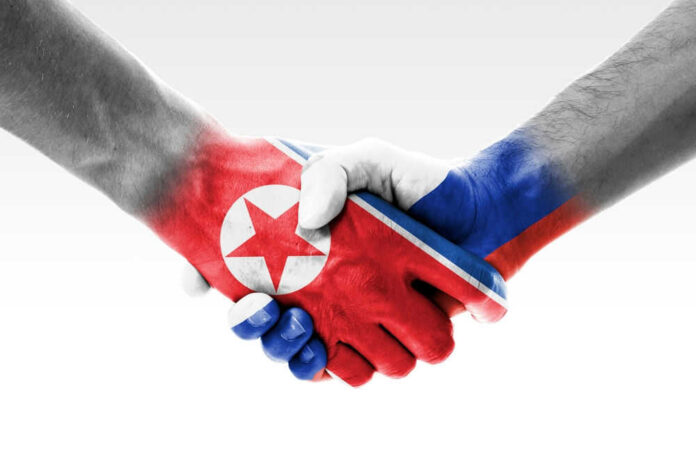
While the Biden administration’s memory drifts into the sunset, the world is left grappling with the fallout of years of weak leadership and reckless spending. The Kursk deployment is not just a story about two dictators shaking hands; it’s a warning shot to anyone who still believes that the West can afford to ignore the consequences of appeasement, open borders, and endless moralizing at the expense of hard reality.