

Governor Gavin Newsom’s $3.8 billion Homekey program planted homeless housing projects in some of Los Angeles’ most desirable neighborhoods, and reporters found almost no real oversight of the money.
Story Snapshot
- Homekey grew from an $800 million pandemic program into a $3.8 billion statewide effort funding 261 projects.
- State officials say the program will house more than 175,000 Californians, but critics say oversight was thin.
- Reports show some Los Angeles Homekey sites brought hundreds, and in some cases over 1,200, police calls.
- California’s Attorney General sued a nonprofit and developer over failed Homekey projects, alleging fraud.
- State auditors found no single system to track how homelessness money was spent or whether it worked.
A Program That Ballooned to $3.8 Billion
Newsom launched Homekey in July 2020 as a pandemic emergency measure, using state and federal money to buy hotels and motels for homeless housing. The program later expanded to $2.75 billion, then grew again. By 2026, California had awarded $3.78 billion for 261 projects the state says will eventually house more than 175,000 residents over their lifetimes.
The state’s own program rules allow local governments to convert hotels, motels, hostels, single-family homes, apartments, and even manufactured housing into permanent or short-term shelter. In Los Angeles County, one Round 2 award turned a 40-room property in Boyle Heights into interim housing for homeless youth, showing how these decisions get made block by block, not just in Sacramento budget documents.
Quiet Neighborhoods Turned Into Hot Spots
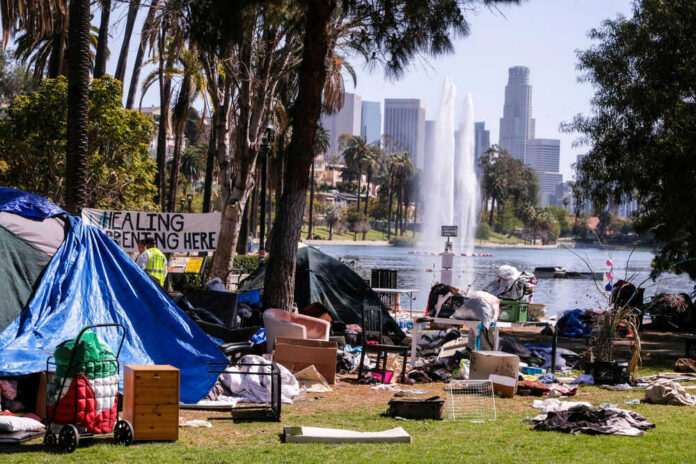
Reporting on Homekey sites found that some of Los Angeles’ most desirable neighborhoods became unexpected homes for troubled housing complexes. Certain developments, including entire apartment buildings, drew hundreds of police responses, with some locations logging more than 1,200 incidents. That kind of impact lands hardest on families who never got a vote on whether a project moved in next door.
State press releases tout Homekey as a success story, pointing to units built and residents served statewide. Those numbers matter, but they say nothing about what happens on a specific street once a project opens. Residents in affected areas were largely left reacting after placement decisions were already finalized, not consulted beforehand.
Oversight Failures Pile Up
An investigation into Homekey’s records found the program came with little built-in oversight from the start. Fewer funders meant fewer checks, and some projects faced construction delays, blown budgets, or outright fraud allegations. State officials also refused to publicly detail how they vetted a follow-up program called Homekey+, leaving taxpayers guessing about basic accountability.
Breaking News
Shocking new figures show LA homeless count spikes despite billions poured into crisisLos Angeles’ most expensive crisis is moving in the wrong direction.
Shocking new numbers show that despite spending nearly $3 billion a year on homelessness programs, the city… pic.twitter.com/baguXinJWL
— News News News (@NewsNew97351204) July 23, 2026
California’s Attorney General sued the nonprofit Step Up and developer Shangri-La in civil court, accusing them of fraud and breach of contract tied to Homekey projects, and demanding money back. Separately, the state auditor found multiple inconsistent systems for tracking homelessness spending, and a bill requiring annual reporting was vetoed before a later version finally passed. Taxpayers still lack a clear scoreboard for what $3.8 billion actually bought.
Sources:
hcd.ca.gov, nbclosangeles.com, calmatters.org, laist.com, housing.lacity.gov