

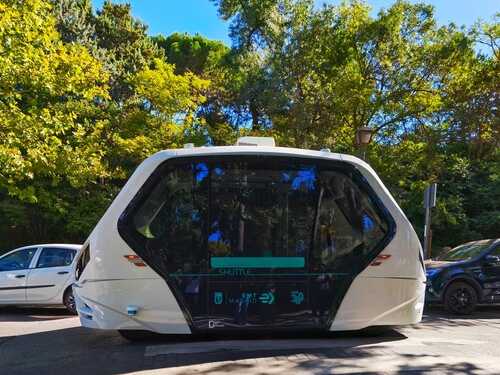
A driverless Waymo robotaxi slammed into a parked car at a California Costco, then just kept rolling away, according to newly surfaced video.
Quick Take
- A 20-second clip shows a light-blue Waymo robotaxi hit a car in a Costco parking lot and continue on its route afterward.
- California law treats leaving the scene of a property-damage crash as misdemeanor hit-and-run, but that label applies to human drivers, not clearly to software.
- Waymo vehicles must record 30 seconds of sensor data before any crash and report incidents to the state, though enforcement against an empty car remains untested.
- Waymo has previously blamed other drivers for crashes and even called itself a “victim” in some collisions, raising questions about who takes responsibility this time.
What The Video Actually Shows
The footage, first reported by the New York Post, captures a Waymo robotaxi crashing into another vehicle in a Costco parking lot in the Bay Area. The car does not stop. It keeps moving, seemingly continuing its assigned trip as if nothing happened. The clip runs just 20 seconds, but it has been enough to spark heated debate online about whether a robot can commit a crime meant for people.
Costco parking lots are notoriously tight, packed with shopping carts, distracted parents, and drivers hunting for spots. Add a self-driving car into that mix and the margin for error shrinks fast. The video does not show serious damage, but it does show something conservatives should care about: a machine making a judgment call with zero accountability standing behind it in the moment.
Does California’s Hit-And-Run Law Even Apply Here
California Vehicle Code Section 20002 requires any driver involved in a crash causing property damage to stop and exchange information. Skipping that step is a misdemeanor, punishable by up to six months in jail. The law was written with a human behind the wheel in mind. Nobody wrote it expecting a car with no driver, no passenger, and no obvious way to “stop and exchange information” on its own.
That gap matters. If a person had been driving that Waymo and rolled away, police would likely call it exactly what the headlines already are calling it. But when the “driver” is a computer program owned by a trillion-dollar tech company, the legal path gets murky fast, and murky is exactly where corporations like to operate.
What Regulators Already Require From Companies Like Waymo
California does not leave autonomous vehicle companies entirely off the hook. State rules require manufacturers to report any collision involving property damage, injury, or death within ten days. Vehicles must also store sensor data covering the 30 seconds before impact, giving investigators a digital black box to review. On paper, that sounds like solid oversight. In practice, it means the public often waits on the company’s own paperwork before anyone in government reacts.
Newer state legislation, arriving in 2025 and expanding through 2026, pushes manufacturers to report even more collision and disengagement data directly to the Department of Motor Vehicles. That is a reasonable step. But reporting a crash after the fact is not the same as stopping one, and it is certainly not the same as a human being held responsible on the spot.
Waymo’s Track Record Cuts Both Ways
Waymo has not been shy about defending its cars when other drivers cause the damage. In Las Vegas, the company said an unoccupied Waymo “did nothing wrong” after an SUV slammed into it. In San Francisco, Waymo has said it may report incidents to police when its cars are “the victim of a crime,” even sharing photos to help investigators. That posture works fine when Waymo is the injured party. It gets far more complicated when the Waymo is the one that caused the damage and drove off.
Other incidents show the pattern is not new. A hit-and-run driver once slammed into a Waymo in downtown Los Angeles, injuring three people, and the robotaxi was the victim that time. In San Francisco’s Outer Sunset, a driver fled on foot after hitting a Waymo carrying two passengers. Those cases built sympathy for the company. This Costco video flips the script, and Waymo has not yet offered the same kind of detailed public explanation.
Why This Story Will Not Stay Small
Robotaxis are expanding into more American cities every year, and with that growth comes more moments like this one. Parents pushing carts, kids weaving between cars, and now a fleet of driverless vehicles making split-second decisions with no person to answer for a mistake. Common sense says accountability should not evaporate just because there is no human hand on the wheel. Until lawmakers catch up, drivers and shoppers alike are left trusting software with the same responsibility once reserved for people.
Sources:
nypost.com, theverge.com, cbsnews.com, tahmazianlaw.com, victimslawyer.com, leginfo.legislature.ca.gov, reddit.com