
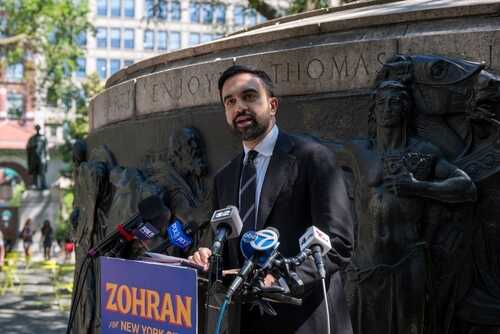
In a Brooklyn Judaica shop, a granddaughter of Holocaust survivors told Mayor Zohran Mamdani his rhetoric is fueling antisemitism — and she said it to his face.
Story Highlights
- A Jewish activist confronted Mamdani at Eichler’s in Borough Park over rising antisemitism.
- Rabbis earlier warned Mamdani that his words about Israel raise safety fears for Jews.
- Mamdani has said there is “no tolerance for antisemitism” and rejects prejudice.
- New York remains a hotspot for antisemitic incidents, adding urgency to the debate.
Direct Confrontation Inside Borough Park Judaica Store
On September 2, inside Eichler’s Judaica in Borough Park, activist Stephanie Benshimol told Mayor Zohran Mamdani, “It’s because of you that we have so much antisemitism,” and accused him of having “chutzpah” for visiting before the Jewish New Year. Reports described the exchange as tense but contained, with the mayor greeting staff before the remarks. The incident unfolded in a heavily Orthodox neighborhood, amplifying its symbolism during a sensitive holiday period.
The exchange followed weeks of friction over Mamdani’s comments about Israel and its leaders. Critics point to his hard-edged line about Prime Minister Benjamin Netanyahu and say the language blurs the line between policy critique and attacks that heighten fear among Jews. Supporters insist criticism of a government is fair game. The clash at Eichler’s showed how those larger arguments now land at street level, where Jewish families shop and pray.
Rabbis Warned the Mayor About Safety Concerns
On August 11, city rabbis met with Mamdani at City Hall and warned that his rhetoric “turns up the temperature” and can have “real consequences” for Jewish New Yorkers. The Mayor’s Office to Combat Antisemitism organized the session, signaling an institutional response to growing anxiety. Some participants left saying they heard no clear pledge to soften his language, while others called the talk candid and productive, with next steps still expected.
Local coverage tied those warnings to recent violence and a rally against antisemitism. Faith leaders said the mood has darkened, with many congregants reporting fear on the streets and in schools. This is not an abstract debate to them. It is about whether heated political messaging makes Jewish residents feel targeted in daily life. That is why the words of public officials draw such intense scrutiny now.
What Mamdani Says About Antisemitism and Israel
Mamdani has publicly stated there is “no tolerance for antisemitism” in New York City and that the city must root it out. He argues that criticism of a nation’s policies should never be treated as criticism of a people or a faith. He has condemned antisemitic vandalism and called for stronger anti-hate efforts. Those statements form the backbone of his defense against claims that his rhetoric endangers Jewish New Yorkers.
Pro-Israel heckler slams Mayor Mamdani over rise of antisemitism during visit to NYC Judaica shop https://t.co/ky8sGWQVZX pic.twitter.com/tnkh7h1YAu
— New York Post Metro (@nypmetro) September 3, 2026
Even so, specific phrases still draw fire. A remark that “Benjamin Netanyahu is not welcome in New York City” struck many as needlessly inflammatory. Critics say sharp attacks on Israel’s leaders can bleed into social hostility against Jews, especially when tensions run high. Backers reply that American leaders often face harsh criticism, and that free speech must allow tough words without branding them as bigotry.
Why This Matters to Safety, Community, and Free Speech
New York remains one of the nation’s hotspots for antisemitic incidents, according to audits and news summaries, keeping nerves on edge. That baseline threat shapes how many Jews hear political rhetoric about Israel today. They want firm, consistent actions that protect synagogues, schools, and shops. They also want leaders to speak with care, because one reckless phrase can become a signal for bad actors to act worse.
The Borough Park confrontation captured a broader crossroad. Jewish New Yorkers expect strong protection and clear language that separates policy critique from people hate. City Hall says it is engaging and building plans. Community leaders want measurable steps, transparent funding, and steady tone from the top. With holy days near and memories long, words carry weight. Safety and liberty both demand precision, not provocation.
What Accountability Should Look Like Now
City leaders can lower the temperature and raise trust with a simple approach. First, publish a timeline for concrete anti-hate actions and funding, with public scorecards. Second, set a clear speech standard that rejects collective blame and old tropes, and model it daily. Third, meet in synagogues and schools, not just City Hall, and listen before speaking. These steps would turn promises into proof and calm a community on edge.
The scene at Eichler’s showed how fast words become real life. A woman who carries her family’s Holocaust story confronted her mayor and pleaded for safety and respect. That moment should focus every official mind. Protect Jewish New Yorkers. Guard free speech, but use it wisely. In a city this loud, clarity saves lives, and careful leadership keeps peace on the block and dignity in the public square.
Sources:
nypost.com, youtube.com, jta.org, amny.com, facebook.com, cbsnews.com, jpost.com, nytimes.com