

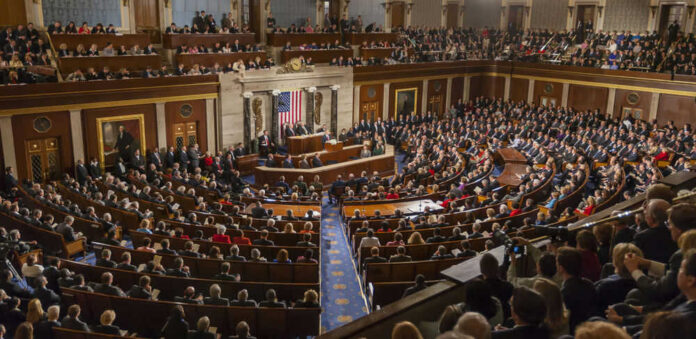
In a rare 413–2 vote, the House formally censured Republican Rep. Chuck Edwards for “persistent unprofessional and inappropriate conduct” toward two young female staffers, a penalty reserved for serious breaches.
Story Highlights
- The House adopted a censure against Rep. Chuck Edwards after an Ethics Committee report and recommendation.
- The committee cited repeated late-night messages, personal comments, and gifts to two aides as misconduct.
- The report said there was no evidence of sexual activity or explicit propositions, narrowing but not erasing the violations.
- The committee said Edwards violated the “spirit” of House rules, underscoring judgment and workplace standards.
House Delivers Rare Censure After Formal Ethics Probe
The House of Representatives voted 413–2 to censure Rep. Chuck Edwards after the Ethics Committee recommended the sanction. The vote marked a strong bipartisan rebuke and adopted the committee’s report into the record. The Associated Press and National Public Radio reported the vote occurred on September 1, 2026, following weeks of public review of the findings. A censure is a formal, public condemnation that signals serious misconduct below expulsion, and it is used sparingly in House history.
The House Committee on Ethics concluded there was substantial reason to believe Edwards engaged in “persistent unprofessional and inappropriate conduct toward two young female staffers.” The report described repeated behavior that fell outside professional norms. The panel’s press release and full report laid out the basis for the censure recommendation issued in early August and transmitted to the full chamber for action. The House’s decisive vote shows it accepted the committee’s findings and wanted to close ranks on workplace standards.
What the Committee Found About Conduct and Boundaries
The Ethics Committee detailed a pattern that included frequent comments about a staffer’s appearance and weight, late-night messages, deeply personal or romantic-seeming texts, uninvited intrusions on personal occasions, paid personal vacations, and thousands of dollars in gifts. The committee said the pattern involved two staffers over a sustained period, which raised concerns about power dynamics and workplace pressure, even without explicit propositions. These specifics grounded the panel’s decision to seek formal discipline.
The committee also drew lines. It stated it found no evidence that Edwards engaged in sexual activity with any staff member or explicitly propositioned them. It concluded the conduct did not meet the letter of federal sexual harassment law or a quid pro quo standard. Still, the panel said the behavior violated the “spirit” of House rules that govern professional workplaces and member-staffer relationships. That distinction explains why the penalty stopped at censure but did not minimize the seriousness the House saw in the case.
Edwards’s Response and the Limits of the Record
Rep. Edwards denied intending romantic or sexual conduct and argued that gifts, compliments, poetry, and social time do not equal sexual misconduct. His counsel emphasized the committee’s own limits, noting it found no sexual activity or explicit propositions. Edwards urged colleagues to reject censure, saying the findings were unfounded. Despite his defense, the House moved forward with the reprimand after the panel’s formal recommendation. An allegation remains an allegation, but a censure is now the House’s official judgment.
House votes 413-2 to censure Rep. Chuck Edwards over misconduct with staffers.
Speaker Johnson backed it. Edwards already dropped his reelection bid. Only two no votes.
Now the same energy for Ilhan Omar and judges who ignore SCOTUS. Consistency or nothing.…— Felix Lima Fernandes (@TheFelix123) September 2, 2026
Some readers will ask what this means going forward. First, the censure stands as a warning to every office: guard boundaries and keep communications, gifts, and travel in professional lanes. Second, the report did not release full interview transcripts or all exhibits in public view here, limiting outside scrutiny of witness details. The House’s overwhelming vote, however, signals the institution felt the visible record was enough to act and set a clear standard for staff safety.
Sources:
ethics.house.gov, nbcnews.com, thehill.com, npr.org, abc11.com, apnews.com