

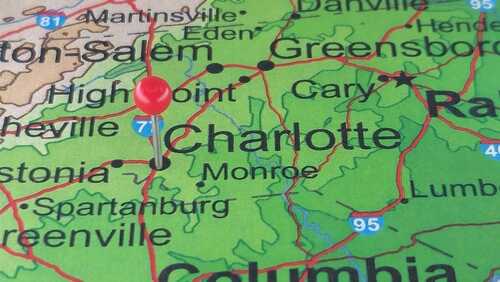
As outrage grows over a brutal murder by a repeat offender, Charlotte’s leadership faces renewed scrutiny for policies that critics argue put innocent lives at risk.
Story Snapshot
- Charlotte residents are outraged after Iryna Zarutska’s murder by a suspect with a long criminal record.
- Mayor Vi Lyles is under fire for her response and for policies seen as soft on repeat offenders.
- Despite citywide crime declines, violent incidents and robberies are rising in Uptown Charlotte.
- The tragedy has reignited debates about public safety, criminal justice reform, and leadership accountability.
Public Safety Concerns Surge After Uptown Murder
The murder of Iryna Zarutska in Charlotte’s Uptown has sparked widespread outrage, as details emerged that the alleged perpetrator had an extensive history of criminal offenses. Residents and commentators argue that this tragedy was preventable—and are demanding answers about why someone with such a record was free to commit another violent act. The city’s leadership, led by Mayor Vi Lyles, is now under intense scrutiny for what many see as a failure to prioritize public safety and crack down on repeat offenders.
Charlotte’s overall violent crime rate has declined in recent years, but this high-profile incident has highlighted a troubling trend: localized spikes in robberies and violence in Uptown, one of the city’s busiest and most visible districts. Crime statistics released by the Charlotte-Mecklenburg Police Department (CMPD) show that while violent crime dropped 25% citywide in the first half of 2025, Uptown experienced a 9.1% increase in violent incidents and a wave of robberies. These numbers have fueled public anxiety and reinforced concerns that the city’s approach to criminal justice is failing to protect law-abiding citizens where it matters most.
Mayor Lyles Faces Criticism for Response and Policies
Mayor Vi Lyles’ response to the murder has become a lightning rod for criticism. Residents and local voices accuse the mayor of downplaying the threat posed by repeat offenders, instead pointing to broad citywide crime statistics that do little to comfort those living in neighborhoods where violence is on the rise. Critics argue that the administration’s focus on reforms and community policing has come at the expense of effective action against habitual criminals—a stance that many Charlotteans see as dangerously out of touch with the realities on the ground.
Compounding frustration is the perception that city leaders are more concerned with image and political talking points than with real accountability. The mayor’s statements have emphasized ongoing efforts and recent decreases in crime, but have failed to address how someone with a lengthy criminal record was able to evade meaningful consequences. Public trust in local government is further eroded as families and business owners in Uptown express fears for their safety and demand stronger measures to keep violent offenders off the streets.
Calls for Accountability and Policy Change Intensify
The Zarutska case has reignited longstanding debates about criminal justice reform, bail policies, and sentencing for repeat offenders—issues that have challenged cities across the country. Charlotte’s experience reflects a broader national tension: while reforms aim to balance fairness and rehabilitation, high-profile tragedies expose critical gaps that put communities at risk. Advocacy groups and concerned residents are now pushing for tougher enforcement, stricter sentencing, and greater transparency in how the city manages individuals with significant criminal backgrounds.
Charlotte mayor slammed over comments after woman stabbed to death on train https://t.co/G5ppwTqI1y
— CHRISTIAN CONSERVATIVE FIGHTERS FOR FREEDOM !!! (@timlatimer365) September 9, 2025
Local law enforcement continues implementing targeted initiatives such as the CORE 13 strategy, designed to address crime hotspots. However, as public outcry grows, city officials face mounting pressure to demonstrate that these efforts are more than just public relations. The balance between reform and public safety remains precarious, and the outcome of the current debate could shape Charlotte’s approach to crime prevention for years to come. Meanwhile, families affected by violence and concerned citizens demand action—not just words—from those in power.
Sources:
Crime uptick in Uptown Charlotte raises safety questions, despite citywide decline – Axios Charlotte
Charlotte, NC Crime Rate: What’s Going On? – Plumides, Romano & Johnson PC
CMPD Releases Charlotte Crime Stats – WCCB Charlotte
Crime Trends in U.S. Cities: Mid-Year 2025 Update – Council on Criminal Justice