
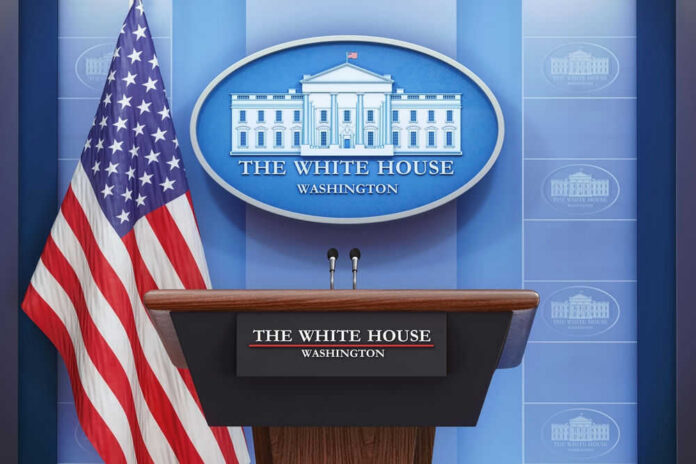
Three of the biggest names in cable and political news lost their front-row seat to the presidency overnight, and the fight over why is now headed to federal court.
Story Snapshot
- Trump announced on Truth Social he was banning CNN, MS NOW and Politico from the White House, calling their coverage “fake news” and a national security risk.
- Reporters from all three outlets had their credentials disabled and were turned away from White House grounds within a day of the announcement.
- Vice President J.D. Vance defended the move, calling the outlets’ coverage “far-left propaganda” undeserving of special access.
- CNN, MS NOW and Politico sued, arguing the ban violates the First Amendment and decades of legal precedent on press access.
Trump Says The Coverage Crossed A Line
President Trump made the announcement plain and fast. “I am proud to announce that, effective immediately, I am banning Fake News CNN, MSNOW… and Politico… from the White House,” he wrote, adding the outlets “constantly write or report fiction or lies”. He later went further, tying the exclusion to national security, saying the coverage relied on “unknown sources” and put the country at risk.
Facing cameras directly, Trump kept it simple. “The stories they wrote are fake,” he said, adding he didn’t have to let the outlets into “the people’s house”. That framing matters. Trump isn’t claiming a security breach with documents or informants. He’s making a judgment call about who gets a badge to his own building, and daring anyone to tell him he can’t.
Vance Frames It As A Fairness Issue, Not Censorship
Vice President Vance picked up the argument during travel to New York, putting the administration’s case in blunter terms. “If you’re going to engage in what is effectively far-left propaganda, why would a Republican White House give you special access?” he said. It’s a fair question for anyone who thinks White House credentials are a right rather than a privilege the administration controls.
Trump also pointed to ongoing coverage of Iran as an example of reporting he considers slanted and unhelpful during sensitive foreign policy moments. Critics note that neither Trump nor Vance has pointed to one specific false story, one named source dispute, or one document showing an actual security breach. The case so far rests on general complaints about tone and negativity, not a documented incident.
The Outlets Say This Is A Constitutional Fight, Not A Content Dispute
CNN didn’t hold back. “We have a right under the U.S. Constitution to do that reporting without hindrance or interference from the government,” the network said, calling a ban “an illegal assault” on that right. Politico promised to “vigorously defend our First Amendment rights against any attempt to restrict them”. The White House Correspondents’ Association agreed, saying flatly the move “violates the First Amendment”.
Press freedom groups piled on too. The Reporters Committee for Freedom of the Press said banning outlets over the content of their reporting “would be flatly unconstitutional”. Aaron Terr of the Foundation for Individual Rights and Expression added that credentials “should not depend on favorable coverage”. All three outlets have now filed suit, and a court hearing is already scheduled.
Legal History Is Not On The White House’s Side
This isn’t uncharted legal territory. A 1977 federal appeals court ruling, Sherrill v. Knight, found that once the White House opens press facilities to reporters, it can’t arbitrarily yank access without a real explanation and a chance to respond. That precedent still stands, and it’s the backbone of the outlets’ lawsuit. Formal, full-outlet bans are historically rare — most past fights involved single reporters, not entire newsrooms.
Trump has tense exchange with CNN's Kaitlan Collins at United Nations after White House media ban: 'You should not be here' https://t.co/6Ki50NM2hw pic.twitter.com/7YVhJccBaF
— New York Post (@nypost) September 23, 2026
Here’s where honest conservatives should separate two questions. Does a president have every right to be furious about coverage he sees as dishonest and unfair? Absolutely, and plenty of Americans share that frustration with legacy media. But turning that frustration into a blanket ban on entire outlets, without naming a single false story or security breach, hands critics an easy argument and a strong legal precedent to use against the White House. If the goal is holding biased media accountable, a messy legal fight that could get overturned in court doesn’t accomplish that. It just becomes the story instead.
What Comes Next
The court hearing will force the administration to explain, on the record, exactly what justified the ban beyond frustration with tone. If Trump’s team can’t point to a specific false story or a real security threat, the legal case gets much harder to win. Whatever people believe about media bias, due process and a documented rationale matter, especially when the fight ends up in front of a judge instead of on Truth Social.
Sources:
cnbc.com, ibtimes.sg, scrippsnews.com, bbc.com, aljazeera.com, npr.org, nbcnews.com, fox29.com