
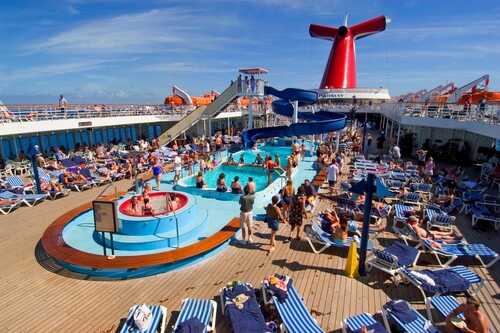
A Carnival cruise ship erupted into chaos when a mass brawl broke out over something as trivial as chicken tenders—raising urgent questions about discipline, personal responsibility, and the decline of basic order in public spaces.
Story Highlights
- Late-night fight involving two dozen passengers broke out over chicken tenders on the Carnival Sunshine as it returned to Miami.
- Viral videos of the brawl have sparked widespread scrutiny of cruise ship security and passenger conduct policies.
- Carnival enforces a strict code of conduct, with involved passengers facing fines, stateroom confinement, and lifetime bans.
- Incident reflects deeper concerns about eroding standards, crowd control, and the impact of social media on public behavior.
Mass Brawl Erupts Over Chicken Tenders Aboard Carnival Cruise
On August 21, 2025, as the Carnival Sunshine approached Miami, a shocking scene unfolded in the Lido Marketplace buffet. Around 2 a.m., a dispute over chicken tenders escalated into an all-out brawl involving approximately two dozen passengers. Shouting, physical altercations, and objects being thrown quickly overwhelmed security, while bystanders captured the chaos on video. These clips spread rapidly across social media, drawing national attention and fierce debate about declining civility and the ability—or willingness—of corporations and authorities to maintain basic order and respect among crowds.
The fight’s absurd origin—an argument over late-night chicken tenders—masked deeper issues. The Lido Marketplace, a 24-hour buffet, is notorious for late-night crowds, often fueled by alcohol and fatigue. Such confined, overstimulated environments can trigger tempers, but many conservative Americans see this as a symptom of a broader breakdown in personal responsibility and respect for rules. Carnival, one of the industry’s largest operators, has faced similar incidents throughout summer 2025, prompting renewed scrutiny over its handling of disruptive behavior and the effectiveness of its zero-tolerance policies.
Zero-Tolerance Policies and Passenger Enforcement
Carnival Cruise Line’s response to unrest has grown increasingly strict. The company enforces a clear code of conduct: passengers who engage in violence face $500 fines, stateroom confinement, immediate removal from the ship, and possible lifetime bans. In the wake of the chicken tender brawl, involved individuals are reportedly under investigation and likely to face these penalties. This approach, while tough on paper, highlights the challenges of enforcement in environments where security staff are often outnumbered and crowd control is difficult. For many observers, the incident exposes the limits of corporate rules in the face of declining personal discipline, raising concern about the consequences of unchecked disruptive behavior on public safety and family values.
Cruise ships, historically, have struggled to manage late-night conduct as passenger demographics have shifted and onboard alcohol sales have increased. The summer of 2025 has been marked by multiple high-profile incidents on cruise ships and at ports—signs that these are not isolated events, but part of a troubling trend. In April, a major fight in Galveston’s cruise terminal led to two dozen passengers being banned, and further altercations have occurred at private islands and while ships are docked. Each event chips away at the perception that travel and leisure spaces are safe, family-friendly environments, heightening frustration among rule-abiding guests.
The Impact of Social Media and Public Perception
Social media has transformed these incidents into viral spectacles, amplifying public outrage and embarrassment. Footage from the Carnival Sunshine brawl, posted by both passengers and content creators, fueled a media frenzy and prompted widespread calls for accountability. While some commentators suggest social media overstates the frequency of such events, others argue that these viral moments reflect a real and growing problem: the erosion of basic norms of behavior in public spaces. For conservative Americans, this trend is particularly concerning, as it signals a departure from the values of respect, order, and personal responsibility that have long defined American culture.
Industry experts and behavioral psychologists point to crowding, alcohol, and perceived scarcity as key triggers for violence in confined settings. However, many cruise industry analysts warn that unless companies like Carnival can restore discipline and deter disruptive conduct, families and law-abiding travelers will look elsewhere for vacation options. The threat of stricter regulations and negative publicity looms, prompting cruise lines to reassess not only their security procedures but also the broader cultural climate aboard their ships.
Industry Response and Broader Implications
Carnival has yet to issue a detailed public statement on the chicken tender brawl, but the company’s enforcement of its code of conduct is clear: those involved face fines, confinement, and likely lifetime bans. Other cruise lines are now reviewing their own policies, anticipating that passengers and regulators alike will demand higher standards of safety and order. The economic impact of these incidents—legal costs, security upgrades, and potential loss of business—is significant. More importantly, the social and political effects are profound: Americans are growing increasingly weary of environments where bad actors undermine the enjoyment and security of the majority. This incident serves as a stark warning that standards, once lost, are difficult to reclaim.
Sources:
Brawl on Carnival ship reportedly over chicken tenders
Carnival cruise chicken tenders brawl
Carnival cruise passengers descend into chaos allegedly fighting over chicken tenders
Massive fight breaks out on Carnival cruise ship over chicken tenders