
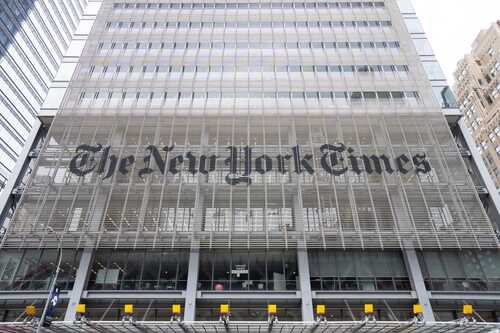
A federal jury hit the New York Times with a $9.25 million defamation verdict after it wrongly tied a college athlete to a fatal shooting, marking a rare courtroom loss for the paper.
Story Highlights
- A Tuscaloosa jury found the New York Times liable and awarded Kai Spears $9.25 million.
- The challenged 2023 article linked Spears to a fatal shooting scene; he denied it as “100% inaccurate”.
- Judges let the defamation claim reach a jury after finding real factual disputes.
- The Times later corrected the article and said it regretted the error.
Jury Verdict Delivers A Costly Lesson To A Media Giant
A federal jury in Tuscaloosa found the New York Times defamed former Alabama basketball player Kai Spears and awarded $9.25 million in damages after a nine-day trial. Jurors heard how a March 2023 article placed Spears at the site of a fatal shooting, a claim he rejected from the start. The verdict marks a rare defeat for the paper and a stark warning that reputation still matters in courtrooms across America.
The New York Times itself acknowledged the loss, stating an Alabama jury ruled it liable for inaccurately saying Spears was present at the shooting scene. That public admission underscores how the case was not about opinion or spin. It was about a concrete factual claim the jury found to be false and harmful. Spears argued the story linked him to a murder he had nothing to do with, and jurors agreed.
What The Article Said, And How The Narrative Unraveled
Reporting from 2023 shows the Times article identified Spears in connection with the shooting location. Alabama Athletics pushed back soon after publication, issuing a statement that refuted the story’s account. Spears then spoke out, calling the report “100% inaccurate.” The immediate denials set up a clear dispute: a named young man versus an anonymous-sourced claim from a national outlet. That clash moved from headlines to depositions and, finally, to a jury box.
Court rulings kept the core claim alive for trial. In late 2023, a federal judge declined to toss the defamation count, allowing Spears to press his case. In May 2026, another judge found there were real factual disputes for jurors to resolve, including whether the article falsely portrayed Spears as involved. Those orders showed this was not a technical lawsuit. It was a straight question of truth and harm, and whether a powerful newsroom got the facts wrong.
Corrections Came Later, But The Damage Was Done
The New York Times later revised its article and said the original version misidentified the person in the car, adding that editors learned through further reporting that it was another individual and that the Times regretted the error. Corrections are important, but they do not erase the initial blast seen by millions. Courts often look at what editors knew and did at the time of publication, not the cleanup after readers and sources point out errors.
Legal analysts often cite United States Supreme Court cases on “actual malice,” which is the high standard public figures must meet. But this verdict shows juries will enforce lines when a news report states a specific and damaging “fact” that misses the mark. The law protects tough reporting. It does not protect false statements that wreck a person’s name. The jury’s message was simple: do your homework first, especially when accusing someone of being near a deadly crime.
Why This Matters To Everyday Americans
This case is about fairness, not politics. A young man said a national paper got a basic fact wrong about a deadly event. He asked a jury to weigh the truth and the harm. The jury sided with him. Many readers have felt steamrolled by big media for years. They see double standards and fast, sloppy rushes to publish. This verdict tells the press to slow down, verify names, and treat people with the same care they demand for themselves.
New York Times loses first defamation trial in more than 50 years to ex-Alabama player Kai Spears https://t.co/6pZWK3eXVi
— Awful Announcing (@awfulannouncing) August 21, 2026
President Trump’s administration now sets the tone for federal agencies, but this ruling came from local citizens applying clear rules. The lesson for every outlet is the same: facts first, then print. Americans can support a free press and also expect accountability when it gets the story wrong. The court system worked here. A jury heard both sides, looked at the record, and returned a verdict that says truth still wins in the end.
Sources:
mediaite.com, sports.yahoo.com, caselaw.findlaw.com, patch.com, rcfp.org, foxsports.com, pbs.org