

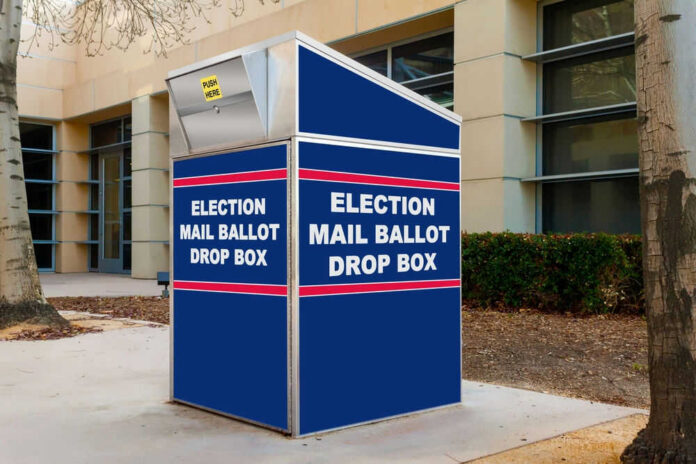
A federal appeals court has just cleared the way for the Postal Service to start screening mail‑in ballots with detailed voter lists and trackable barcodes — a move many conservatives hail as a long‑overdue win for election integrity.
Story Snapshot
- The D.C. Circuit Court of Appeals temporarily allowed the U.S. Postal Service to move forward with a new election‑mail rule tied to President Trump’s order on mail‑in voting.
- The rule would require states to send voter lists and unique ballot barcodes through a new federal portal before any federal mail‑in ballots are accepted.
- Supporters say the change will let law enforcement compare sent and returned ballots and spot fraud or irregularities across the system.
- Critics claim the plan gives Washington too much control over mail voting and could clash with state authority over elections.
Appeals court greenlights major shift in mail‑in voting rules
The District of Columbia Circuit Court of Appeals has temporarily lifted a lower court block, allowing the United States Postal Service to move ahead with a sweeping new rule for federal election mail. The proposal, written to carry out President Trump’s Executive Order 14399 on “Ensuring Citizenship Verification and Integrity in Federal Elections,” would change the Postal Service from a simple carrier of ballots into an active checkpoint for who receives them. This provisional decision opens the door to nationwide changes before the next federal election.
Under the proposed rule, each state that uses mail‑in or absentee ballots for federal races would have to register with a new Federal Ballot Mail Portal created by the Postal Service. State election officials would then submit a list of every voter they plan to send a ballot to, including the person’s name, address, and a unique serialized barcode tied to that voter’s ballot envelopes. The Postal Service would check outgoing ballot mailings against that list and could reject any ballot sent to someone who is not on it.
How voter lists and barcodes would tighten ballot tracking
The rule would also force states to use specially designed ballot envelopes that meet new technical standards set by the Postal Service. Both outbound and return ballot envelopes would carry Intelligent Mail barcodes that are unique to each voter, allowing federal systems to track ballot movement from mailing to return. According to the Postal Service’s own description, this would “assist in ensuring compliance with federal regulations and support law enforcement activities,” giving investigators a way to compare the number of ballots mailed with the number received and flag possible issues.
Backers argue that this level of tracking is overdue after years of chaos around mail‑in voting, delayed counts, and concerns about duplicate or ineligible ballots. By requiring states to submit clean voter rolls up front and tying every ballot to a specific barcode, they say the system will make it harder for bad actors to slip extra ballots into the stream or harvest votes without detection. For conservatives who watched loose mail‑in rules explode during the pandemic, the idea of firm federal standards and real‑time tracking feels like a long‑awaited correction.
Federal oversight vs. state control: the brewing constitutional fight
The push for this rule began with President Trump’s executive order, which directed the Postal Service not to transmit any mail‑in or absentee ballot unless the voter appears on a state‑specific participation list. While states would still decide who is eligible for mail voting, the Postal Service would refuse to carry ballots from states that decline to turn over their voter data. That threat has alarmed many Democratic officials and voting‑rights groups, who say it gives an independent federal agency too much leverage over how states run their elections.
🚨#BreakingNews D.C. Appeals Court Allows USPS to Proceed with Trump's Mail-in Ballot Rule in Half of the Country
A federal appeals court in D.C. on Friday cleared the way for the U.S. Postal Service to move forward with a proposed rule requiring states to submit voter lists and… pic.twitter.com/QFakvFDf4O
— Lynnwood Times (@LynnwoodTimes) July 18, 2026
Critics also warn that making ballot delivery depend on federal approval could clash with the Constitution’s Elections Clause, which gives state legislatures and Congress — not the Postal Service — the power to set rules for federal elections. Legal analysts who opposed Trump’s earlier mail‑voting order argue that turning the Postal Service into a “gatekeeper” over who may vote by mail crosses a line from logistics into election administration. Several letters from lawmakers and state officials stress that any national standards for eligibility should come from Congress, not from a rulebook inside the mail system.
What this means for election integrity and everyday voters
For many conservative voters, the core question is simple: will this rule make it easier to catch fraud and harder to cheat? The rule’s supporters point to the law‑enforcement benefits of matching every mailed ballot to a specific voter record and to a trackable barcode, giving investigators a clear picture of how many ballots went out and how many came back. They argue that honest voters and local clerks have nothing to fear from accurate lists and tight tracking, and that real integrity requires hard data, not slogans.
Opponents counter that sudden changes before a high‑turnout election could confuse voters or slow the mail system if states struggle to meet the new requirements. Some worry that states that refuse to share full voter lists could see their ballots held back, affecting millions of law‑abiding citizens who simply prefer to vote by mail. The appeals court’s temporary order does not settle those questions, but it does mean the Trump administration and the Postal Service can keep moving toward finalizing the rule while the legal and political fight plays out.
Sources:
nypost.com, reuters.com, newsmax.com, democracydocket.com, njslom.org, wltreport.com, content.govdelivery.com, wpr.org