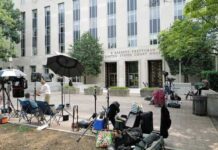

Reports say the Justice Department is probing whether E. Jean Carroll lied under oath about outside funding in her lawsuit against President Trump, raising serious questions about truthfulness in a case that shaped years of media narrative [3].
Story Snapshot
- Reports describe a Department of Justice inquiry into possible perjury tied to Carroll’s 2022 deposition about lawsuit funding [3].
- Coverage says Carroll’s team later disclosed help with legal fees from Democratic donor Reid Hoffman, creating a potential conflict with her sworn statement [1][3].
- The Justice Department spokesperson reportedly issued a non-denial, keeping the probe’s status opaque [1].
- Two civil verdicts in Carroll’s favor remain on appeal, while the reported probe focuses on her testimony, not the jury findings [2].
What Reporting Says About The Possible Perjury Focus
Media accounts say the Department of Justice opened a criminal investigation into whether E. Jean Carroll committed perjury during a 2022 deposition by stating she had no outside funding for her lawsuit against President Trump [3]. Subsequent coverage asserts that Carroll’s legal team later disclosed financial support from Democratic donor Reid Hoffman for legal fees and expenses, creating a potential inconsistency with the earlier sworn testimony [1][3]. The heart of the inquiry, as described, is whether her statement was false or materially incomplete when given under oath [3].
According to reports summarizing the Department of Justice’s posture, a spokesperson did not deny the existence of a relevant investigation, stating that no United States Attorney’s Office had declined to investigate any case relating to CNN’s inquiry [1]. Separate coverage says the United States Attorney’s Office for the Northern District of Illinois is involved, with attorney Todd Blanche reportedly recused, suggesting a routing choice to avoid conflicts [2]. None of the available sources includes a charging document or docket showing a filed criminal case [1][3].
Key Facts, Known Gaps, And Why Timeline Matters
Coverage presents three pillars: the 2022 deposition statement denying outside funding, later acknowledgment of support from Reid Hoffman, and a Department of Justice look at whether those facts add up to perjury [1][3]. However, the exact transcript language, the full funding timeline, and the specific question-and-answer context are not provided in the public materials cited here [1][3]. Without the transcript and the April 2023 letter referenced in reporting, it is unclear if the testimony was inaccurate when made or later overtaken by funding developments [1].
Perjury hinges on precise elements: a knowingly false statement, under oath, about a material matter. Reporting does not identify evidence of intent, the exact scope of the funding question, or whether any omission was material to claims or damages in the civil suit [1][3]. That gap cautions against overreach. Conservatives should demand the transcript, the letter, and funding records to establish whether Carroll’s words were false when spoken or whether subsequent financing created a misleading after-the-fact appearance [1][3].
How This Intersects With Ongoing Appeals And Public Trust
Wikipedia’s case summary states that civil juries ruled against Trump and those verdicts remain on appeal, providing context but not resolving the funding-question discrepancy now reportedly under federal review [2]. The investigation described in media reports does not revisit the juries’ findings on abuse and defamation; it focuses on Carroll’s sworn statements about who paid the bills [3]. That procedural focus matters because credibility and candor under oath underpin the justice system, regardless of political preferences.
Conservatives have watched for years as third-party litigation funding and political donor involvement distort accountability. If wealthy donors bankrolled litigation while sworn testimony denied outside funding, that threatens confidence in equal justice and transparency. If, however, the testimony was accurate when given and support arrived later, the narrative changes. That is why producing the transcript, the full funding timeline, and any nonprofit agreements is essential before drawing conclusions [1][3]. The Department of Justice’s reported non-denial keeps pressure on the facts to speak for themselves [1].
What To Watch Next: Documents, Dockets, And Definitions
Readers should watch for four developments: release of the 2022 deposition transcript; production of the reported April 2023 letter from Carroll’s counsel addressing fees and funding; documentary proof of when Reid Hoffman-linked funds were committed or paid; and any public step from the Department of Justice or the United States Attorney’s Office that confirms scope. Those items will clarify whether “outside funding” referred to contingency fees, third-party financing, later reimbursements, or something else entirely [1][3].
Conservatives value truth under oath, limited government, and equal treatment under the law. If testimony was false, accountability should follow. If the record shows no perjury, transparency will still serve the public by dispelling rumor. Until documents emerge, the prudent posture is firm but disciplined skepticism grounded in facts, not headlines. Demanding the receipts, not spin, is how we protect trust in the process and ensure the law applies evenly, no matter the politics [1][3].
Sources:
[1] Web – DOJ Launches Investigation Into Woman Whom Jury Found Trump Sexually …
[2] Web – Trump Goons Launch Revenge Plot Against Sex Attack Victim
[3] Web – E. Jean Carroll – Wikipedia