

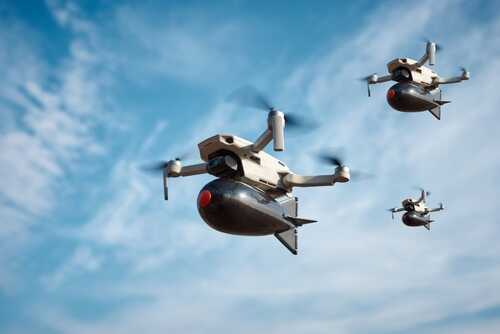
Ukraine’s drone war is no longer a side story; it is now shaping casualties, battlefield moves, and deep strikes behind Russian lines.
Quick Take
- Analysts say drones now drive a large share of battlefield losses and target destruction in Ukraine.
- Ukrainian forces have used drones to help retake ground and hit Russian logistics deep in occupied areas.
- Experts still warn that drones are powerful tools, not a full replacement for ground forces and combined arms.
- Ukraine is also testing sea-launched and AI-enabled unmanned systems that show fast adaptation.
Drones Are Now Central to the Fight
Analytical reporting says drones have become one of the main killers on the battlefield in Ukraine. Some estimates put drone involvement at roughly 70 to 85 percent of frontline casualties or destroyed targets, though those figures are still estimates, not audited totals. Even so, the scale is hard to ignore. Drones now shape how both sides move, hide, resupply, and attack under constant watch.
That shift has changed the tempo of the war. Ukrainian forces have been credited with regaining drone superiority in some frontline sectors, and one assessment said Kyiv reached a ratio of 1.3 strike drones for every Russian strike drone in April 2026. The same assessment said Ukrainian drone pressure is degrading Russian forces at operational depth and opening weaknesses in Russian lines. For readers who care about deterrence and hard power, that is a major battlefield change.
Ukraine Is Using Drones to Hit Harder and Farther
Ukraine’s drone campaign is not limited to trench fighting. The Council on Foreign Relations said Ukrainian innovation helped Kyiv retake seventy-eight square miles over five days in February 2026, in large part by scaling drone operations and long-range strike power. Other reporting says Ukraine has kept pressing Russian military assets, logistics, and energy sites far from the front, showing that unmanned systems now serve both tactical and strategic goals.
Ukraine has also shown a fast ability to adapt. The Main Intelligence Directorate said Group 13 used modified Magura naval drone platforms in late July to launch FPV attack drones from the sea onto land targets in occupied Crimea, hitting radar-related systems. That kind of switch matters because it shows modular design and quick battlefield learning. A platform built for one mission can be turned into another without waiting for a brand-new weapons system.
The Limits Matter as Much as the Hype
Military analysts also warn against treating drones like a magic weapon. The Australian Army, West Point, Hudson, and other institutions say drones are force multipliers, not replacements for infantry, artillery, engineering, logistics, and control of ground. That warning should sound familiar to anyone who has watched Washington fall in love with the newest shiny tool while ignoring the basics. Drones can punish an enemy, but they cannot occupy land or win a war alone.
There is also a clear gap between battlefield effect and true strategic victory. Several studies say drones have changed the war at the tactical and operational level, but they have not by themselves delivered decisive victory or solved the core problem of holding territory. The same body of research says operator skill, supply, electronic warfare, and human oversight still matter a great deal. In plain terms, the machines are impressive, but the war still depends on people and institutions.
Autonomy, AI, and the Next Phase of Warfare
Ukraine is also pushing into AI-enabled unmanned systems. The Center for Strategic and International Studies said Kyiv is advancing AI-driven systems to reduce direct warfighter exposure while improving combat effectiveness, but it also said fully autonomous warfare is still not here and human oversight remains important. That point matters. Autonomy may raise hit rates and cut risk, yet it also raises hard questions about control, accountability, and how much freedom commanders should give to machines.
The broader lesson is bigger than Ukraine. This war is teaching militaries that cheap drones can impose costly problems on richer armies, especially when paired with data, sensors, and rapid adaptation. It is also proving that old truths still hold: power on paper is not enough, and a nation still needs combined arms, industrial depth, and the will to keep fighting. For conservatives who value realism over hype, that is the clearest takeaway from the drone revolution.
Sources:
19fortyfive.com, researchcentre.army.gov.au, irregularwarfarecenter.org, osw.waw.pl, kse.ua, ukrainesarmsmonitor.substack.com, tandfonline.com, cfr.org, understandingwar.org, reddit.com, unsw.edu.au, hoover.org, csis.org, mwi.westpoint.edu, en.wikipedia.org, youtube.com