
A New York City mayor is telling people to sweat it out at 78 degrees while workers’ rights and the power grid become the latest battlefield for big-government climate politics.
Story Snapshot
- Mayor Zohran Mamdani declares a heat emergency and urges New Yorkers to set air conditioners to 78°F “to protect the grid.”
- A sweeping executive order claims to “protect” 1.4 million outdoor workers, expanding city control over business operations and work conditions.
- City agencies are ordered to push multilingual heat rules and illness plans into both outdoor and indoor workplaces by 2027.
- More than 200 cooling centers and high-tech kiosks are promoted, while no hard data is offered to prove that 78°F thermostat limits meaningfully help the grid.
Mamdani’s 78-Degree Order: Comfort vs. Control
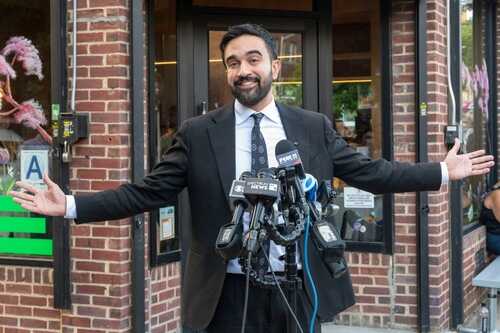
New York City Mayor Zohran Mamdani has used a declared heat emergency to tell residents and businesses to set their air conditioners at a steamy 78 degrees, saying this will ease stress on the electric grid during a “life-threatening” heat wave. His public press events describe triple-digit temperatures and a heat index above 110 degrees, and he warns of health risks while urging less cooling instead of more. The guidance is framed as voluntary, but it functions as political pressure on landlords, office owners, and small shops who already pay high energy bills and taxes. No named utility, such as the local power company, is cited in his statements to confirm that the 78-degree mark is critical for grid stability or that it is based on engineering analysis rather than activism. For many New Yorkers, especially seniors and people with health problems, 78 degrees in a small apartment is not comfort—it is barely tolerable. Trump-era energy policy focuses on affordable, reliable power; Mamdani’s plan instead asks people to endure more heat so the city can claim climate virtue.
City health data show that hundreds of New Yorkers die early each summer because of hot weather, and officials highlight air conditioning as the most effective protection against deadly heat. At the same time, the same report urges leaders to “discourage excess cooling in offices and commercial establishments” to protect the grid, echoing Mamdani’s 78-degree push. That message sets up a direct tension: people need strong cooling to stay alive and well, but planners want to limit cooling to manage demand. Rather than invest first in more generation, more transmission, and lower energy costs so every family can safely run their unit, the city leans on behavior rules and thermostat targets. Conservative readers will recognize the pattern from other blue cities: government tells individuals to sacrifice comfort and choice while city hall grows its power and claims moral credit.
Executive Order: Worker Safety or Government Overreach?
Mamdani has also signed a first-of-its-kind executive order on worker heat protections, directing what he calls a “whole-of-government” response for extreme heat. The order covers an estimated 1.4 million outdoor workers, from construction crews to delivery drivers, and demands new heat illness prevention plans and multilingual safety guidance. City agencies must draft rules, training, and standards, with guidance for indoor workers due by March 1, 2027. Supporters say this protects vulnerable workers and stops bosses from pushing people too hard in dangerous conditions. But this sweeping language also invites deep bureaucratic control over how private businesses schedule shifts, manage breaks, and run their operations. Once the city claims the power to dictate heat “safety” plans, it can expand that framework into new mandates for staffing, equipment, and even building design. Many conservatives will see this as one more step toward a centralized labor regime that sidelines common-sense cooperation between employers and employees.
Reports on heat response plans nationwide note that many cities lack strong written plans and that access to air conditioning is the single most effective way to cut deaths during heat waves. Those same reviews warn that surveillance of electric demand and careful measurement of which policies work are often “absent or minimal,” meaning leaders may roll out dramatic rules without proving their impact. Mamdani’s order fits this trend: it is broad, symbolic, and heavy on messaging, yet city documents and press events do not provide clear, measured evidence that his specific tools—especially the 78-degree guidance—deliver real gains. Instead, the executive order builds on existing programs like “Beat the Heat” and adds layers of directives, committees, and studies. For an already overburdened business community, each new mandate means time, paperwork, and potential legal risk, with little promise that actual cooling and energy costs will become more affordable.
Cooling Centers and Tech Tools: Real Help or PR Stage Props?
To show action during the emergency, the city advertises more than 200 cooling centers, including libraries, community sites, and even buses set up as mobile relief stations. Officials say LinkNYC sidewalk kiosks will now display live walking directions to the nearest cooling center within ten minutes, updating as centers open or close. These tools can help some people in crisis, especially those without air conditioning at home. But they also highlight a deeper failure: in a rich city, many residents still cannot afford to properly cool their own homes, so they must rely on government spaces and short-term shelters. Health experts stress that access to home air conditioning and the ability to pay the power bill are key to saving lives in heat waves. Instead of making electricity cheaper and expanding capacity, city leaders keep pushing public cooling centers and phone apps—visible programs that score media headlines yet leave core energy policy untouched. Under Trump, the national focus is on reliable baseload power, lower energy prices, and less red tape; Mamdani’s agenda leans on climate symbolism, worker rules, and thermostat guidance that shift responsibility onto families and businesses.
🇺🇸 NYC Mayor Urges Residents to Set ACs to 78°F Amid Brutal Heatwave, Sparking Backlash Over Government Overreach
As New York City endures an extreme heatwave with temperatures climbing into the high 90s and heat indices potentially reaching 112°F, Mayor Zohran Kwame Mamdani has… https://t.co/SmOSSElJyA
— Joe (@LTSmash420) July 2, 2026
Across the country, policy guides aimed at mayors encourage this style of leadership: appoint a single heat “czar,” build cross-agency teams, and use public messaging to push climate-focused behavior changes. These documents praise mayors who lead by example, restructure city spaces, and even require landlords to provide cooling. Mamdani’s actions match that script closely, from his executive order to his media-heavy heat briefings. Yet there is almost no specific, third-party science offered to prove that a 78-degree thermostat limit in New York offices will meaningfully strengthen the grid or cut deaths. What it clearly does is normalize the idea that city hall can tell you how cool your home or business should be. For conservatives who value individual choice, property rights, and a strong, affordable energy system, Mamdani’s heat agenda is not just about weather—it is another test case of how far local government will go in the name of “climate” and “safety,” and whether ordinary Americans will push back.
Sources:
thegatewaypundit.com, nyc.gov, eenews.net, wcrinet.org, bluegreenalliance.org, youtube.com, x.com, abc7ny.com, www1.nyc.gov, facebook.com, instagram.com, nysclimateimpacts.org, pmc.ncbi.nlm.nih.gov, c40knowledgehub.org