
A deadly high-seas campaign that has killed more than 200 people is now testing how far America should go in the name of fighting drugs — and how much proof our government owes its own citizens.
Story Snapshot
- U.S. strikes on alleged drug boats under Operation Southern Spear have killed roughly 199–200 people across at least 60 attacks.[2][3]
- The Trump administration says the targets are narco-terrorist traffickers, but publicly available evidence of drugs on the destroyed boats remains thin.[2][3]
- Only a handful of survivors have ever been recovered and identified, leaving most of the dead unnamed and unverified as cartel members.[2][3]
- Critics frame the campaign as potential “extrajudicial killings,” forcing conservatives to weigh aggressive border security against demands for transparency and rule of law.[2][3]
Rising Death Toll In A Quiet Maritime War
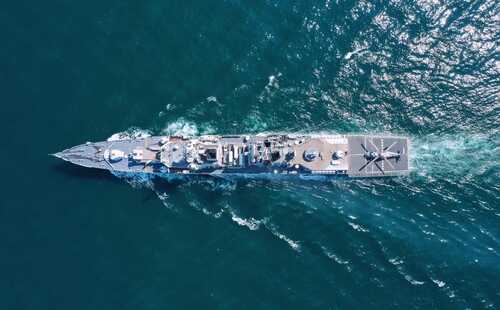
According to recent wire reporting, the death toll from the Trump administration’s months-long series of strikes on suspected drug-trafficking boats in the Caribbean Sea and the eastern Pacific Ocean has climbed to at least 199 people.[2][3] These attacks began last September and are part of what has been publicly identified as Operation Southern Spear, an anti-cartel effort using Navy, Air Force, Marine Corps, and Coast Guard assets to hunt suspected trafficking vessels well off America’s shores.[3] As of early May 2026, open-source tallies documented at least 60 strikes on 61 vessels, with several additional deaths presumed at sea.[3]
Reporting indicates that these strikes are not one-off events but a sustained campaign that now resembles a low-level maritime war against transnational criminal organizations.[2][3] The first acknowledged strike, on a boat originating from Venezuela in early September, was touted by the administration as having destroyed illegal narcotics bound for the United States and killed 11 members of the Venezuelan-linked gang Tren de Aragua.[3] Since then, the pattern has expanded to cover known smuggling routes in both the Caribbean and the eastern Pacific, with Southern Command periodically releasing video clips of boats being hit and engulfed in flames to underscore the seriousness of the crackdown.[2][3]
Government Narrative: Narco-Terrorists On The High Seas
The administration has framed these operations as a necessary escalation against drug cartels that function more like terrorist networks than traditional criminal gangs.[3] Officials insist that intelligence from surveillance, route analysis, and other classified sources shows the vessels are operated by “narco-terrorists” transporting deadly cargo toward the United States, threatening American communities already ravaged by fentanyl and cocaine.[3] In this telling, striking fast-moving, stateless boats in international waters is an extension of defending the homeland, similar in spirit to stopping terrorists before they reach our borders rather than waiting to pick up the pieces after overdoses and gang violence at home.
For many law-and-order conservatives, that message lands: Washington has spent decades talking about drug wars while overdose numbers climbed, so a president finally unleashing the full power of the military against cartel infrastructure can look like overdue accountability.[3] The involvement of multiple branches of the armed forces and the Coast Guard underscores that this is not a symbolic show but a real campaign aimed at degrading the logistics chains that move narcotics north.[3] From this perspective, the rising tally of destroyed boats and killed traffickers is evidence that cartels are finally paying a price for turning the seas around the Americas into smuggling highways.
Evidence Gaps And Questions About Who Is Dying
Yet the same public record that documents the scale of the campaign also highlights serious gaps that constitutional conservatives cannot ignore.[2][3] Most media accounts, including those citing U.S. military statements, consistently describe the targets as “suspected” or “alleged” drug boats and acknowledge that authorities have not publicly produced evidence showing drugs on board the vessels destroyed.[2][3] Unlike traditional interdictions, where law enforcement seizes cargo, arrests crews, and brings them into court, many of these strikes end with burning wreckage, missing bodies, and no visible chain of custody to prove exactly what was on those boats or who those people were.
Open-source summaries report that of the roughly 199 people believed killed, only a tiny number have been publicly identified or even confirmed as cartel operatives.[2][3] According to one account, as of the spring of 2026, only three people were known to have survived strikes and then been rescued, with two repatriated to Ecuador and Colombia and another transferred to Costa Rican authorities.[2] At least 22 people reportedly survived initial attacks only to die later at sea or in follow-up strikes, further complicating efforts to verify identities or gather testimonies.[2] Meanwhile, a separate report cites families and regional governments saying that some of the dead were civilians, including fishers, raising the stakes of any misidentification.[3]
Conservative Balance: Tough On Cartels, Tough On Government Power
For a constitutional, limited-government conservative audience, this situation presents a real tension: strong support for smashing cartels and securing the border on one side, and deep skepticism of unchecked federal power and secret evidence on the other.[2][3] Legal experts and some lawmakers quoted in coverage have questioned whether repeated lethal strikes on “suspected” boats, outside declared war zones and without public proof, risk sliding into extrajudicial killing territory.[2][3] Reports also indicate that a review by the Pentagon’s inspector general is focused on the targeting process rather than the core legality of the campaign, leaving many rule-of-law questions unanswered.[2][3]
That does not mean the strikes are unlawful or unjustified, but it does mean that conservatives who care about both security and the Constitution have reason to demand more transparency.[2][3] At minimum, many will want to see clearer public standards for how a boat is designated as a narcotics target, how the government distinguishes traffickers from ordinary mariners, and whether post-strike investigations confirm that these dead were the cartel operatives officials say they were.[2][3] Pushing for declassified summaries of intelligence, verifiable identification of the dead, and stronger congressional oversight would align with core conservative principles: keep America safe, crush cartels, but never hand any administration a blank check to kill on suspicion alone.
Sources:
[2] Web – Recent survivors of US boat strikes haven’t been found, bringing …
[3] Web – United States strikes on alleged drug traffickers during Operation …