
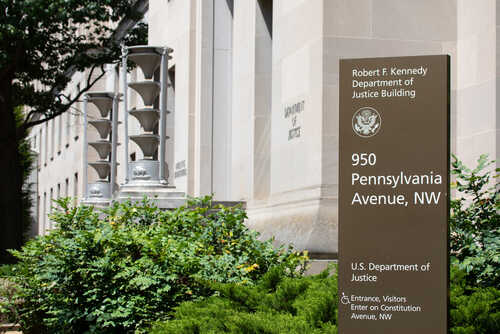
The Trump Justice Department is putting election officials on notice: if they let non‑citizens vote in federal races, they could face criminal charges.
Story Snapshot
- Federal law clearly makes it a crime for non‑citizens to vote in federal elections.
- A 2026 Trump executive order directs the Justice Department to go after officials who allow non‑citizen voting.
- Justice Department letters warn election officials in key states and seek massive amounts of voter data.
- Civil rights groups and some judges say non‑citizen voting is extremely rare and accuse the DOJ of overreach.
Federal Law: Non‑Citizen Voting Is Already a Crime
Federal law, under 18 U.S. Code Section 611, makes it illegal for any non‑citizen to vote in an election that includes candidates for President, Vice President, or members of Congress. This statute applies no matter how the vote is cast, in person or by mail, and covers all non‑citizens, including legal residents and visa holders. A violation can bring fines and up to one year in jail, and it can also trigger deportation or block future citizenship under immigration law.
Section 611 includes a narrow exception for people who truly believed they were citizens because both parents were Americans and they lived here from a young age. Outside that narrow exception, the law does not care whether the person “meant” to break the rule; voting itself is the offense. This strong federal standard backs up what most Americans already assume: only citizens should have a say in choosing national leaders.
Trump’s Executive Order and DOJ Threat Letters to States
In March 2026, President Trump signed an executive order called “Ensuring Citizenship Verification and Integrity in Federal Elections,” directing the Attorney General to investigate and prosecute officials who allow non‑citizens to vote in federal contests. The order tells the Justice Department to push states to verify citizenship, review voter rolls, and bring cases against both illegal voters and any officials who knowingly look the other way. This moves the federal government from simply punishing individual offenders to targeting the systems that let them on the rolls.
Assistant Attorney General Harmeet Dhillon followed up with letters to election officials in states like Arizona, Georgia, and Michigan, warning that allowing non‑citizens to vote could lead to criminal charges. Those letters demand cooperation with federal investigations and signal that DOJ will not treat non‑citizen voting as a minor paperwork issue. At the same time, civil rights groups and some state officials call these letters “intimidation,” arguing they are designed to scare local offices and stir fears of voter fraud that data do not support.
Massive Data Demands and Courtroom Pushback
To enforce the order, the Justice Department has requested extensive voter information from at least 39 states, seeking detailed records to look for possible non‑citizen voters. When some states refused, DOJ sued eight of them to force compliance, asking courts to order the release of personal voter data like names, addresses, and voting history. Supporters say this kind of audit is needed to protect election integrity and keep illegal voters off the rolls, especially in swing states.
Federal judges have pushed back hard in several of these cases. One district court judge ruled that a demand for unredacted data on 23 million California voters was “unprecedented” and violated the constitutional separation of powers. According to the California Attorney General’s office, DOJ has lost all eight voter‑roll lawsuits decided so far, with courts rejecting the breadth of its data requests. These rulings limit how far the Justice Department can go in forcing states to share sensitive information, even in the name of stopping illegal voting.
Is Non‑Citizen Voting a Crisis or a Rare Problem?
Non‑citizen voting cases do exist. The Justice Department has charged multiple non‑citizens in New Jersey with illegally voting in federal elections and making false statements on registration forms. These charges show that some people who are not citizens do end up on the rolls and cast ballots for President or Congress. For many conservatives, even a small number of such cases feels like a direct attack on fair elections and the value of citizenship.
Federal and State Elections
• Federal law (18 U.S.C. § 611) prohibits non-citizens (“aliens”) from voting in any election that includes federal offices (President, Congress, etc.). This has been in place for decades, with criminal penalties added in 1996: fines, up to one year…— JoChap 🇷🇺🇺🇸🪆🎶 (@KoshkaChap) July 8, 2026
On the other side, many studies say non‑citizen voting is extremely rare nationwide. A Brennan Center review found only tiny numbers of suspected non‑citizen votes out of tens of millions of ballots, and a Heritage Foundation‑cited analysis reached similar conclusions. A federal judge reviewing a revamped federal database system even said there was “no evidence at all whatsoever” that non‑citizens were voting based on that tool’s data. Non‑partisan groups argue that broad claims of a non‑citizen voting “crisis” are driven more by politics than proof.
Tools, Errors, and the Battle Over Election Integrity
Part of the fight centers on how states and the federal government try to spot non‑citizens on the voter rolls. The Department of Homeland Security’s Systematic Alien Verification for Entitlements program, often used to flag possible non‑citizen voters, has been prone to error and has given incorrect information to at least five states. Those errors have fueled false alarms about large numbers of illegal voters, later shown to be wrong when states reviewed the cases more carefully.
Groups like the Center for Election Innovation and Research report that sweeping allegations about non‑citizen registration or voting usually come from misunderstandings or misreading complex data, not from real fraud. They argue that strong citizenship rules are already in place and that most flagged “non‑citizens” are innocent voters or database mismatches. The Trump administration and its allies answer that, rare or not, each unlawful vote cancels out a lawful one, and officials who ignore federal law should expect serious consequences.
Sources:
cbsnews.com, justice.gov, brennancenter.org, whitehouse.gov, electioninnovation.org, campaignlegal.org, facebook.com, ballotpedia.org