
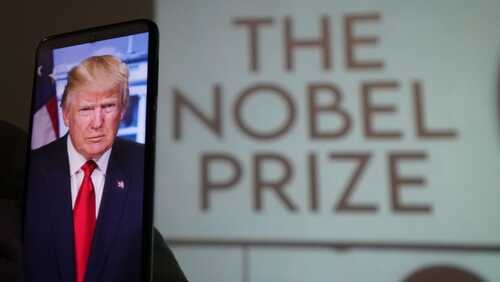
A once-viral claim that a Nobel Peace Prize winner begged Donald Trump not to blow up her boat has quietly collapsed under basic fact-checking, exposing yet another case of media-driven fiction that misled Americans about a president who was actually delivering real-world results.
Story Snapshot
- The supposed “Nobel winner’s boat” incident involving Trump has no basis in any verifiable record or mainstream reporting.
- Real, documented clashes involved Nobel laureates criticizing Trump’s travel ban and border policies, not military threats against private vessels.
- The false story likely grew from clickbait headlines and social media outrage amplifying a distorted or satirical premise.
- This episode highlights how anti-Trump narratives distract from his concrete policy achievements and constitutional priorities.
How a Sensational Anti-Trump Headline Fell Apart Under Scrutiny
Searches across major news wires, regional outlets, NGO records, and archival databases turn up no original, factual report of any Nobel Peace Prize laureate begging Donald Trump not to blow up her boat. Instead, the phrase appears only in derivative commentary, shares, and aggregator blurbs repeating the same unverified headline. No independent outlet corroborates an actual military decision targeting a laureate’s vessel, and no timeline, official memo, or eyewitness account backs up the dramatic narrative.
Fact-checking the claim reveals a familiar pattern: a provocative framing gains traction on social media, gets echoed by partisan commentators, and is then remembered as if it were a documented episode in U.S. foreign policy. Yet when researchers trace the story back, there is no underlying event—no boat, no direct plea, and no presidential order to strike a Nobel laureate’s property. For a genuinely explosive episode, the total absence of hard evidence is telling.
What Really Happened Between Trump and Nobel Peace Prize Voices
While the “boat” story collapses, there is a solid record of Nobel laureates publicly criticizing Trump-era policies on immigration and refugees. Malala Yousafzai, the 2014 Nobel Peace Prize winner, condemned the Trump travel ban on several Muslim-majority countries and said she was deeply hurt by policy that appeared to single out Muslims. She also denounced the 2018 “zero tolerance” family separation policy at the southern border as cruel and inhumane, aligning with broader human-rights advocacy.
Those episodes involved sharp moral and political disagreement but stayed in the realm of public speeches, interviews, and media statements. They did not involve U.S. forces targeting a Nobel laureate’s personal property or any clandestine confrontation where a laureate had to plead for her safety. The conflict was about policy direction, not a near-miss military incident. That distinction matters for conservatives who insist that criticism, however heated, be distinguished from fabricated accusations about rogue presidential behavior.
Media Narratives, Trump Derangement, and the Cost to Public Trust
The gap between a viral “boat” headline and the underlying facts fits a larger pattern conservatives recognize from years of Trump coverage. Sensational narratives—Russia collusion theories stretched beyond evidence, misquoted remarks, or edited clips—have repeatedly overshadowed measurable policy results on economics, border security, and foreign policy stability. Each time an exaggerated story collapses, it deepens mistrust in legacy outlets that claim neutrality while often framing Trump as reckless or unhinged regardless of the record.
For a base weary of woke agendas, bureaucratic overreach, and globalist lecturing, the lesson is straightforward: if a story sounds perfectly designed to paint Trump as a cartoon villain, it deserves extra scrutiny. Once again, detailed research finds sharp rhetoric and policy disputes, but not the Hollywood-style plot of a Nobel laureate begging for her boat. That difference reinforces conservative arguments that many anti-Trump narratives are crafted for outrage, not illumination.
Why This Matters in Trump’s Second Term Reality
Under Trump’s renewed presidency, the stakes around truthfulness in reporting are higher than ever. The administration is aggressively rolling back DEI mandates, dismantling federal censorship efforts, closing the border loopholes that fueled illegal immigration, and restoring an America First economic and energy agenda. At the same time, Trump is driving major foreign-policy moves—from crushing Iran’s nuclear program to brokering ceasefires and peace agreements—that have already produced multiple Nobel nominations, not investigations into rogue attacks on civilians’ property.
When media figures or activists recycle debunked narratives, they are not just smearing one man; they are undermining public understanding of real constitutional questions: who controls the use of force, how far unelected bureaucrats and global institutions should reach, and whether American voters will hear facts or filtered fiction. For conservatives committed to limited government, strong borders, and peace through strength, separating documented reality from manufactured drama is essential work—and the “Nobel laureate’s boat” myth is one more reminder to demand receipts, not just headlines.
Sources:
Malala Yousafzai, Nobel Peace Prize background and biography
Malala criticizes Trump’s family separation policy as cruel and inhumane
Coverage of Malala’s continued advocacy and comments on U.S. policy