
Entire Spokane neighborhoods did not just burn; they were erased in a single weekend, leaving more than 600 structures gone and tens of thousands of people suddenly homeless or displaced.
Story Snapshot
- Three linked fires around Spokane destroyed at least 600 homes and other buildings.
- About 60,000 to 65,000 people were ordered to evacuate as the flames pushed into neighborhoods.
- Whole streets now stand as blackened foundations, twisted metal, and lonely chimneys.
- Fire crews are still counting the losses and trying to hold the line around the city.
Wildfire Turns Spokane Neighborhoods Into Burned-Out Streets
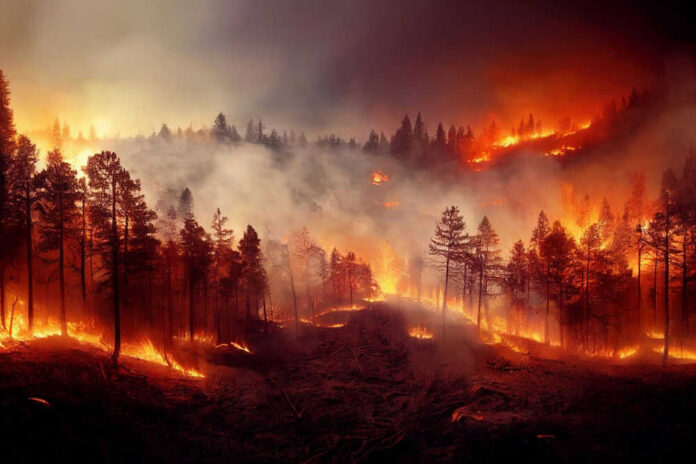
Wildfires northwest of Spokane did more than scorch trees; they erased whole residential blocks, turning familiar suburbs into gray ash and skeletons of houses. The Old Trails, Fairview, and Autumn Lane fires merged into what officials now call the Spokane Complex Fire, burning through forests and straight into town. By early Sunday, emergency managers and state officials were already saying that roughly 600 structures were gone, and some estimates climbed even higher.
The pictures are brutal. Video and photos show streets where every house is burned down, with only chimneys and brick walls still standing. Yards are covered in charred debris and melted siding. Cars sit as black shells in driveways. For many families, there is no “damaged” home to repair. The house simply does not exist anymore. Reporters on the ground describe “neighborhoods gone” and “smoking ruins” where weekend plans turned into emergency escapes.
Evacuation Orders Push Tens Of Thousands Out Overnight
The human shock of this disaster is not just in the ashes, but in the numbers of people forced to grab what they could and run. State and local reports say roughly 60,000 to 65,000 residents came under evacuation orders as the fires pushed toward Spokane’s neighborhoods. Families from Indian Trail, Nine Mile, and other areas left with kids, pets, and go-bags, filling shelters, fairgrounds, and church parking lots turned into makeshift camps.
Emergency managers used Level 3 “go now” orders over wide zones when the flames jumped the river and moved faster than any normal traffic pattern. That kind of order means no waiting to see if the fire turns. You leave or risk getting trapped. Across the region, people who went to sleep on Friday believing the fire was “out there” woke up Saturday to pounding on doors, phone alerts, and an orange sky over their own streets.
How Hundreds Of Structures Were Lost In Hours
This was not a slow burn. Wind gusts that reached 35 to 45 miles per hour pushed flames through Riverside State Park and into housing tracts in a matter of hours. Dry grass and timber acted like a fuse. Once the fire reached fences, decks, and cars, it moved from home to home “like dominoes,” as one local report described. At its worst, officials believed 4,000 to 5,000 structures were directly threatened along the fire’s advance.
Different agencies now give slightly different counts, which is normal in the first days after a major fire. Some state briefings mention about 600 structures lost. One emergency operations update put the figure closer to 700. A local incident commander on a live briefing called 600 an “initial estimate” and warned that the exact number would change as crews move through the rubble. The bottom line is the same: this was not a small rural fire. This was city-scale destruction.
No Mass Casualties, But Deep Loss And Hard Questions
For all the damage, officials have said there were no confirmed mass deaths in the Spokane area fires so far, and no large number of serious injuries. That outcome is a tribute to fast evacuation orders and people who actually obeyed them. Firefighters and sheriff’s deputies went door to door, cleared streets, and blocked reentry before the worst heat hit structures. Shelters opened quickly, and utilities cut power where needed to reduce sparks.
Nearly 65,000 people have been evacuated from their homes in Spokane County, Washington as wildfires have consumed more than 8,000 acres since they started on Saturday. The Pacific Northwest is facing its worst fire season.
Follow live coverage: https://t.co/b7cWYwpX7U pic.twitter.com/Aw4eIKd9dO
— CNN Weather (@CNNweather) August 4, 2026
Yet many residents now face the kind of loss that does not fade with a news cycle. Homeowners returned to streets where nothing is left to “save.” Insurance, rebuilding rules, and government aid will decide whether whole working and middle-class blocks ever come back. Conservative readers will notice another pattern: yet again, ordinary families pay the price while officials talk about climate, budgets, and long-term plans. Personal responsibility matters, but so does a government that hardens forests and power lines before neighborhoods burn.
Where Spokane Goes From Here
The fires remain partly uncontained, and crews are still working to hold lines and map hot spots. Damage counts will shift in the days ahead as inspectors move lot to lot and separate “damaged” from “fully destroyed.” What will not change is the core reality: more than 600 structures are gone, up to 65,000 people fled at least once, and whole Spokane neighborhoods now exist only in memory and old photos.
Spokane’s disaster is part of a wider trend across the West, where dry summers, strong winds, and fuel-packed forests push fire right to suburb edges. For people far from Washington, this story should feel less like distant tragedy and more like a warning label. If fire can erase blocks inside the second-largest city in the state, “wildfire season” is no longer just something that happens in the mountains. It is something that starts at the edge of your cul-de-sac.
Sources:
thegatewaypundit.com, nypost.com, pnwdaily.com, youtube.com, pbs.org, fires.cornea.is, spokanepublicradio.org, spokesman.com, cnn.com, en.wikipedia.org, npr.org, opb.org