

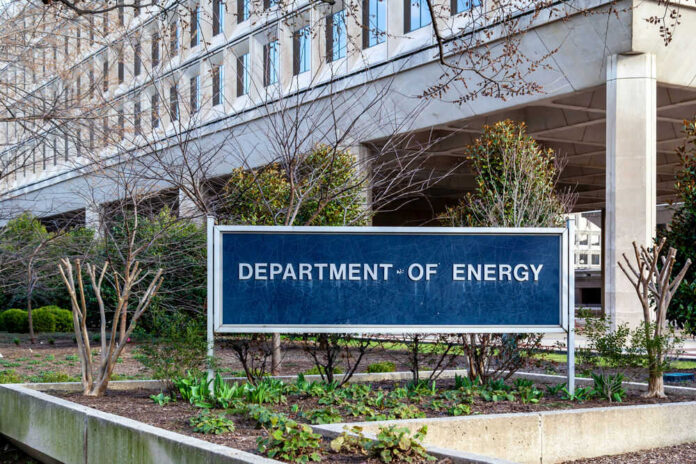
A 30-year U.S.–Saudi nuclear deal will let American firms build reactors while setting guardrails that the White House says will stop weapons risks through tough monitoring and consent rights.
Story Highlights
- The deal opens Saudi Arabia’s civilian nuclear program to U.S. technology and oversight through 2056.
- Key safeguards and U.S. consent rights are built on long-standing law known as a “123 agreement”.
- Some reporting says uranium enrichment could be allowed, raising concerns about future risks.
- The Energy Department says U.S. involvement improves safety and sets higher standards than rival offers.
What Was Signed And What It Does
The United States and Saudi Arabia finalized a civilian nuclear cooperation pact that enables U.S. companies to join the kingdom’s reactor buildout and related supply chain through mid-century. The Energy Department said the agreement establishes the legal base for a decades-long partnership and binds work to American nonproliferation rules. Supporters argue this keeps dangerous technology within a framework the United States can shape and monitor, instead of ceding the field to China or Russia.
The administration frames the pact as a standard “123 agreement,” a term for deals under U.S. law that set strict conditions on nuclear trade. These deals give Washington veto power over sensitive steps, require safeguards on U.S.-supplied materials, and ban use for any explosive device. The Government Accountability Office describes these core assurances as the backbone of every such agreement, including perpetual safeguards and consent rights before enrichment or reprocessing occur.
Safeguards, Consent Rights, And The Enrichment Question
Officials say the pact adds targeted verification on the most sensitive parts of the fuel cycle, including enrichment, conversion, fuel fabrication, and reprocessing. That approach aims to detect any misuse early and to keep activities within peaceful bounds. However, separate reports indicate the United States removed some past limits on enrichment and eased rapid international inspections compared to earlier proposals, drawing pushback from critics who want a United Arab Emirates‑style ban.
Multiple outlets report that enrichment in the kingdom could be possible under certain terms, subject to U.S. consent and oversight rather than a flat prohibition. That structure mirrors many U.S. nuclear deals worldwide, which rely on consent rights rather than absolute bans. Backers say consent authority lets Washington decide case by case and impose conditions, while keeping Saudi demand tied to U.S. companies and standards. Skeptics warn any domestic enrichment can build latent capability if rules weaken later or if other suppliers step in.
Why The U.S. Chose Partnership Over Absence
The Energy Department argues American involvement raises safety, security, and transparency by linking Saudi projects to U.S. technology, training, and compliance systems. The alternative would be a program led by foreign rivals with lower standards and fewer checks, which could reduce U.S. visibility and leverage. Heritage Foundation and other policy analyses note that “123 agreements” enable trade only when key conditions are met, reinforcing physical protection of materials, export control, and safeguards on every U.S.-origin item.
Arms control advocates counter that the strongest model is the United Arab Emirates deal, which locked in a no‑enrichment, no‑reprocessing rule up front. They say anything less risks a regional cascade if Iran expands its program or if competitors offer looser terms. Reuters and CNN reporting adds that Congress will study any enrichment provisions closely, since lawmakers have long insisted that U.S. consent rights and inspection access remain firm and fast.
Congressional Review And Next Steps
Under U.S. law, Congress reviews every “123 agreement” and can move to block it if major concerns arise. Lawmakers from both parties have said any civilian deal must not fuel an arms race or weaken long‑standing nonproliferation guardrails. The administration says the pact keeps those guardrails and adds targeted checks where risk is highest, while also unlocking jobs and investment for U.S. companies across the nuclear supply chain. Industry groups expect bids on reactors, fuel services, and training once the agreement takes effect.
U. S. Foreign Policy must be adopting the idiotic theory that the only thing that stops a Shia Islam theocracy with a bomb is a Sunni Islam absolute monarchy with a bomb. #ETTD
Coveted U.S. Nuclear Deal Is a Coup for Saudi Crown Prince https://t.co/uMmbYgzKGH
— Spence Williams (@beoduck) July 22, 2026
For conservative readers who value strength and vigilance, the core test is simple: keep America in the lead, set the rules, and hold partners to them. This deal seeks to do that by tying Saudi projects to U.S. standards, consent rights, and monitoring that deter misuse. Open questions remain on enrichment terms. That is why Congress’s review matters. If lawmakers enforce tight consent and verification, the United States can grow energy ties while guarding against any path to a bomb.
Sources:
abcnews.com, armscontrol.org, brookings.edu, newsmax.com, reuters.com, cnn.com, docs.house.gov, fdd.org, armscontrolcenter.org, thebulletin.org, en.wikipedia.org