
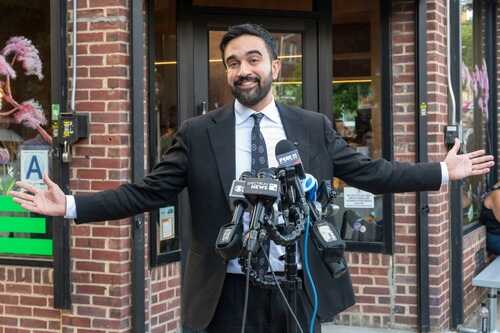
Britain just got its fifth prime minister in four years, and voters did not cast a single new ballot to put Andy Burnham in Downing Street.
Story Snapshot
- Andy Burnham becomes the United Kingdom’s 59th prime minister after winning the Labour Party leadership unopposed.
- Keir Starmer’s resignation triggered a fast, inside‑Parliament succession rather than a national election.
- Burnham secured hundreds of Labour lawmaker nominations, making any rival challenge impossible under party rules.
- His rise highlights how Britain can swap prime ministers midstream without voters ever going back to the polls.
How Andy Burnham Reached The Top Job Without A Single New Vote
Andy Burnham did not ride a wave of fresh votes into power. He rode party rules. After Keir Starmer announced his resignation as prime minister and Labour leader, the governing party opened a leadership contest. Burnham had already returned to Parliament by winning a byelection in the Makerfield seat, giving him the basic qualification every Labour leader needs: he was a member of Parliament. From there, the real game moved behind closed doors.
Labour’s rules say anyone who wants to lead the party must win support from at least one fifth of its lawmakers in the House of Commons. In this contest, Burnham did not just cross that line. He crushed it. He secured nominations from well over the required share of MPs, with reports of around 349 nominations out of roughly 401 Labour lawmakers, leaving no mathematical path for a rival to gather enough backers. Once the nomination window closed, he stood alone as the only valid candidate.
The Leadership Contest That Was Over Before It Began
When a leadership race has only one candidate who meets the rules, the word “contest” is almost misleading. Labour held a short, formal process and then confirmed Burnham as leader at a special party conference on a Friday. With no other names on the ballot, party officials simply declared him the duly elected leader. In plain English, he won by default. The lack of competition may bother some voters, but by party standards it was completely legitimate.
That leadership win was not just a party trophy. In Britain’s system, whoever leads the majority party in the House of Commons is the person the monarch calls on to form a government. Labour still held a clear majority, so the path was automatic. Starmer remained as caretaker prime minister until the palace meeting. Then, following long‑standing practice, King Charles III invited Burnham to form a government, turning him from party leader into the country’s 59th prime minister. No extra election was needed because the voters had already chosen a Labour majority at the last general election.
Why Britain Keeps Getting ‘Unelected’ Prime Ministers
Many Americans assume you must win a nationwide popular vote to become a head of government. Britain has never worked that way. Voters choose local members of Parliament, not a prime minister’s name on a ballot. The leader of the party that wins the most seats then becomes prime minister. If that leader quits mid‑term, the party picks a new leader, and that new leader takes the top job without anyone stepping back into a voting booth.
That might sound like a loophole, but it is closer to the norm than the exception. Research on British history shows that most prime ministers since 1900 first entered office between elections, after winning internal party contests rather than fresh national votes. From a common‑sense, conservative viewpoint, this has one clear upside: it protects stability. The country avoids constant election campaigns every time a party changes its mind about its leader. The downside is just as clear. Regular people can feel shut out when they see yet another “unelected” prime minister taking office on the strength of party deals and Westminster math.
What Burnham’s Mandate Really Looks Like
Supporters point to Burnham’s nomination numbers as proof of a strong mandate. He cleared the Labour threshold by a mile and faced no rival, which shows deep backing inside his party. He also recently won the Makerfield byelection and built a strong profile as mayor of Greater Manchester, earning him a reputation as one of the country’s more popular politicians. On paper, that adds up to real political strength, even if it was not tested in a fresh general election campaign.
🎯 Andy Burnham is set to become UK prime minister on July 20, 2026, following Keir Starmer’s departure, with his first national address due the same day.
📊 Burnham will pledge “more breathing space,” stability, responsibility, hope and unity as Labour faces scrutiny over a… pic.twitter.com/gNXCuNyPZQ
— kautious (@kautiousCo) July 20, 2026
Critics, especially those on the populist right, frame the story very differently. They argue that swapping prime ministers without asking voters first weakens democratic trust and lets party insiders dodge accountability. That concern matches a broader push for tighter checks on mid‑term leadership changes, such as calls for Parliament to stage a formal confidence vote whenever a new leader takes over between elections. By that measure, Burnham’s rise was perfectly legal but still feels like elite musical chairs to many outside London.
The Constitutional Logic Behind The Palace Choreography
The final act of Burnham’s rise played out with royal formality. Starmer went to King Charles III to offer his resignation. The king accepted it and then met Burnham, asking him to form a new government. This ceremony may seem like an old‑world relic, but it has a simple constitutional logic. The monarch’s job is to appoint the person who can command a majority in the Commons, not to pick favorites. Once Labour confirmed Burnham as leader, that choice was obvious.
From a conservative, rule‑of‑law perspective, the process checks out. The voters chose a Labour majority. The Labour Party chose Burnham as leader under its own written rules. The king acted on that choice, as the constitution expects. The deeper question is not whether the process was legal. It is whether constant mid‑term changes are healthy for a country already worn down by political drama. On that front, Burnham now owns the burden. He has inherited power without a new vote. He will need clear results if he wants to earn the public mandate the process never asked for.
Sources:
youtube.com, theguardian.com, dw.com, thehindu.com, bbc.co.uk, newswav.com, edge.airmedia.org, instituteforgovernment.org.uk, qz.com