

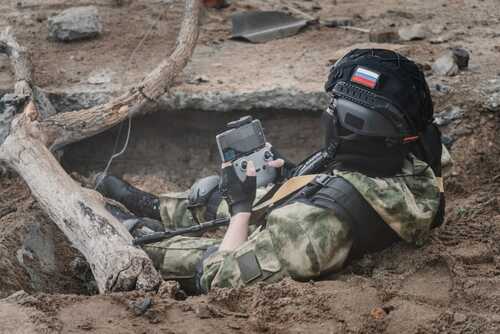
Russian drones breaching NATO airspace during massive military drills have pushed Europe to the edge, prompting urgent questions about Western resolve and the security of America’s closest allies.
Story Snapshot
- Russian and Belarusian forces conduct their largest joint military drills since the Ukraine invasion, simulating Western attacks near NATO’s borders.
- Multiple Russian drones violate Polish airspace, triggering a swift NATO air defense response and raising fears of broader conflict.
- European leaders condemn the incursion as the most serious airspace violation since the Ukraine war began, warning of deliberate provocation.
- NATO ramps up military readiness as Poland and the Baltics brace for further escalation, while the U.S. monitors the crisis under President Trump.
Russian-Belarusian Drills and the Escalation at NATO’s Doorstep
In September 2025, Russia and Belarus launched the “Zapad 2025” military exercises on Belarusian soil, marking the most extensive such drills since the onset of Russia’s war in Ukraine. These operations simulate defensive responses to hypothetical Western attacks, and their scale underscores Moscow’s intent to project power across Eastern Europe. The timing of these drills, against the backdrop of an ongoing conflict in Ukraine, has heightened anxieties among NATO allies—particularly Poland and the Baltic states—who view such maneuvers as thinly veiled threats to their sovereignty and security.
During the first days of the drills, a major incident occurred: multiple Russian drones entered Polish airspace in what Polish authorities described as a clear and dangerous violation. With the assistance of NATO air forces, Polish military units intercepted and shot down the drones, marking the most serious breach of European airspace since Russia’s invasion of Ukraine. While Russian and Belarusian officials insisted the drones went off course by accident, European leaders were quick to denounce the episode as a deliberate provocation and a test of NATO’s resolve. Such incursions, even if unintentional, dramatically increase the risk of miscalculation and escalation.
NATO’s Response and the Stakes for American Leadership
NATO immediately increased its regional alert level, with allied fighters—including Dutch F-35s—scrambling to patrol and reinforce the skies over Poland and the Baltic states. The alliance’s response sends a strong message: any attack or violation of member state territory will trigger collective defense commitments. For Poland, which plans to spend $55 billion (4.8% of GDP) on defense in 2025, the incident validates years of warnings about the Russian threat and the necessity of robust deterrence. NATO’s credibility, and by extension American leadership, is being put to the test as Russia probes for weaknesses along the alliance’s eastern flank.
President Trump’s administration, in stark contrast to the previous White House, has prioritized restoring military strength and standing with NATO allies while demanding fair burden sharing. The current crisis provides a clear example of why a strong, clear-eyed American posture is indispensable: adversaries like Russia exploit perceived divisions and indecision, and only decisive action can maintain peace. Many American patriots recall how endless globalist appeasement and “woke” distractions left our allies vulnerable and our adversaries emboldened—now, vigilance and unity are required.
Regional Fallout: Border Tensions, Defense Buildup, and Economic Risks
Communities along the Polish, Lithuanian, Latvian, and Belarusian borders are living with heightened alert, frequent military activity, and the real possibility of armed confrontation. For these NATO front-line states, the threat is not abstract: history teaches that unchecked aggression leads to disaster. Defense industries are rapidly ramping up production, while cross-border trade faces interruptions and economic uncertainty grows. Political polarization over support for Ukraine and the alliance’s military posture is rising, but the overwhelming consensus among Eastern European governments is that only strength deters further Russian adventurism.
The long-term implications extend far beyond Europe. If Russia’s repeated incursions go unanswered, the precedent could embolden other adversaries and erode the credibility of American security commitments worldwide. For conservatives who value strong borders and respect for national sovereignty, the current situation is a sobering reminder: peace through strength is not a slogan, but a necessity when facing regimes that disdain Western values and constitutional freedoms.
#OMG… #Russia Tests #Trump On The Eve Of 9/11 Memorial Ceremonies….
POLAND SHOOTS DOWN RUSSIAN DRONES: Where The Hell Is #TACO?….
FIRST TIME NATO HAS FIRED: #Putin has crossed the line…
EUROPE ON BRINK OF WAR: #Zelensky Urges Joint Air Defense…
MAJOR ESCALATION:… pic.twitter.com/P4GD4ddS6r
— Brian Harrod (@GetTheDailyDirt) September 10, 2025
Expert analysts warn that Russia’s tactics aim to generate a “gray zone” of insecurity, undermining NATO’s unity and pressuring Western governments to accept Moscow’s dominance in Ukraine. While Russia and Belarus claim innocence, their actions speak louder than words. The only way to prevent further escalation is to remain vigilant, support our allies, and reject any return to the failed policies of appeasement and globalist overreach. America must stand firm, defend its interests, and ensure that the lessons of history are not forgotten as Europe teeters on the brink.
Sources:
Russia-Belarus military drills start this week: Here’s what to know (Defense News)
Poland Shoots Down Russian Drones; NATO on Brink as Tensions Mount (TIME)