
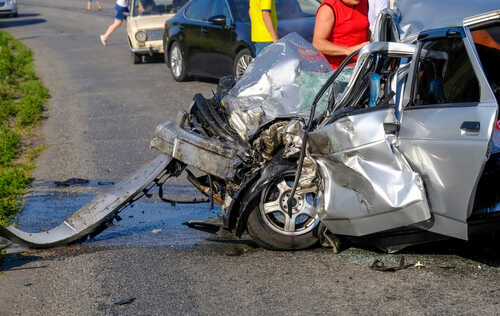
Prosecutors say a Bay Area startup founder hit triple-digit speeds in a Tesla before slamming into stopped traffic, and now a murder case will test where reckless driving ends and implied malice begins.
Story Snapshot
- Prosecutors allege the Tesla reached 142 mph moments before a fatal crash.
- A mother and daughter died in the highway fire; a father tried to save them, reports say.
- The state frames it as driver-caused, not a Tesla defect, sharpening the legal focus.
- The public evidence record lacks the charging affidavit and raw vehicle data.
What Prosecutors Say Happened On Highway 87
Santa Clara County prosecutors charged Silicon Valley developer Zachary Chernicky with two counts of murder after a December highway crash in San Jose. They allege his Tesla reached 142 miles per hour 15 seconds before impact, 126 miles per hour five seconds before impact, and about 102 miles per hour at the point of collision. They say he plowed into stopped traffic, sparking a fire that killed a mother and her young daughter. Prosecutors stated the car did not cause it; the driver did.
The speed figures matter because they support a theory of implied malice. California murder law allows a charge when someone knowingly does something dangerous to life and does it anyway. Prosecutors often point to extreme speed, no braking, or racing behavior. The state’s line that “the Tesla didn’t cause this crash” narrows the fight to the driver’s choices, not a design flaw or automation miss.
The Missing Pieces In The Public File
The available reporting does not include the charging affidavit, crash reconstruction, or the raw event data download from the Tesla. The public has not seen throttle, brake, steering, or airbag module data. Without those, the claimed 142, 126, and 102 mile-per-hour sequence remains an allegation rather than a verified exhibit. The record also lacks witness statements, toxicology, and phone logs that could show distraction, impairment, or intent beyond speed alone.
That gap matters for both sides. If the telemetry holds up and lines up with scene evidence, the state’s case gets stronger. If an independent expert finds timestamp drift, speed misreads, or a scenario that does not match debris and crush profiles, the defense gains room. The same goes for medical records, autopsy findings, and first responder notes. Precision cuts through hype. Sensational headlines do not.
How This Case Fits The Modern Tesla Playbook
Tesla crashes draw outsized heat because they mix high speed, automation questions, and tech-culture baggage. But when criminal charges follow, cases usually turn on data, scene geometry, and the driver’s mental state, not brand drama. In prior prosecutions tied to Tesla driver-assist, officials leaned on event recorder downloads, brake and accelerator traces, and video to separate human misconduct from machine error. The same approach is likely here, despite no public file yet.
Past cases also show a charge gradient. Manslaughter often shows up where prosecutors see gross negligence, like running a red light on driver-assist. Murder appears when the facts suggest conscious disregard for life, such as extreme speed into stopped traffic. The label matters because it signals what the state thinks it can prove about mindset, not just mechanics. That is the fulcrum this San Jose case rests on.
What A Fair Test Of Evidence Should Include
A clean, trusted record should show a forensic download from the car’s data systems with chain of custody. It should pair that with crash reconstruction: skid marks, yaw, vehicle rest positions, crush depth, and time-distance math. Phone records should address distraction. Toxicology should address impairment. Witness accounts should cover lane position and braking. If prosecutors are right, these pieces will align with the 142-126-102 narrative and the implied-malice claim.
Silicon Valley developer accused of murder after investigators say Tesla reached 142 mph before fatal crash https://t.co/BoMHHVXecP #FoxNews NOTHING GOOD Happens in California ! California is a State of Evilness/Criminals and Corruptions ! TRUE ☝️
— arlrust (@arlrust777) July 21, 2026
If they do not align, the charge should be revised. Equal justice demands proof, not posture. American common sense says speed can kill, but it also says courts should judge facts, not status or brand. The father who tried to save his family deserves that rigor. The community deserves roads where laws mean something. The defendant deserves a fair chance to test the state’s story. That is how you keep grief from turning into guesswork.