
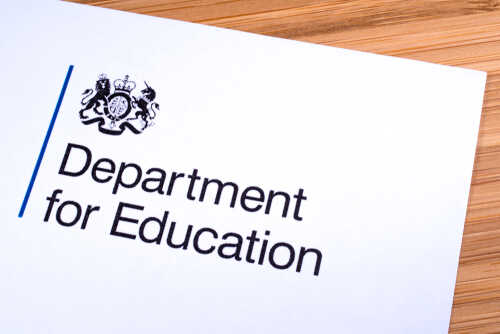
The Trump administration’s move to dismantle the Department of Education has set off a political earthquake, returning education control to the states and exposing the deep rift between common-sense local governance and the left’s obsession with federal micromanagement.
Story Snapshot
- President Trump signs executive order to shut down the Department of Education and send authority back to the states.
- Education Secretary Linda McMahon leads the transition, releasing $6.8 billion in previously withheld federal funds to state governments.
- Democrats and civil rights groups protest, claiming this threatens protections for vulnerable students.
- Governors, parents, and teachers brace for massive changes, with states poised for newfound educational freedom—and responsibility.
Trump Fulfills Major Campaign Promise: Federal Education Bureaucracy on the Chopping Block
President Donald Trump kept one of his most ambitious campaign promises on March 20, 2025, by signing an executive order that sets in motion the closure of the U.S. Department of Education. For decades, conservatives have argued that a one-size-fits-all federal bureaucracy is the root of America’s education problems, smothering innovation, local values, and parental rights beneath mountains of red tape. Now, that bureaucracy is on borrowed time, and power is finally shifting back where it belongs: to the states, local communities, and parents who know their children best.
Linda McMahon pulls back the curtain on Trump's plan to dismantle the Department of Education https://t.co/ew7Gfqu9sk
— Fox News Politics (@foxnewspolitics) August 1, 2025
Secretary of Education Linda McMahon is spearheading the transition, meeting with governors of every political stripe and unlocking $6.8 billion in previously frozen federal education funds. This dramatic shift is being framed by the Trump administration as a nonpartisan push for innovation and efficiency, but the outcry from the usual suspects—Democrats in Congress, civil rights groups, and union leaders—has been as loud as it is predictable. The left has clung to the Department of Education for decades, using federal dollars and regulatory threats to force their agenda into local classrooms. That era, according to the Trump team, is finally coming to an end.
States Prepare for a New Era of Educational Freedom—and Responsibility
Governors across the nation, both Republican and Democrat, are scrambling to prepare for the massive responsibility that comes with the return of education authority. The National Governors Association is now at the center of heated discussions about how to allocate the flood of federal funds and set new standards for schools. State leaders are expressing gratitude for the new flexibility but are also demanding a clear path forward to ensure an orderly transition. For too long, local educators and school boards have been forced to jump through federal hoops just to access the funding that taxpayers already paid for. Now, with the shackles off, states have a real chance to tailor education to their own needs—and fix the mess left by Washington bureaucrats.
Teachers and administrators are watching closely. Some are hopeful that the end of federal micromanagement will mean less paperwork, more classroom autonomy, and a renewed focus on teaching instead of compliance. Others are anxious about changes in funding streams and regulatory oversight as states take the helm. The Trump administration insists that essential programs will continue during the transition, but there’s no denying the magnitude of these changes. The days of Washington insiders dictating curriculum to millions of families are numbered.
Opposition Cries Foul: The Left’s Fear Campaign in Full Swing
Civil rights organizations and Democratic lawmakers are painting the move as an all-out assault on vulnerable student populations, claiming that abolishing the Department of Education will gut protections for minorities, students with disabilities, and low-income families. The American Civil Liberties Union and similar groups warn of increased disparities and the erosion of federal civil rights enforcement. Critics argue that this is a recipe for chaos, with each state setting its own standards and rules, and they are demanding Congress step in to block the move.
The left’s panic over losing control of federal education levers is palpable. They see the Department of Education not as a neutral arbiter but as a weapon for enforcing their vision—one that has led to plummeting national test scores, frustration among parents, and a growing exodus to alternative schooling options. The administration counters that the real threat to American students has been decades of failed policies and bureaucratic meddling, not the return of authority to states and communities.
What Comes Next: Congress, States, and the Future of American Education
The Department of Education’s closure is not yet a done deal; full legal abolition will require Congressional action. But the wheels are in motion, and the Trump administration is pressing ahead with dismantling the federal apparatus, prioritizing an orderly transition and continued funding for essential programs. States are preparing to rewrite the education rulebook—some with gusto, others with caution—and the debates over curriculum, parental rights, and funding are sure to heat up as November’s midterm elections approach.
https://x.com/deenie7940/status/1951345367133442486
This is not just another policy change—it’s a fundamental realignment of power away from unelected federal bureaucrats and back to the people. For conservatives, parents, and anyone who believes in the Constitution, this is a long-overdue correction to decades of government overreach and ideological meddling in America’s classrooms. The next chapter in American education is being written right now, and for once, it’s being written by the people who matter most: the states, the parents, and the local communities who know what’s best for their kids.
Sources:
ACLU: Trump’s Attack on the Department of Education Explained