

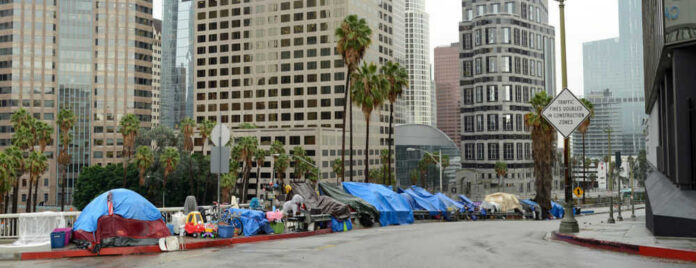
Venice Beach residents packed a tense meeting and demanded action after reports of rising street crime, drug use, and overdose scenes near supportive housing sites.
Story Highlights
- Residents reported violence, drug activity, and safety fears at a crowded community meeting.
- Local data show sharp rises in complaints and sanitation calls tied to public space disorder.
- Police logs detail recent aggressive panhandling with knives and guns near Venice.
- No hard data yet links supportive housing residents to the crime spike.
Residents Confront Program Leaders Over Safety Near Facilities
Community members in Venice Beach confronted leaders of two supportive housing programs during a heated June 2026 meeting. Residents described finding bodies, witnessing open drug use, and fearing for their families on local streets. Video from the meeting shows repeated claims that crime is getting worse and that city policies failed to protect the neighborhood. A national outlet summarized the event as a full room of locals demanding safety and accountability after months of escalating incidents.
Parents and shop owners said the area around certain facilities has changed, with petty thefts, menacing behavior, and visible narcotics use now common. Speakers argued the city shifted burdens onto Venice without guardrails or enforcement. They asked for stricter site management, clear curfews, and fast removal of dangerous behavior. Organizers urged the city and county to send more patrols, cleanups, and coordinated outreach that does not enable public drug markets.
Documented Disorder: Complaints, Cleanups, And Street Threats
Public records cited by local advocates show over 850 formal complaints about shared public space in 2025, a 35 percent jump from two years earlier. Sanitation teams logged more than 200 service calls for waste and health risks in 2025, up 28 percent from the prior year. These numbers track what residents describe: growing disorder in parks, on sidewalks, and around service hubs. The complaint surge reflects pressure on families, tourists, and small businesses who rely on safe, clean public areas.
Police reports from the nearby Mar Vista area in April 2026 included aggressive panhandling cases where suspects displayed a knife and a gun. The incidents occurred near key corridors that feed into Venice. The crime report did not identify the suspects’ housing status or tie them to specific programs, but it confirmed rising street-level threats in the local footprint. Residents argue these cases match what they encounter daily and demand targeted enforcement near troubled blocks.
No Proven Causation Yet Between Programs And Crime Spike
While residents link rising crime to supportive housing sites, available sources do not provide firm data that program participants are driving the spike. Coverage of the meeting and the viral video center on local testimony but do not isolate suspects by housing status or facility rosters. That evidentiary gap matters for policy. Any durable fix must track who is committing crimes, where they cluster, and how operations at each site impact the surrounding streets.
Some measures suggest a mixed picture. One documentary cited a 22 percent drop in unsheltered individuals in 2024, which complicates claims of a continuous surge. Program operators also log thousands of outreach contacts, which shows service activity even as residents question results. These figures do not negate the lived reality on the ground, but they show why leaders must separate anecdotes from verified trends before making final calls on closures or relocations.
Accountability Steps Conservatives Can Support Right Now
Local leaders can take concrete steps to protect families while vetting claims. First, city officials should order a focused audit of crime within defined zones around each supportive housing site. The audit should map arrests, emergency calls, and overdoses over time, with clear distances from each facility. Second, the city should publish monthly discipline and incident logs from program operators, with privacy safeguards, so neighbors can see how rules are enforced.
@spencerpratt, @TraciParkforLA oversees that vacant Marina Del Rey/Venice Beach Ramada Inn that the City purchased in 2020 for use as housing/shelter. Would you have it occupied on Day 1? Would people complain about it? How would you do better?
— landless got hacked by an Elon Musk impersonator (@rooflesser_) June 30, 2026
Third, residents deserve a rapid-response plan: fixed police beats, timed sanitation sweeps, and a no-tolerance policy for weapons, open drug markets, and intimidation. Fourth, the city should require performance contracts. If a site repeatedly fails to control spillover harms, funding should pause until compliance returns. These steps respect compassion but insist on order. Families, shopkeepers, and visitors should not shoulder chaos while bureaucracies debate metrics.
City Hall Silence And Meeting Cancellations Fuel Frustration
Trust erodes when officials cancel key forums or delay answers. Venice’s neighborhood leadership recently canceled a homelessness committee meeting, which residents saw as a stall amid clear public safety concerns. People want straight data, clear standards, and fast follow-through. The longer officials downplay street risks, the more parents avoid parks, businesses lose customers, and tourists stay away.
The Venice clash is bigger than one meeting. It tests whether leaders can pair humane services with firm law and order. Residents asked for fairness and safety on their blocks. That should not be controversial. The path forward is clear: verify facts, enforce laws, clean streets, and hold every funded program to measurable results. Venice deserves a beach that is safe, open, and family-friendly again.
Sources:
virginiabeach.gov, nypost.com, instagram.com, facebook.com