
President Trump delivers a stark warning to NATO allies: refuse to help reopen Iran’s blockade of the Strait of Hormuz, and face a “very bad future” that endangers global energy security and American leadership.
Story Highlights
- Trump demands warships from NATO, China, France, Japan, South Korea, and Britain to escort tankers through the Strait of Hormuz, closed by Iran in retaliation for US-Israel strikes.
- Oil prices surge 40-50% as the strait—carrying 20% of global oil—remains choked, hitting Europe and Asia hardest and exposing ally dependence on US protection.
- Trump invokes US Ukraine aid as reciprocity, testing NATO commitments amid active warfare that began February 28, 2026.
- Iran launches attacks on UAE ports, Kuwait bases, and Baghdad airport; IEA releases 400 million barrels to stabilize markets.
- Over 1,200 dead and 3.2 million displaced in Iran, with Tehran showing partial normalcy as Nowruz approaches.
Trump’s Direct Challenge to NATO Allies
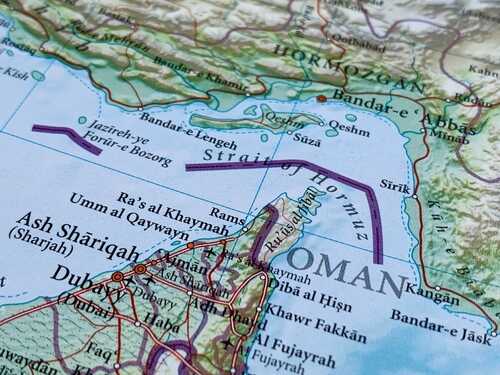
US President Donald Trump stated in a Financial Times interview on March 16, 2026, that NATO faces a “very bad future” without ally assistance to reopen the Strait of Hormuz. Iran closed the 21-mile-wide chokepoint between Iran and Oman after US-Israel strikes began on February 28. Trump cited US support for Ukraine as leverage, urging reciprocity from nations reliant on Gulf oil flows. This marks a shift from past spending critiques to wartime energy security demands. Allies like Britain and France face direct pressure as their bases endure Iranian attacks.
Iran’s Retaliation and Escalating Attacks
Iran’s IRGC claimed complete control of the Strait of Hormuz, launching missile and drone barrages totaling 700 missiles and 3,600 drones against US and Gulf targets. On March 15-16, Tehran struck a UAE port, a Kuwait base destroying an Italian drone, and Baghdad airport wounding five. Israel responded with strikes on an Isfahan factory killing 15 and Beirut targets. The US claims to have obliterated Iran’s Kharg Island oil facility. These actions disrupt 20% of global oil and LNG trade, fueling economic chaos.
Global Economic Fallout and IEA Response
Oil prices jumped 40-50% due to the Hormuz blockade, prompting the International Energy Agency to release 400 million barrels from strategic reserves, prioritizing Asia. Europe and China, heavily dependent on Gulf imports, suffer most from the surge. Shipping and energy sectors face crippling disruptions, with aviation and military bases targeted. Trump’s Truth Social post on March 15 called for warships from multiple countries. In NBC remarks, he noted Iran seeks a deal but on insufficient terms, hinting at further bombings.
Tehran maintains semi-normalcy with bazaars reopening ahead of Nowruz, despite 1,200 deaths and 3.2 million displaced per UN figures. Iranian officials Abbas Araghchi and Masoud Pezeshkian frame the blockade as retaliation against aggressors, urging neighbors to reject US security overtures.
Trump warns of 'very bad' future if NATO allies refuse to help open critical Strait of Hormuz https://t.co/9przGU88hW pic.twitter.com/P7rbdIn5FV
— New York Post (@nypost) March 16, 2026
Stakeholder Pressures and Power Dynamics
Trump pressures non-NATO players like China, delaying a summit with Xi Jinping over oil dependence. French President Macron called Iranian attacks “unacceptable” after a soldier died in Iraqi Kurdistan. Italy downplays base hits to avoid escalation. Israel’s Effie Defrin oversees strikes degrading Iranian capabilities. Power tilts toward US military superiority, but asymmetric Iranian tactics expose ally vulnerabilities. No commitments from allies confirmed yet, risking NATO fractures if they balk at burden-sharing.
Sources:
Trump warns NATO faces ‘very bad future’ over Hormuz – Middle East Eye
Trump pressures NATO, China over Iran’s closure of key waterway – Institut Kurde
Trump warns NATO faces ‘very bad future’ if allies fail to help open Hormuz Strait – Times of Israel
Iran-US war Trump live updates – Independent