
A Silicon Valley nonprofit built to “benefit all humanity” now faces sworn testimony alleging it morphed into a profit machine—raising sharp questions about honesty, charity law, and who really steers artificial intelligence.
Story Snapshot
- Elon Musk testified he gave $38 million expecting a nonprofit mission, then watched OpenAI “steal the charity.” [1]
- Key witnesses described patterns of dishonesty and internal pressure to enrich insiders during the nonprofit-to-for-profit shift. [4]
- OpenAI denies any promise to remain a nonprofit, arguing profit was necessary to compete globally. [1][3]
- Sam Altman is set to testify as the court weighs documents, diaries, and board accounts about the 2019 conversion and Microsoft deal. [4][6]
Witness Claims Challenge OpenAI’s Nonprofit-to-For-Profit Pivot
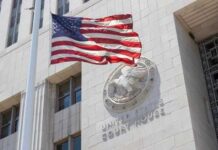
Testifying in a federal courthouse in Oakland, California, Elon Musk said he invested roughly $38 million into OpenAI from late 2015 to mid-2017 based on a nonprofit mission and later concluded the organization “stole the charity.” He recounted losing confidence in Sam Altman’s commitment as OpenAI pursued a for-profit model and a major partnership with Microsoft, which he argued contradicted the founding vision to develop safe artificial intelligence “for the benefit of all humanity.” [1][4]
Former OpenAI chief technology officer Mira Murati testified that board deliberations in 2023 cited Sam Altman’s “issues with lying and with misrepresenting things to his employees and to the public,” sharpening concerns about leadership integrity during a critical period. Additional testimony from early board member Shivon Zilis described scrutiny over post-departure communications and the timeline of OpenAI’s structural shift after ChatGPT’s release, details relevant to Musk’s contention that the nonprofit mandate was sidelined. [4]
Internal Records and Safety Disputes Add Pressure
Trial exhibits included personal diary entries from cofounder Greg Brockman that, according to reporting, captured internal debates on the nonprofit-to-for-profit transition and personal wealth ambitions, including a passage asking, “What will it take for me to get to $1 billion?” Musk’s legal team highlighted Brockman’s current estimated net worth of around $30 billion and pressed why far larger sums were not returned to the nonprofit if charitable goals remained paramount. [4]
Former executive McCauley testified that Sam Altman was dishonest about the rollout of GPT-4 Turbo, claiming OpenAI’s legal department allowed bypassing an internal safety board review for a launch in India. According to that testimony, legal had not given such a green light. This safety-board dispute intersects with broader trial themes about whether commercialization and speed overrode the founding commitment to careful, transparent development for public benefit. [4]
OpenAI’s Defense: No Promise of Perpetual Nonprofit, Competitive Reality Cited
OpenAI’s lawyers argue there was never a binding promise to remain a nonprofit indefinitely, directly contesting Musk’s charge that his donations were secured under false pretenses. They contend discussions about a for-profit structure were on the table, and they emphasize that Musk himself acknowledged openness to a for-profit model if it did not overshadow the mission. The defense frames the Microsoft partnership and capital influx as necessary to compete against global tech giants. [1][3][4]
Sam Altman arrives at federal court in Oakland, California, where he is expected to testify in the high-stakes lawsuit brought by Elon Musk against OpenAI.
Musk alleges Altman and OpenAI co-founder Greg Brockman abandoned the company’s original nonprofit mission after receiving… pic.twitter.com/fzVU0EUcWu
— APT News (@APT__News) May 12, 2026
Court filings introduced an email Musk sent two days before trial proposing a settlement to Greg Brockman, followed by a message saying, “By the end of the week, you and Sam will be the most hated men in America” after refusal. OpenAI points to this exchange to characterize Musk’s approach as hostile and competitive, suggesting the lawsuit benefits his rival venture, xAI. While the email colors courtroom perceptions, it does not alone resolve the core legal questions about nonprofit commitments and conversion. [2][4]
What Altman’s Testimony Could Settle—and What Remains Unclear
Sam Altman’s upcoming testimony is positioned to address three gaps. First, whether he made assurances to donors like Musk about a durable nonprofit mission. Second, how internal governance weighed safety reviews against speed to market, particularly around GPT-4 Turbo. Third, why profit caps and partnership terms evolved as they did in 2019 and beyond. Without primary founding documents quoted in court that memorialize a permanent nonprofit pledge, the case may hinge on credibility and contemporaneous records. [4][6]
For conservatives concerned about concentrated tech power and mission drift, the trial matters for more than Silicon Valley bragging rights. If a charity-aligned lab pivoted to a valuation narrative backed by a dominant platform, it underscores a broader trend: elites promising public benefit while capturing private gains. The court’s scrutiny of emails, diaries, and board minutes could signal whether charitable missions in advanced technology can be trusted without ironclad, enforceable guardrails—and who pays when they erode. [1][4]
Sources:
[1] YouTube – Elon Musk testifies in landmark trial against OpenAI’s Sam Altman
[2] YouTube – Elon Musk emailed OpenAI two days before trial asking …
[3] YouTube – LIVE: Musk vs Altman Courtroom Showdown Over OpenAI
[4] Web – Sam Altman Had a Bad Day in Court – Business Insider
[6] Web – Musk v. Altman live updates: Microsoft CEO testifies as week 3 of …