

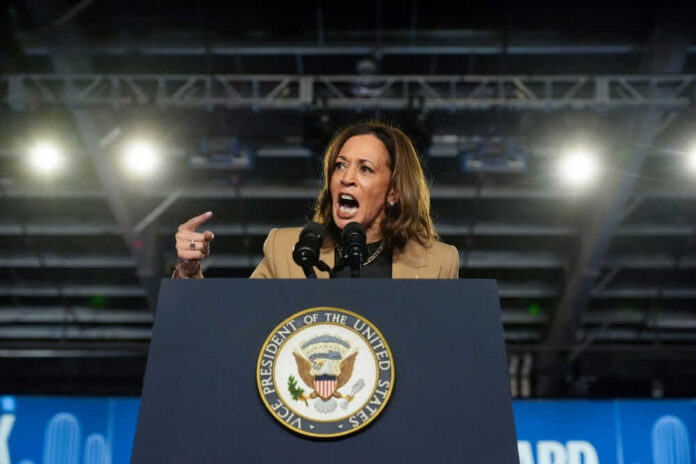
At a Nashville forum, Kamala Harris named her “most effective” presidents — and pointedly left Joe Biden off the list.
Story Highlights
- Harris listed Franklin Roosevelt, John F. Kennedy, and either Lyndon Johnson or Barack Obama, depending on outlet reporting, but not Biden.
- The exchange happened at the National Urban League conference during a rapid-fire question segment.
- The omission fueled talk that public figures use what they do not say as a political signal.
- Rankings of “most effective” presidents often reflect ideology and values as much as performance.
What Harris Said On Stage And Why It Drew Notice
National Urban League President Marc Morial asked Kamala Harris to name the three most effective presidents in American history during a conference in Nashville. Harris replied with Franklin Roosevelt and John F. Kennedy, and then, depending on the outlet, either Lyndon Johnson or Barack Obama. She did not include Joe Biden, the president she served under from 2021 to 2025. The short answer set off headlines because it skipped her former boss by name.
Fox News aired video that cited Franklin Roosevelt, John F. Kennedy, and Barack Obama as Harris’s picks. Two separate AOL write-ups, citing contemporaneous accounts, listed Franklin Roosevelt, John F. Kennedy, and Lyndon Johnson. All versions agree on one point: Biden did not make her top three. Harris opened with a light quip, “Oh Marc, don’t make me do that,” and then delivered the list that others quickly dissected online and on cable.
How Omission Works As A Political Signal
Political audiences often treat what a leader does not say as a sign of distance. Short, on-stage answers become loyalty tests because people can clip them and replay them. That pattern showed up again here, as the focus moved from Harris’s named choices to the one name she skipped. The dynamic grows fast in today’s media because simple clips travel farther than longer context from the full event.
This case also shows how a “top three” list is a values statement. Presidential ranking questions are subjective. They lean on what the respondent sees as “effective,” which can mean policy wins, crisis response, or big laws passed. Surveys show that rankings shift by ideology, and some figures rate higher with liberals or conservatives. That helps explain why a short list can trigger debate across party lines within minutes.
Why These Presidents, And What “Effective” Might Mean
Franklin Roosevelt oversaw the New Deal and World War II. John F. Kennedy defined an era with rhetoric and early Cold War tests. Lyndon Johnson pushed through the Civil Rights Act and the Voting Rights Act. Barack Obama signed the Affordable Care Act. Each of those touchstones often appears in mainstream lists that stress large federal action. That lens tends to prize expansive government programs, which many conservatives see as costly, centralizing, and often unwise.
Kamala Harris Names FDR, JFK, LBJ, and Obama as Most Effective Presidents, Leaves Biden Off the List https://t.co/T90GfqBO9N
— Linda Beus (@lovey2u2) August 4, 2026
Conservative readers can read the moment two ways. First, Harris’s choices mirror a left-of-center view that “big government” equals “effective.” Second, her decision not to include Biden fits a media pattern where omission sparks talk of rifts or rebranding. The facts are clear: she answered quickly, named three known Democratic icons, and skipped Biden. The motives are not proven. Still, the public reaction shows how fast a brief answer can shape a larger political story.
What Matters Now For Voters Focused On Results
Voters who value individual liberty, lower taxes, and secure borders judge “effectiveness” by limits on federal power and respect for the Constitution. By that standard, lists that exalt sweeping federal expansion will not land well. Under President Trump, the current administration stresses energy independence, border security, and deregulation. That policy lens differs sharply from the presidents Harris highlighted, whose legacies often reflect larger federal roles and higher spending.
Sources:
facebook.com, foxnews.com, aol.com