
The quiet stretch of California desert where a San Bernardino County detective was shot says more about modern policing than any press conference sound bite.
Story Snapshot
- A San Bernardino County sheriff’s detective was shot during an afternoon investigation near Palmdale.
- The detective was airlifted to a hospital and is reported to be in stable condition.
- The suspect believed to have shot the detective died at the scene, with another possible suspect still unaccounted for.
- Los Angeles County Sheriff’s Department homicide detectives are leading the crime scene investigation alongside San Bernardino authorities.
A gun battle in the high desert, and a detective down
On a hot Wednesday afternoon in the Antelope Valley, a San Bernardino County sheriff’s detective went from running an investigation to fighting for his life in seconds. Officials say the detective was shot shortly after 3 p.m. in a remote Littlerock area, near the 13000 block of East Avenue R and 130th Street. This is scrubby desert country, dotted with worn buildings and long dirt driveways, where backup is miles away and danger can appear without warning.
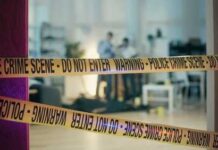
Authorities describe the encounter as a “gun battle,” though they have not yet released a full blow‑by‑blow account. What they have confirmed is stark: the detective was hit by gunfire, and at least one suspect was killed at the scene. Another possible suspect, according to one report, remained at large as detectives locked down the area and searched the surrounding desert. The scene quickly filled with deputies, crime tape, and helicopters, painting a picture of a fight that escalated fast and ended hard.
The wounded detective and the tight information gap
The injured detective was airlifted from the dusty roadside to a hospital in Lancaster, where he was listed in stable condition. One outlet reports the bullet struck his lower rib area, a painful but survivable wound with the right medical care. Officials have not released his name, rank beyond “detective,” or a detailed medical update. That silence is common after officer‑involved shootings but leaves the public with only a few key facts: he is alive, he is hurt, and he was working when someone opened fire.
Reporters on the ground pressed for more, but answers stayed narrow. Agencies have not explained what kind of case brought the detective to that stretch of Avenue R, or why he was close enough to be shot. CBS Los Angeles, citing deputies who were assisting, said the team had been serving a search warrant when the shooting started. Other outlets simply say he was “conducting an investigation,” a vague phrase that could mean anything from surveillance to a follow‑up interview. That gap matters, because the nature of the mission shapes how people judge what happened.
Who investigates when the investigator is shot
While the detective’s own department handles his side of the story, homicide detectives from the Los Angeles County Sheriff’s Department stepped in to run the crime scene. That might sound strange at first: a San Bernardino County detective is shot, yet Los Angeles County detectives take the lead. But the shooting happened just east of Palmdale, in Los Angeles County’s high desert, where jurisdiction lines are sharp but daily realities blur. The two agencies now share the case, mixing local control with outside review.
The joint response reflects a core conservative value: treat an attack on law enforcement as an attack on public order, and bring every tool to bear until the threat is contained. Dozens of Los Angeles County deputies flooded the scene, with their vehicles and gear visible against the wide desert backdrop. That level of force is not about theater. It tells anyone watching that if you shoot at a deputy in this region, you will face not just one department but a united wall of badges, guns, and investigators.
Palmdale’s shadow of past ambushes and public trust
This shooting did not happen in a vacuum. Palmdale and the surrounding high desert have lived through several deputy ambush and shooting cases in recent years, including the murder of Los Angeles County Deputy Ryan Clinkunbroomer as he sat at a stoplight outside the Palmdale station. Residents have seen patrol cars attacked, deputies shot in the head, and suspects hunted down by large manhunts. Every new report of “deputy shot in Palmdale” now lands on a community already on edge.
August 5, 2026
The Los Angeles County Sheriff’s Department is the investigating agency for the shooting involving the San Bernardino County Sheriff’s detective.
All media inquiries should be directed to them. pic.twitter.com/ROApyblIQx
— San Bernardino County Sheriff (@sbcountysheriff) August 5, 2026
That history shapes how this latest case is heard. Early reports using words like “ambush,” “gun battle,” and “search warrant” fire up strong feelings, even when many details are not yet clear. From a common‑sense, right‑leaning view, one core point stands out: criminals increasingly treat law enforcement officers as open targets, even when they are simply carrying out court‑approved work in lonely areas. When agencies hold key facts back for days, it may protect the case, but it also pushes nervous citizens to guess and fill in the blanks with past horrors.
What we know, what we don’t, and why it matters
Here is what stands firm so far: a San Bernardino County sheriff’s detective was shot while working an active investigation or warrant near Avenue R and 130th Street East; he was airlifted and is stable; a suspect linked to the shooting died at the scene; and Los Angeles County homicide detectives are running the crime scene with San Bernardino leaders. No public record yet names the detective, the suspect, or the exact legal basis for the operation.
That missing detail is not a scandal by itself, but it does carry risk. When citizens are asked to trust both the badge and the process, clarity helps. Knowing whether this was a high‑risk warrant, a low‑key follow‑up, or something in between changes how we judge the danger faced by the detective and the tactics used by deputies. For now, we are left with the desert, the gunfire, and the helicopter ride out, waiting for the official story to catch up to the raw facts already on the ground.
Sources:
nypost.com, abc7.com, nbclosangeles.com, youtube.com, cbsnews.com, laist.com, kesq.com