
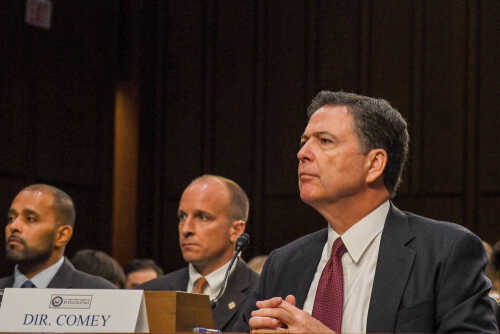
Former FBI Director James Comey faces criminal charges, spotlighting deep-rooted tensions between federal oversight and accountability.
Story Highlights
- James Comey, former FBI Director, faces criminal charges in Virginia.
- Comey, known for criticizing President Trump, is now on the defensive.
- The trial underscores ongoing debates over federal agency accountability.
- Implications for trust in federal institutions are at the forefront.
Comey’s Day in Court: A Turning Point
In Alexandria, Virginia, James Comey, the former FBI Director, faces a significant legal battle. Known for his vocal criticism of President Trump, Comey is now tasked with defending himself against criminal charges. The case is pivotal, not just for Comey but for the broader narrative surrounding federal oversight and accountability. As Comey stands trial, many see this as a critical juncture in addressing the responsibilities and limitations of federal agencies.
The charges against Comey are a stark reminder of the ongoing debates about the power and influence of federal institutions. For years, conservatives have voiced concerns over the perceived overreach of agencies like the FBI. This trial could potentially reshape public perception and trust in these institutions. The outcome may either reinforce calls for stricter oversight or, conversely, validate the actions taken by these agencies in recent years.
Implications for Federal Oversight
The trial’s proceedings are expected to delve into the nuances of federal authority and the checks and balances necessary to prevent misuse of power. For conservatives, this case symbolizes a broader fight against government overreach and the erosion of individual liberties. The trial serves as a litmus test for the justice system’s ability to hold high-ranking officials accountable, irrespective of their past roles or political affiliations.
As the trial unfolds, it challenges the public to reconsider the balance between security and freedom. It highlights the necessity for a transparent judicial process that scrutinizes actions taken by those in power. The implications of this trial extend beyond Comey, potentially affecting future policies and the functioning of federal agencies.
Public Trust and Institutional Accountability
Public trust in federal institutions has been a contentious issue, largely influenced by past actions and perceived biases. This trial could either exacerbate skepticism or restore faith in the system’s ability to self-regulate. For many conservatives, the proceedings represent a chance to hold accountable those who they believe have overstepped their boundaries, impacting American liberties.
The trial’s outcome will likely reverberate across political and public spheres, influencing discourse on the role of federal agencies. As Americans watch this legal battle unfold, the emphasis remains on ensuring that justice is served, and constitutional principles are upheld. This case serves as a critical reminder of the need for vigilance in preserving the values upon which the nation was founded.