
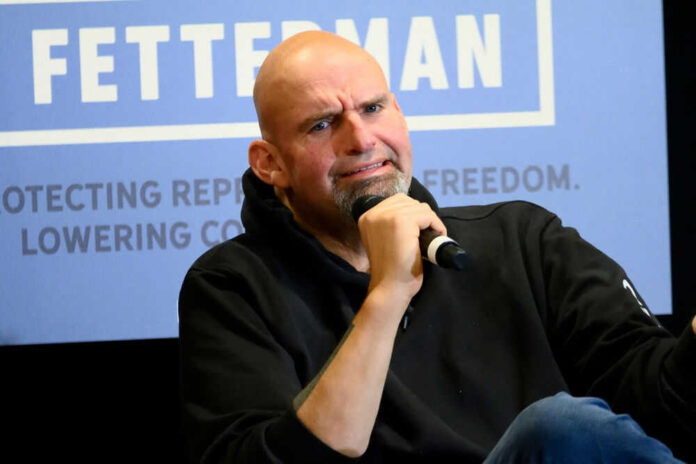
Senator John Fetterman broke with Democratic leadership during the government shutdown and shocked a political forum by refusing to weaponize the term “fascists” against Republicans, exposing a rare crack in the left’s increasingly hostile political warfare.
Story Highlights
- Fetterman publicly criticized his own party’s shutdown tactics and voted for bipartisan solutions over Democratic strategy
- At a public forum, the Pennsylvania senator refused to call Republicans “fascists,” rejecting the inflammatory rhetoric that has become standard among Democrats
- Senate Democrats blocked GOP efforts to fund military personnel on Day 16 of the shutdown, prioritizing partisan leverage over troop support
- Fetterman’s stance highlights growing frustration with destructive political polarization and signals potential fractures within Democratic ranks
Breaking with Democratic Party Line
Senator John Fetterman of Pennsylvania took an unprecedented step during the recent government shutdown by openly challenging his own party’s approach to the funding crisis. When Congress failed to pass appropriations bills by the September 30 deadline, Fetterman voted for a Democratic alternative continuing resolution but simultaneously criticized Democratic tactics. His statement that “my vote was for our country over my party” represented a direct rebuke to Democratic leadership’s strategy of using the shutdown as political leverage. This willingness to prioritize government function over partisan advantage stands in stark contrast to the approach taken by Democratic leaders like Chuck Schumer.
Rejecting Extremist Political Rhetoric
Fetterman’s most striking departure from Democratic orthodoxy came at a political forum when he refused to characterize Republican opponents as “fascists,” a term that has become increasingly common in left-wing political discourse. This rejection of inflammatory labeling represents a significant break from the destructive rhetoric that has poisoned Washington politics and contributed to unprecedented levels of division. While many Democrats have embraced extreme language to demonize conservatives and Trump supporters, Fetterman’s refusal to participate in this verbal warfare demonstrates that some elected officials still recognize the danger of escalating partisan attacks. His stance serves as an implicit criticism of those who have normalized calling half the country fascists simply for holding different policy views.
Democrats Block Military Funding During Shutdown
The political dysfunction Fetterman criticized became even more apparent when Senate Democrats blocked Republican efforts to fund the Pentagon and pay military troops on Day 16 of the shutdown. Senate Majority Leader Chuck Schumer refused to allow unanimous consent for GOP proposals to ensure military personnel received their paychecks during the crisis. Senator John Thune sharply criticized Democrats for this obstruction, highlighting how partisan maneuvering was directly harming service members and their families. President Trump took action to temporarily ensure military pay continued despite the impasse. This Democratic obstruction exposes the hypocrisy of a party that claims to support the troops while actively blocking their funding for political advantage.
Implications for Political Discourse
Fetterman’s willingness to challenge both his party’s tactics and its increasingly extreme rhetoric represents a potential turning point in American political discourse. The escalating use of terms like “fascist” to describe political opponents has contributed to a climate where compromise becomes impossible and demonization replaces debate. Political analysts have noted that Fetterman’s call for civility and bipartisan cooperation stands as a rare counter-narrative to the prevailing trend of partisan warfare. While some Democrats have criticized Fetterman for undermining party unity, many moderates and independents have praised his prioritization of country over party loyalty. His stance raises important questions about whether Washington can return to a politics of persuasion rather than destruction.
The Broader Context of Government Dysfunction
The 2025 government shutdown emerged from deep partisan divides over spending priorities, including disputes over healthcare subsidies, Medicaid cuts, and overall budget allocations. Senate Democrats demanded comprehensive guarantees on spending bills while refusing Republican proposals for piecemeal funding of critical departments like defense. This breakdown in negotiations reflects the broader dysfunction that has plagued Congress for years, with multiple shutdowns occurring over the past decade due to similar partisan gridlock. The immediate impacts include disrupted federal services, delayed paychecks for government employees, and uncertainty for military personnel and their families. Long-term consequences may include further erosion of public trust in government institutions and the establishment of dangerous precedents for future budget battles that prioritize political warfare over basic governance.
Sources:
Fetterman Statement on Government Shutdown – Senator John Fetterman Official Website
Senate Dems Tank GOP Plan to Pay Troops, Fund Pentagon as Shutdown Hits Day 16 – Fox News