

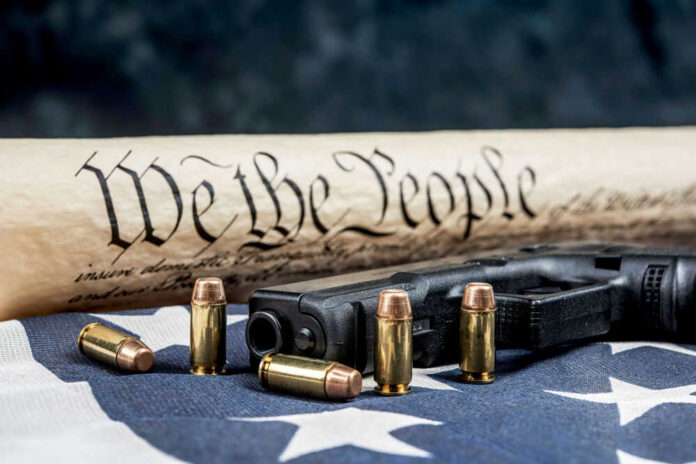
Handguns drive most firearm homicides, and many are tied to illegal markets, not gun stores.
At a Glance
- Handguns account for the clear majority of firearm homicides, year after year.
- Law enforcement traces show pistols dominate crime-gun recoveries nationwide.
- Most crime guns do not come straight from licensed dealers, pointing to diversion and theft.
- Policy that targets illegal supply lines can cut violence without punishing lawful owners.
Handguns, Not Rifles, Define America’s Homicide Problem
Federal data draw a simple map of lethal risk: handguns dominate murder scenes. The Bureau of Justice Statistics reported about 7,600 handgun homicides in 2018, with handguns making up roughly two-thirds of all firearm homicides that year. That pattern spans decades. Uniform Crime Reports tallies by weapon type show thousands of handgun killings each year, while rifles of any kind make up a small slice by comparison. Debates may fixate on a specific rifle model, but the body count points elsewhere.
https://www.youtube.com/watch?v=MJcbiCvwoz0
Tracing records reinforce the same picture. The Bureau of Alcohol, Tobacco, Firearms and Explosives reported more than one million pistols traced from crime recoveries between 2017 and 2021, dwarfing rifles and shotguns. National Public Radio’s summary of the federal report noted the share of recovered handguns submitted for tracing jumped from 62 percent to 75 percent in three years, a sign that short, concealable pistols remain the workhorse of street violence, and that police are leaning on tracing to follow the gun’s path.
How Crime Guns Flow: Theft, Straw Buyers, and the Gray Middle
Researchers tracking illegal gun markets reach a tough conclusion: most firearms used in crime did not come to offenders through a clean, legal retail sale. A review of empirical studies in a National Institutes of Health archive found only about one in six crime guns was obtained legally by the user, underscoring the role of theft, street sales, and straw purchasing in arming criminals. That does not absolve sloppy dealers or weak oversight, but it shifts the policy lens toward diversion points.
Federal tracing trends add texture to that finding. More short “time-to-crime” pistols now show up in cases, including those built from kits or bearing defaced serial numbers, which frustrate investigations and speed the weapon pipeline. That change hints at two realities at once: supply routes adapt fast, and enforcement that focuses on the chokepoints—thefts, straw purchases, and illegal brokers—can make a measurable dent when done with focus and scale.
What Enforcement That Respects Rights Actually Looks Like
Common-sense priorities start with the supply chain we know is dirty. Prosecutors should hammer straw buyers with certain, swift penalties that stick on the first offense. Inspectors should concentrate on dealers with unusual sales spikes and repeat trace hits, not blanket every shop with the same dragnet. Police should surge on gun theft rings, especially those targeting cars and freight, because stolen guns feed local shootings within months. These moves fit American conservative values: punish criminals, protect the rights of the law-abiding, and measure results.
Community safety also depends on demand-side pressure. Focused-deterrence teams can call in the small group driving most shootings and pair firm sanctions with help to exit the life. Cities that align these tactics with fast ballistic leads and real-time tracing turn arrests into prevention, not paperwork. None of that requires banning common rifles used by millions for lawful purposes. The homicide math says to prioritize illegal handguns on the street, not the legal rifles in the safe.
Stay Honest About Limits—and Still Act
Data on how offenders acquired specific guns can be thin or lagged, so advocates on both sides sometimes overstate their case. Yet the broad signals line up: handguns dominate homicides; pistols dominate traces; and studies point to illegal pathways more than storefront buys. Policymakers should follow that trail. Target the actors who steal, traffic, and straw purchase. Back cops with modern tracing and swift prosecution. Protect lawful ownership. Save lives where the evidence actually points.
Sources:
sciencedirect.com, politifact.com, aic.gov.au, ucr.fbi.gov