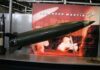

President Trump’s America First agenda demands urgent revival of the SR-72 hypersonic program to counter China’s aggressive advances, yet bureaucratic delays leave America vulnerable in the global arms race.
Story Highlights
- SR-72 remains a conceptual unmanned Mach 6 aircraft proposed by Lockheed Martin Skunk Works in 2013, with no verified flights by 2026 despite hypersonic threats from China and Russia.
- TBCC engines blending turbine and scramjet tech promise global strikes in under an hour, building on SR-71 Blackbird legacy retired in 1998.
- USAF holds funding power amid propulsion challenges; missed 2023 flight projections highlight need for Trump administration pushback against delays.
- Program counters A2/AD defenses where stealth fails, restoring U.S. aerial dominance essential for national security and conservative priorities of strong defense.
- Speculative YouTube claims lack evidence; credible sources confirm SR-72 as unproven concept fueling billion-dollar hypersonic market.
SR-72 Origins and SR-71 Legacy
Lockheed Martin Skunk Works proposed the SR-72 in 2013 as an unmanned hypersonic successor to the SR-71 Blackbird. The SR-71, retired in 1998, achieved Mach 3.2 speeds using Pratt & Whitney J58 turboramjets during the Cold War. Post-retirement gaps emerged as China and Russia developed advanced missile defenses. The U-2 shootdown in 1960 originally spurred SR-71 development under Clarence Kelly Johnson. SR-72 aims to fill this void with revolutionary speed.
Technical Innovations in Propulsion and Design
SR-72 employs turbine-based combined cycle (TBCC) engines, transitioning from turbofan to scramjet for sustained Mach 6 cruise, nearly double SR-71 speeds. NASA contracts from 2014-2018 validated feasibility using off-the-shelf turbines like Pratt & Whitney F100 or GE F110 up to Mach 3, then scramjets. DARPA’s HTV-2 tests in 2010-2011 reached Mach 20, informing aerothermal data. Unmanned blended wing-body design enhances efficiency for ISR and strike missions in contested airspace.
Current Status and Development Hurdles
Subscale TBCC ground tests succeeded, but no demonstrator flight occurred by projected 2023 date, with 2030 operational entry uncertain. Propulsion transition beyond Mach 3 poses the primary challenge, as noted in recent analyses. Speculation of secret flights persists without verification. Lockheed program lead Brad Leland called hypersonics a game-changer against threats in 2018. Focus shifted to HSSW missile integration amid classification opacity.
Strategic Imperative Amid Global Arms Race
SR-72 penetrates anti-access/area-denial (A2/AD) zones where stealth alone fails, enabling continent-spanning strikes in under one hour. USAF balances budgets against peer threats from China and Russia accelerating hypersonics. Lockheed partners with Aerojet Rocketdyne for engines, leveraging Skunk Works expertise. High costs mirror SR-71 but promise ISR edge. Experts like James C. Goodall affirm TBCC viability via NASA studies, while others warn of cancellation risks.
Hypersonic SR-72 Son of Blackbird Can Be Summed Up in 1 Wordhttps://t.co/rJCtROloeG
— Harry J. Kazianis (@GrecianFormula) March 12, 2026
Implications for U.S. Defense Under Trump
If realized, SR-72 reshapes aerial warfare, influencing sixth-generation fighters and hypersonic norms. Short-term, it validates TBCC for broader programs, boosting Lockheed contracts. Long-term, it heightens arms race tensions but secures American superiority. With Trump prioritizing strong defense over past fiscal mismanagement, reviving SR-72 counters globalist weaknesses, upholding constitutional duties to provide for common defense and patriot values.
Sources:
Son of Blackbird: The SR-72 and the Hypersonic Future
All You Need to Know About the SR-72 Son of Blackbird
SR-72 Hypersonic Demonstrator Aircraft
The Lockheed SR-72 Son of Blackbird Has 1 Big Problem
Lockheed Martin SR-72 Son of Blackbird or Darkstar
Fact or Fiction SR-72 Darkstar
The Air Force’s Mach 6 SR-72 Son of Blackbird Is Real