

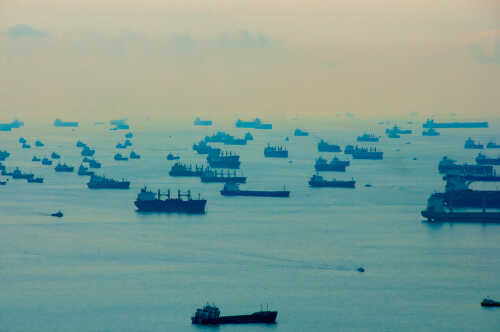
President Trump deployed financial guarantees and potential Navy escorts to counter Iran’s stranglehold on the world’s most critical oil chokepoint after the Islamic Republic effectively shut down the Strait of Hormuz in retaliation for U.S.-Israeli strikes.
Story Snapshot
- Iran’s Revolutionary Guard closed the Strait of Hormuz, halting 20% of global oil trade and spiking prices to year-highs following U.S.-Israeli military strikes in early March 2026.
- Trump announced immediate political risk insurance through the U.S. Development Finance Corporation and hinted at Navy convoy escorts to restart oil shipments.
- Oil shippers remain hesitant despite federal guarantees, citing safety risks and unclear insurance coverage in the narrow 21-mile chokepoint.
- Energy analysts warn prolonged closure threatens inflation and could deliver a “heart attack” to global markets, undermining Trump’s campaign promises of low gas prices.
Iran’s Retaliation Paralyzes Critical Energy Artery
Iran’s Revolutionary Guard Corps brought shipping traffic through the Strait of Hormuz to zero on March 2, 2026, after U.S. and Israeli forces conducted strikes on Iranian targets over the final weekend of February. The narrow waterway between Iran and Oman handles roughly 20 million barrels of oil daily, representing one-fifth of global petroleum trade. Iranian forces threatened to target any vessel attempting passage and launched attacks on regional energy infrastructure in the United Arab Emirates and Oman, sending oil prices to their highest levels in over a year. The closure represents the most severe disruption to Gulf shipping since the 1980s Tanker War during the Iran-Iraq conflict.
Trump Pledges Federal Support to Restart Oil Flows
President Trump convened an emergency meeting with Energy Secretary Chris Wright and Treasury Secretary Scott Bessent on March 3, 2026, before announcing his administration’s response via Truth Social. Trump directed the U.S. Development Finance Corporation to provide political risk insurance and financial guarantees at reasonable rates for tankers willing to transit the strait. The president also signaled potential U.S. Navy escorts for commercial vessels, framing the initiative as essential to maintaining the “free flow of energy to the world.” Treasury Secretary Bessent indicated additional measures would follow, describing the insurance program as launching “effective immediately” to calm jittery energy markets.
Shippers Reject Federal Promises Amid Safety Concerns
Oil tanker operators refused to resume Strait of Hormuz crossings despite Trump’s guarantees, citing inadequate risk mitigation for crews and vessels worth hundreds of millions of dollars. Industry experts noted the 21-mile-wide strait leaves minimal room for evasive maneuvers if Iranian forces attack, creating potential for catastrophic environmental disasters beyond insurable losses. Lloyd’s of London insurance underwriters expressed confusion over the administration’s plan, suggesting Navy escorts could escalate rather than reduce targeting risks from Revolutionary Guard patrol boats and shore-based missiles. Maritime analysts questioned whether federal political risk coverage addresses the full spectrum of threats, including crew safety and vessel replacement costs, leaving shipping companies to weigh multi-billion-dollar assets against uncertain protections.
Economic Fallout Threatens Conservative Policy Priorities
The Strait closure puts upward pressure on domestic gasoline prices at a critical moment for Trump’s energy dominance agenda, with voters expecting relief after years of Biden-era inflation driven by reckless spending and regulatory overreach. Rystad Energy analyst Claudio Galimberti warned that continued conflict in the Gulf region, which hosts the world’s densest concentration of natural gas facilities, would push oil prices higher and ripple through consumer costs nationwide. Economists predict prolonged disruption beyond two weeks could trigger another inflationary spiral, complicating the administration’s efforts to restore economic stability. While analysts acknowledge U.S. naval forces possess the capability to clear Iranian threats and reopen the waterway within weeks, the standoff exposes vulnerabilities in global energy security that adversarial regimes exploit to punish American strength and undermine free-market principles.
Trump Promises 'Death, Fire, and Fury' Should Iran Interfere With Oil Transportation
https://t.co/4h64UOJs6g— Townhall Updates (@TownhallUpdates) March 10, 2026
The crisis underscores the dangers of Middle Eastern instability and the critical importance of American energy independence. Trump’s rapid response demonstrates a commitment to protecting economic interests and projecting power against rogue states like Iran that weaponize natural resources. However, the reluctance of private shippers to accept federal assurances reveals gaps between government promises and market realities, raising questions about whether bureaucratic solutions can effectively counter asymmetric warfare tactics employed by the Revolutionary Guard against vital international commerce routes.
Sources:
Washington Examiner: Trump offers assistance to oil shippers amid price spike, Iranian threat
Business Insider: Trump, US oil price, stock market, energy, Iran commodity war
Sky News: Trump’s solutions to Iranian shipping threat leave insurance sector unimpressed