
A single five-mile strip of land in the Persian Gulf may be the pressure point President Trump can use to squeeze Iran’s regime funding without a full-scale invasion.
Quick Take
- Kharg Island handles roughly 90% of Iran’s oil exports, making it a major “single-point vulnerability” for Tehran.
- Reports say the Trump administration is weighing options as the U.S.-Israeli conflict with Iran continues, but no seizure has been confirmed.
- Analysts argue control of Kharg could choke off revenue linked to the Iranian Revolutionary Guard, while critics warn of retaliation and oil-price shocks.
- History shows Kharg has been attacked before—especially during the Iran-Iraq War—yet Iran managed to keep exports moving through defenses and workarounds.
Why Kharg Island Matters to Iran’s Regime and the Global Market
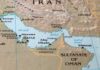
Kharg Island sits about 30 kilometers off Iran’s coast near Bushehr, but its strategic weight is far larger than its footprint. Research describes the island as a dense hub of pipelines, loading terminals on multiple shores, refinery capacity, and military facilities that together underpin the country’s export system. Multiple reports put the share of Iran’s oil exports flowing through Kharg at around 90%, a concentration that makes any disruption economically decisive.
Iran’s reliance on one primary terminal also makes Kharg a geopolitical lever. Research notes Iran’s oil sector is often framed at roughly $50 billion, with significant control attributed to the Iranian Revolutionary Guard (IRGC), including sanctions-evasion networks sometimes described as a “ghost fleet” exporting to China. From a U.S. perspective, that means Kharg is not just an energy node—it is tied to the revenue streams that keep the regime and its security apparatus functioning.
What the Trump Administration Is Reportedly Considering in 2026
As of early March 2026, reporting indicates the U.S. is weighing a possible military seizure of Kharg Island amid a second week of fighting involving the U.S., Israel, and Iran. One White House adviser, Jarrod Agen, publicly discussed taking Iranian oil out of hostile hands in a Fox Business appearance, while other coverage describes a broader debate over whether pressure can be applied without widening into an open-ended occupation.
Several pro-seizure arguments in the research emphasize targeted economic coercion over large-scale strikes. Michael Rubin, an AEI senior fellow and former Pentagon adviser, has promoted the concept as a practical way to starve the regime of cash with fewer destructive effects than bombing. Retired Lt. Gen. Keith Kellogg is also cited as supporting the idea of taking control of the island’s export function. Importantly, the available reporting describes deliberations—not a confirmed order or completed operation.
History: Iraq Bombed Kharg—Yet Iran Kept Oil Moving
Kharg’s vulnerability is real, but its history is not theoretical. During the Iran-Iraq War, Iraq attacked the island repeatedly, with research citing especially intense bombing by the mid-1980s. Accounts describe severe damage to export-related facilities and a long contest over how to prevent Iran from earning wartime revenue. Iran responded with layered defenses and improvisation, including air defenses and alternative logistics to sustain exports even under pressure.
That record cuts two ways for Washington. On one hand, it underscores how central Kharg is to Iran’s export system—enemies targeted it for a reason. On the other hand, it demonstrates Iran’s ability to adapt and repair, even under heavy attack, meaning any U.S. plan would need to account for countermeasures, rerouting attempts, and escalation dynamics. The sources also note that earlier U.S. leaders considered action in past crises but did not proceed.
Risks: Retaliation, Energy Shock, and Escalation Calculus
Strategists who focus on energy markets point to immediate consequences if Kharg’s exports are halted: tighter supply and higher global oil prices. One expert view in the research argues intentional damage is unlikely because the blowback could be severe—especially if Iran retaliates against regional energy infrastructure or shipping lanes. The Strait of Hormuz looms over every scenario; even limited disruption can ripple through global prices and threaten maritime security.
The Oil Island That Could Break Iran https://t.co/gSRK5VtPVr
— zerohedge (@zerohedge) March 9, 2026
For a conservative audience frustrated by years of foreign-policy drift, the appeal of a focused pressure point is understandable: cut off the cash that fuels a hostile regime instead of writing checks for endless nation-building. Still, the public record in these sources supports caution on one key point: the 2026 “Kharg seizure” remains a reported option, not an established fact. Until the administration confirms a decision, the clearest reality is that Kharg’s concentration of oil infrastructure has become the centerpiece of the debate.
Sources:
https://www.eenews.net/articles/the-oil-island-that-could-break-iran/
https://hds.sndu.ac.ir/article_2889.html?lang=en
https://www.newarab.com/news/us-mulling-seizure-strategic-kharg-island-iranian-oil
https://www.iranicaonline.org/articles/kharg-island-03/
https://www.aol.com/articles/us-looking-plan-seize-iranian-191900625.html