
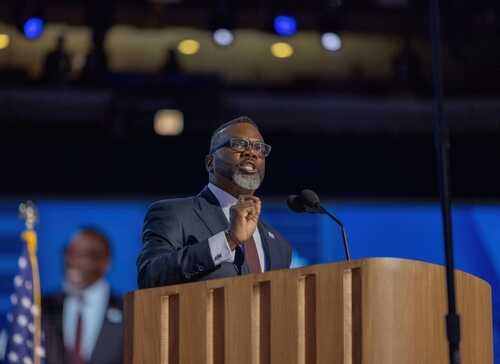
A recent executive order threatens federal immigration enforcement in Chicago, drawing harsh criticism from the White House.
Story Snapshot
- Chicago Mayor Brandon Johnson signs an executive order banning ICE from using city property.
- The White House accuses Johnson of aiding criminal illegal immigrants.
- Johnson and Illinois Governor JB Pritzker file a lawsuit against the federal government’s National Guard deployment.
- Political tensions escalate between local and federal authorities over sanctuary policies.
Executive Order Establishes ICE-Free Zones
On October 6, 2025, Chicago Mayor Brandon Johnson signed an executive order prohibiting U.S. Immigration and Customs Enforcement (ICE) from using city-owned property for immigration enforcement. This move effectively creates “ICE-free zones” within city limits. The order is positioned as a measure to protect immigrant communities and assert local autonomy against federal overreach.
Johnson’s executive order comes amidst heightened political polarization over immigration policies. It is seen as a direct response to the Trump administration’s deployment of National Guard troops to Illinois, an action perceived by local officials as an aggressive federal intervention.
White House Condemnation and Political Tensions
The White House swiftly responded with strong language, accusing Mayor Johnson of “aiding and abetting criminal illegal immigrant killers, rapists.” White House spokeswoman Abigail Jackson condemned the executive order, emphasizing that it undermines law enforcement and public safety. This reaction underscores the ongoing clash between sanctuary city policies and federal immigration enforcement priorities under President Trump’s administration.
The executive order and subsequent lawsuit filed by Johnson and Illinois Governor JB Pritzker against the federal government’s National Guard deployment highlight the significant tensions between local and federal authorities. This legal battle represents a broader struggle over jurisdiction and policy, with both sides asserting their respective authorities.
Impact and Implications for the Future
The immediate impact of the executive order is a restriction on ICE operations within Chicago’s city limits. This has sparked increased legal and political conflict between city, state, and federal authorities. In the short term, the order provides a sense of protection for immigrant communities but also introduces heightened uncertainty due to anticipated federal pushback.
In the long term, this situation may set a precedent for other cities to enact similar policies, potentially leading to further legal challenges and escalation of federal-local tensions. The ongoing debates over sanctuary city policies and federal authority will likely intensify, influencing future immigration policy discussions nationwide.
White House blasts ‘SICK’ Chicago Mayor Brandon Johnson for creating ‘ICE Free Zones’ banning agents https://t.co/iNxbuK6D1p
— Gyuri Aradi (@TDSPsychWard) October 7, 2025
As this story unfolds, the polarized opinions on safety and immigration policy will continue to fuel the debate over the balance of power between local autonomy and federal authority. The implications of this executive order extend beyond Chicago, potentially affecting broader industry and sector relations nationwide.
Sources:
Fox News: Chicago Mayor Creates ICE-Free Zones
ACLU: Contextual Analysis of Sanctuary Policies